Who is this choice relevant to?

Seller of miniature components

You want to capture markings, contact points or small connectors clearly. The close-up capabilities of the exact camera-and-lens combination are important here; OM SYSTEM, Canon Nederland and Nikon Nederland describe different macro and close-up options.

Online shop with lots of repeat photography

You regularly photograph new products and want to be able to recreate the framing and lighting. A stable set-up deserves as much attention as the camera; MPB and Shopify Nederland explain the role of the set-up in product photography.

Seller of shiny components

You photograph metal contacts, for example, and want to assess reflections without losing sight of the shape and details. OM SYSTEM and Sony Nederland describe close-up capabilities and working distances that affect where you position the light.

What should you look for when choosing?

Existing camera or smartphone

Choose this option: if test shots already show the smallest sales-relevant detail clearly enough.

Bear in mind: improving your set-up can save you from buying a new camera, but it doesn’t prove that every small marking will be clearly visible.

Compact camera with close-up mode

Choose this option: if you want to photograph small components without changing lenses. The OM SYSTEM TG-7 is one example, with its microscope mode.

Bear in mind: working very close to your subject can limit the space available for lighting; a stated focusing distance does not guarantee that every marking will be legible.

System camera with a macro lens

Choose this option: if you want to match your lens choice to small details and are prepared to put together a complete system.

Bear in mind: a standard zoom does not automatically offer the magnification or working distance of a dedicated macro lens.

What to consider What should you check? Who is this most relevant to?
Legibility of small details Compare the magnification and working distance of the exact lens, and test the smallest relevant component at the size it will appear in your online shop. If I want to show small markings and connectors clearly, I look at the complete camera-and-lens combination. Around 26% of consumers focus primarily on the legibility of tiny details.
Consistent product photos Check that the camera is stable and that the background, framing and light position can remain the same between shots. For recurring product ranges, I want to be able to keep the composition consistent. Around 21% of consumers prioritise consistent photos across a large number of products.
Reflections and lighting Consider the space in front of the lens and test your set-up with the lamps or light guide you plan to use. For shiny contacts, I want to position the light without reflections obscuring important details. Around 21% of consumers prioritise controlling reflections and lighting.
Sharpness at different depths Check whether the exact model supports focus stacking and whether the camera and component can remain still throughout a series of shots. If both a connector and the marking behind it need to be sharp, I look into options for shooting at multiple focus positions. Around 16% of consumers are primarily interested in sharpness across several layers of depth.
Complete set-up Check the full kit contents and see whether you still need to buy a macro lens, tripod or lighting separately. When I want to keep the complete photography set-up within budget, I compare the kit and the required accessories together. Around 16% of consumers focus primarily on the overall set-up.

Common buying pitfalls

  • Mistaking a standard zoom kit for a complete macro set-up

    The Canon EOS R50 kit reviewed includes an RF-S 18-45 mm zoom lens. Canon’s stated 1.4× magnification applies to the separate RF 100 mm F2.8L Macro IS USM, not to the kit lens.

    Compare the contents of the full kit with the magnification and working distance of the lens you actually plan to use.

    A system camera may require a separate compatible macro lens.

  • Confusing minimum focusing distance with the clear space in front of the lens

    Sony gives the SEL30M35 a minimum focusing distance of 9,5 cm and a working distance of 2,4 cm from the front of the lens. These measurements describe different distances.

    Check both measurements and test whether you can still position the lighting properly around the component.

  • Buying a new camera before testing your set-up

    A stable composition and controllable lighting remain important for product photos, whatever camera you choose.

    First, take test shots with a fixed set-up and check whether the smallest details and reflections come out clearly before replacing your equipment.

  • Assuming that every model supports focus stacking

    The manufacturers’ information cited here confirms features for specific models, not automatically for every camera from the same brand.

    Check the manual for the exact camera model and chosen lens before taking this feature into account.

Relevant camera brands

OM SYSTEM

According to OM SYSTEM, the TG-7 has a built-in microscope mode; the OM-5 Mark II offers a system-camera option with focus stacking.

  • OM SYSTEM says the TG-7 can focus from 1 cm away. According to the manufacturer, the TG-7 Micro Adventure Kit pairs this with an LG-1 light guide.
  • Kit accessories are not automatically included with every TG-7 version. Focus stacking on the OM-5 Mark II is not a feature you can assume is available on the TG-7 without checking.

Canon

The EOS R50 kit provides a system-camera starting point; Canon also sells separate RF macro lenses.

  • Canon specifies a maximum magnification of 1.4× for the separate RF 100 mm F2.8L Macro IS USM.
  • The EOS R50 kit reviewed includes the RF-S 18-45 mm zoom, not that macro lens. Canon’s information about built-in focus stacking specifically mentions the EOS R7 and EOS R10.

Nikon

Nikon Z cameras offer a system-camera option, with the choice to buy a Z macro lens separately.

  • Nikon specifies 1:1 magnification for the NIKKOR Z MC 50 mm f/2.8.
  • The Z50II kit reviewed includes two zoom lenses, not the separately described macro lens. So assess the complete combination.

Sony

According to Sony, the ZV-E10 II uses interchangeable E-mount lenses; the SEL30M35 is a separate APS-C macro lens.

  • Sony specifies 1:1 magnification for the SEL30M35.
  • The stated working distance of the SEL30M35 is 2,4 cm from the front of the lens. The ZV-E10 II kit reviewed includes an E PZ 16-50 mm zoom, not the SEL30M35.

Cameras at Joybuy

This Joybuy selection includes compact and digital cameras for photography and video. Take test shots to check whether the camera and complete set-up can capture the smallest details of your components.
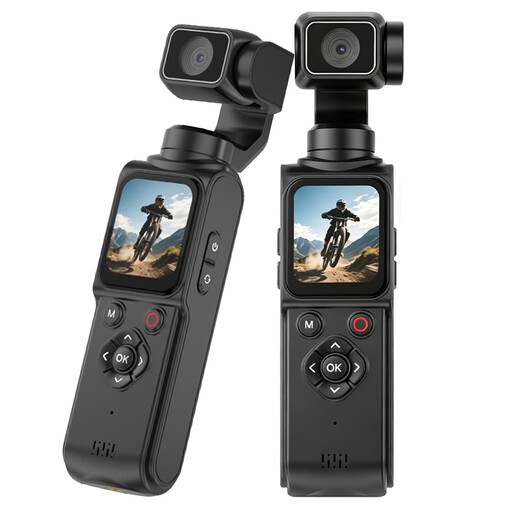
KINSI Mini Vlog Camera 4K

KINSI Mini Vlog Camera 4K

The mini tripod mentioned could help keep the camera position steady for repeat product photography.

The product name mentions 64 MP, Wi-Fi, a 330° rotating lens, a 1.72-inch touchscreen, face recognition, a tripod and Type-C.

Joybuy
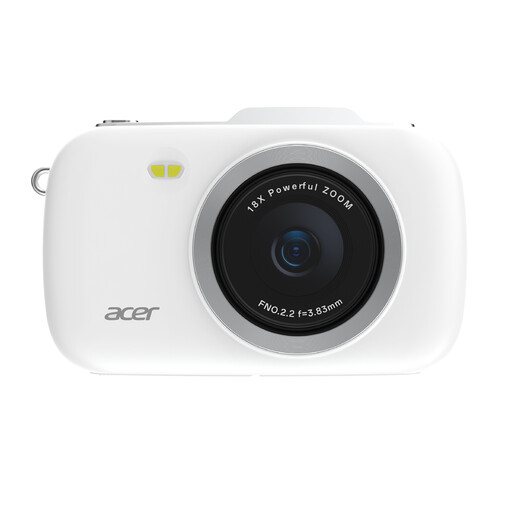
KOMERY G7-A 4K digital camera, white

KOMERY G7-A 4K digital camera

Take a test shot to see whether this digital camera captures the smallest details of your components clearly enough.

The product name mentions 80 MP, 18× zoom and the colour white.

Joybuy
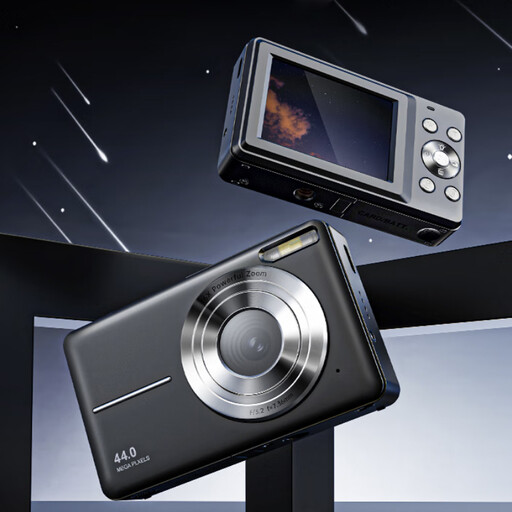
Songdian Pocket Camera 4K, black

Songdian Pocket Camera 4K

Take a test shot to check whether the pocket camera is suitable for the details you want to show in your product photos.

The product name mentions 44 MP, 16× zoom and the colour black.

Joybuy
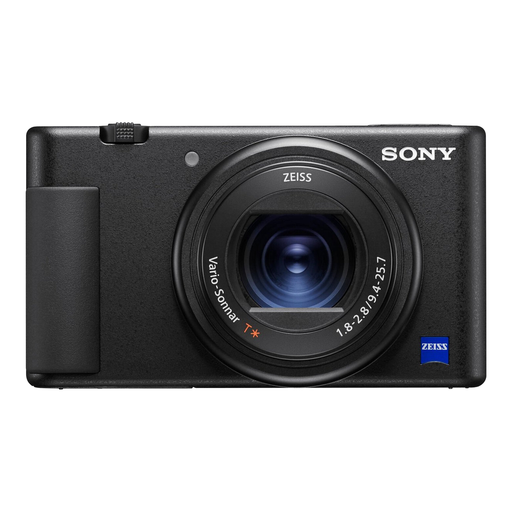
Sony ZV-1 compact camera

Sony ZV-1 compact camera

Take a test shot to see whether this compact camera shows the smallest sales-relevant detail clearly enough.

Joybuy
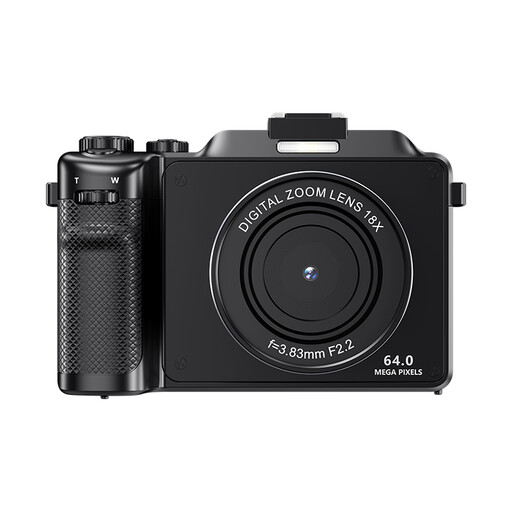
Komery X9 4K digital camera, black

Komery X9 4K digital camera

Take a test shot to check whether this camera is suitable for the small details you want to photograph.

The product name mentions 64 MP and 18× digital zoom. The product description warns that digital zoom reduces image quality.

Joybuy

Frequently asked questions

Do I always need a separate macro lens?

No, not with every camera set-up. According to the manufacturer, the OM SYSTEM TG-7 has a built-in microscope mode; with a system camera, close-up photography depends on the exact lens. Compare the kit contents with the lens you need, then take a test shot of the smallest component.

How can I keep photos of successive components consistent?

Use a stable camera position and keep the background, framing and light position as consistent as possible. MPB describes a tripod as a way to maintain the composition while you adjust the subject or lighting.

What should I consider besides the camera body?

Check the exact kit contents and see whether you also need a macro lens, a stable set-up or lighting. Ondernemersplein distinguishes between consumer rights and terms for business sales when it comes to warranties, so bear in mind the capacity in which you are buying.

Can I use product photos from another website in my online shop?

Not necessarily. KVK states that photos are automatically protected by copyright, so check that you have permission or an applicable licence. Taking your own photos avoids using someone else’s image, but they must still represent the product on offer accurately.

What product information should my online shop show alongside the photo?

According to Ondernemersplein, you must give customers clear and accurate information before they order, including product features, price and additional costs. Make sure the photo doesn’t give a misleading impression of the version on offer or the components included.
