
Photographers with a fixed badge setup
You photograph small objects on a tripod and want to avoid touching the camera for every shot. Canon Netherlands describes remote control as a way to avoid touching the camera when taking a picture.


For badge photos taken with your camera fixed on a tripod, a wired shutter release is a sensible choice if the connector is compatible with your exact camera model. It lets you take a shot without touching the camera. If you want to stay at your workbench while arranging badges, compare a compatible wireless shutter release with control through your camera app. Choose an intervalometer only if you want to schedule shots. None of these options replaces a stable setup, and compatibility varies by model.
You photograph small objects on a tripod and want to avoid touching the camera for every shot. Canon Netherlands describes remote control as a way to avoid touching the camera when taking a picture.
You want to take pictures from your workbench while the camera stays in place. Compare a compatible wireless shutter release with the app controls available for your camera.
You want to set a delay or intervals, so you need more than a simple shutter button. Check both camera compatibility and the power supply required.
First, check your exact camera model and its connector. Then see whether an existing camera app supports the way you work; choose a programmable shutter release only if you need the extra features.
| What to consider | What to check before buying | Who is this important for? |
|---|---|---|
| Compatibility | Check the full camera model, connector type and any adapter requirements. | If I’m considering a cable, it needs to fit my exact camera so I can release the shutter. Compatibility is the top priority for around 31% of consumers. |
| Taking pictures without touching the camera | Check that the shutter release works with your camera and that a cable will reach from where you work. | I don’t want to disturb my fixed close-up composition by pressing the shutter button on the camera. Around 25% of consumers prioritise taking pictures without touching the camera. |
| Freedom to move around | Check the compatibility and connection of a wireless shutter release or camera app. | When I’m rearranging badges, I want to take pictures from my workbench without having to keep walking over to the tripod. Freedom to move around is the top priority for around 19% of consumers. |
| Scheduled shots | Check that the shutter release offers the delay and intervals you need, works with your camera and uses the right power supply. JJC specifies two AAA batteries for the TM-C. | If I want to take a series of shots at set intervals, I need programmable features rather than just a standard shutter button. Around 13% of consumers prioritise these features. |
| No extra accessory | Check that the manufacturer’s app supports your camera and phone, and try controlling the camera with it before choosing anything extra. | I want to find out whether my existing camera app can control the camera remotely, so I don’t buy a separate shutter release unnecessarily. Around 12% of consumers prioritise avoiding an extra accessory. |
Connectors and compatibility can vary by model. For example, FUJIFILM specifies particular adapter requirements for certain cameras when using the RR-100.
Before buying, check the full camera model, connector type and any compatibility notes.
Canon Camera Connect and Nikon SnapBridge offer remote control for equipment supported by the respective app.
Try the app with your camera and phone first, then compare how it works with a cable or separate wireless shutter release.
An intervalometer adds programmable features that you don’t need if you simply want to press the shutter button yourself.
Decide whether you need a delay, intervals or a set number of shots, then check compatibility.
Canon offers wired and wireless shutter releases, as well as an app for compatible cameras.
Nikon describes wired and wireless control options for specific camera models.
The RR-100 is a wired shutter release for the camera models specified by FUJIFILM.
The RM-VPR1 is a wired option to compare if your camera model supports the connector.
The TM-C combines a wired shutter release with programmable timer functions.
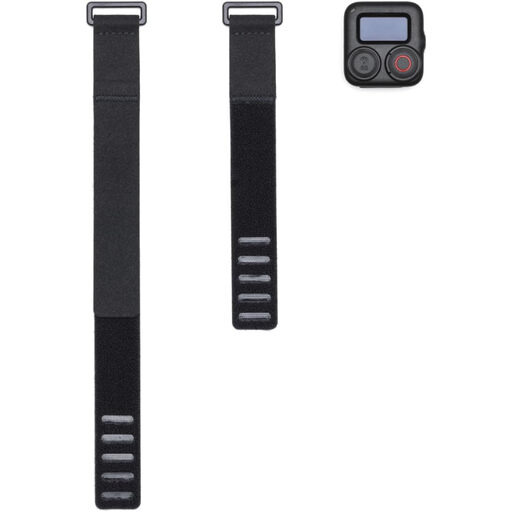
This Joybuy pick is a Bluetooth remote control described in the product title as being for the listed Osmo cameras; check that your camera is one of these models.
 No image available
Designed for use with one of the models listed in the product title: Osmo Action 4, Osmo Action 5 Pro, Osmo 360 or Osmo Action 6.
The product title specifies Bluetooth control and compatibility with these listed models.
No. First check whether your camera and phone support remote control through the manufacturer’s app. Canon Camera Connect and Nikon SnapBridge offer this option for compatible equipment; a cable or separate wireless button may suit a different way of working better.
No. Compare the full camera model, the specified connector type and the manufacturer’s compatibility information. For example, FUJIFILM specifies a separate adapter for certain cameras when using the RR-100.
First check that the version you choose works with your camera. JJC lists adjustable delays, intervals and shot counts among the TM-C’s features; the product information specifies two AAA batteries.
For online consumer purchases in the Netherlands, you generally have a statutory 14-day cooling-off period after delivery, subject to legal exceptions. The product must also meet what you could reasonably expect; ACM ConsuWijzer explains that there is no single fixed statutory guarantee period for all products.
Take used batteries to a shop or supermarket that sells batteries. The Dutch government lists these shops and supermarkets as collection points.