
Catalogue photographer
You photograph complete invitations repeatedly and want to be able to recreate an overhead shot.


If you mainly photograph complete invitations, choose a camera and lens combination that can frame the whole card from the height available to you, and make sure your setup is stable and the lighting is easy to control. For small print details, the included lens’s focusing distance and magnification are key: Canon lists a maximum magnification of 0.16× with autofocus at 45 mm for the RF-S 18-45mm. Take a test shot under your usual workspace lighting to assess the colour and reflections.
You photograph complete invitations repeatedly and want to be able to recreate an overhead shot.
You want to show small lettering, embossing or paper texture on its own. The lens and shooting distance are important considerations.
You want different users to be able to set up the same arrangement again and account for changing workspace lighting.
Choose this when: you usually photograph a complete invitation or several cards, and the lens can frame them from your working height.
Consider: check what’s included in the kit and test whether the lens focuses as needed at your shooting distance.
Choose this when: you need a small print or paper detail to appear large in the frame and the standard zoom isn’t up to the job.
Consider: check the lens mount, working distance and lighting. A different lens may mean extra cost and setup.
Choose this when: your current device already captures the detail you need, but framing or lighting varies from one shot to the next.
Consider: test your own sample shots to make sure the resolution is suitable for the end use before replacing your equipment.
Adobe highlights good lighting and a stable mount for overhead photos, while Adobe Blog recommends matching the white balance to your lighting. So assess your complete setup first, then decide which camera specifications will make a difference to your work.
| What to consider | What should you check? | Who should give this more weight? |
|---|---|---|
| Colour and reflections | Take a test shot under the lighting you plan to use, then compare the colour and sheen with the invitation. | If I want to reduce colour differences between sessions, I test the lighting and white balance together. Around 33% of consumers prioritise consistent colour and manageable reflections. |
| Framing the whole card | Measure the available shooting height and test whether the largest card fits in the frame straight and clearly. | If I photograph complete cards, I want to fit them into a single frame from my regular workspace. Around 27% of consumers prioritise showing the entire invitation. |
| Small print details | Check the exact lens’s magnification and focusing distance in the focus mode you plan to use. | For small lettering or paper texture, I want to know whether the lens can capture the detail clearly and at a large enough size. Around 20% of consumers put print details first. |
| Recreating a shared setup | Record the shooting height, card position and lighting, and take a test shot whenever the lighting setup changes. | If several people use the same photo space, I want them to be able to recreate the settings and framing. Around 20% of consumers place the greatest importance on a shared setup that can be repeated. |
Choosing a camera body with more megapixels won’t, by itself, fix a crooked overhead photo or inconsistent lighting.
Test the framing and lighting with one of your own invitations before comparing cameras.
The magnification of the Canon RF-S 18-45mm varies with focal length and focus mode. Its stated figure doesn’t guarantee that every print detail you want to show will fill the frame.
Decide on the smallest detail you want to show and test it with the exact lens before choosing a kit.
According to the Government of the Netherlands, there is no fixed statutory warranty period in the Netherlands. Your right to a product that meets expectations is separate from any additional manufacturer’s warranty.
Keep your purchase information and contact the seller if something is wrong. Also check the terms of any manufacturer’s warranty separately.
The Dutch EOS R50 kit with RF-S 18-45mm is a specific combination to consider for photographing complete cards.
The Z50II kit reviewed includes 16-50mm and 50-250mm zoom lenses.
The α6400 is described both as a body-only option and as an ILCE-6400L kit with a 16-50mm zoom lens.
The X-S20 is an option if you want to choose your own lens and RAW workflow.
The selection below includes compact DJI Osmo Pocket cameras and a Songdian digital camera to consider for still invitation photos. For each model, check whether you can set it up securely at your working height and whether it can capture the card or detail you want in focus.
 No image available
The product description mentions photographing still subjects and using a tripod. Consider whether the setup suits your workspace.
The description lists a 1-inch CMOS sensor, a rotating touchscreen and mechanical 3-axis stabilisation.
 No image available
The product description mentions a camera for content creation. Test it with an invitation to see whether the fixed setup and focusing suit your needs.
The description lists a 1-inch CMOS sensor and a 20 mm f/2.0 wide-angle lens.
 No image available
The product description mentions photography and a wide composition. Test whether the lens can capture your complete invitation from the height available.
The description lists a 1-inch CMOS sensor and a 20 mm f/2.0 wide-angle lens. It also mentions 4K video and a 2-inch rotating screen.
 No image available
The description mentions a compact camera with gimbal stabilisation. Test the framing and focus you need using one of your own invitations.
The product name lists a 1-inch CMOS sensor, 4K/240fps, 2× zoom, 107 GB of built-in storage and a 2-inch rotating screen.
 No image available
The product description mentions autofocus and manual focus. Check which mode works for the detail you want to photograph.
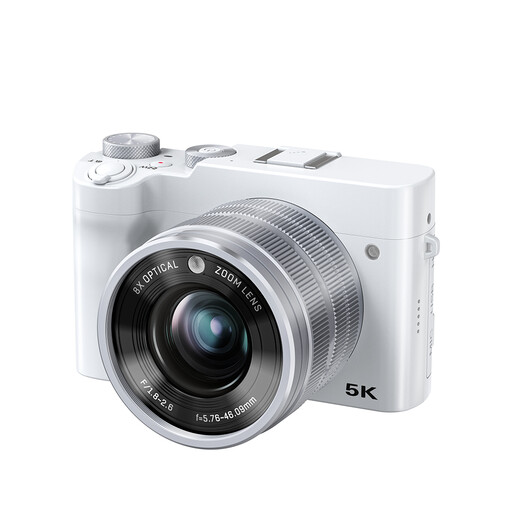
The product information lists 64 MP photos and 8× optical zoom.
Lay the card flat, hold the camera steady above it and test whether the whole card fits in the frame from the height available. Adobe highlights good lighting and a stable mount for overhead photos.
Take a test shot under the lighting you actually use and adjust the white balance to match. Assess glossy print separately, as white balance won’t remove reflections.
No. Check the exact kit contents and lens specifications. The Canon R50 kit reviewed includes an RF-S 18-45mm; Canon lists different maximum magnifications for that lens with autofocus and manual focus.
No. The Government of the Netherlands says there is no fixed statutory warranty period in the Netherlands: you are entitled to a product that meets expectations for the length of time you can reasonably expect it to last. If something is wrong, contact the seller; check the terms of any manufacturer’s warranty separately.
Identifiable people in photos count as personal data. According to the Dutch Data Protection Authority, the GDPR applies when such images are processed. Where possible, frame colleagues out of the shot. If someone is identifiable, assess which lawful basis and information obligations apply before processing or publishing the image.