If you want to photograph an entire seed pod, a camera with a standard zoom lens may be enough. For very small seeds, the magnification of the specific lens is what matters most. A compact camera with a built-in macro mode means you won’t need to change lenses, while a mirrorless camera gives you a choice of lenses. Check what’s included in the kit and the working distance. For still subjects, use a stable support if needed: Canon Europe recommends one for close-ups of still-life subjects.
Who is this choice for?
Seed detail photographers
If you want to capture tiny seeds and surface textures in close detail, compare the magnification and working distance of the specific lens, not just the camera body. Canon Netherlands and Nikon Netherlands list these lens specifications for individual lenses.
Photographers capturing whole seed pods in window light
If you want to capture the shape, shadows and texture of a still seed pod, you can support the camera if the desired sharpness requires a longer exposure. Canon Europe recommends a tripod or other support for close-ups of still subjects.
Beginners who don’t want to choose a separate lens
If you want to start taking close-ups without changing lenses, look for a built-in macro mode and check whether it gives you the framing you want. OM SYSTEM describes a Microscope mode on the TG-7.
Which purchase concerns matter?
Start by considering how large you want the subject to appear in the frame. Then think about the window light, the controls you want and the lens supplied with the camera.
| What to consider |
What to look for when buying |
Who this matters most to |
| Filling the frame with small seeds |
Compare the maximum magnification of the specific lens and its working distance. Canon Netherlands lists a maximum of 0.25× for the RF-S 18-45mm in manual focus mode; Nikon Netherlands lists 1:1 for the separate Z MC 50mm f/2.8. |
If I want to fill the frame with small seeds, I look at the lens and how much room it leaves in front of the subject. Around 33% of consumers prioritise magnification. |
| Sharpness in window light |
Check whether you can adjust the camera settings and set the camera up securely; use test shots to see which areas are in focus. Canon Europe recommends a tripod or other support for close-ups of still subjects. |
If I want to get several parts of a still seed pod in focus in available window light, a stable set-up matters. Around 25% of consumers prioritise sharpness and exposure. |
| Taking photos without changing lenses |
With a compact camera, check its macro mode and the framing it can achieve; with a mirrorless camera, check which lens is actually included in the kit. The Consumentenbond explains that a compact camera has a fixed lens. |
If I want to get started without choosing a separate lens, the built-in capability is my first consideration. Around 25% of consumers prioritise ease of use. |
| Whether you’ll need an additional lens |
Check what’s included in the kit and whether any macro lens you might buy is compatible with the camera body. A standard zoom lens isn’t automatically a 1:1 macro lens. |
If I want to avoid needing another lens later for small details, I compare complete kits with compatible components. Around 17% of consumers prioritise their expansion needs. |
Which mistakes can you avoid?
-
Assuming every lens labelled ‘macro’ offers the same magnification
According to Canon, the Canon RF-S 18-45mm achieves a maximum of 0.25× in manual focus mode. Nikon lists 1:1 for a separate macro lens; that specification doesn’t automatically apply to a standard kit lens.
Before you buy, compare the magnification of the lens actually included with your chosen model against the size of the detail you want to photograph.
You may need a separate, compatible macro lens to achieve the magnification you want.
-
Confusing focusing distance with working distance
For the Sony SEL30M35, Sony lists a minimum focusing distance of 9.5 cm from the sensor and a working distance of around 2 cm from the front of the lens. This difference affects how much room you have for the subject and the window light.
Check the working distance at the magnification you want to use, not just the minimum focusing distance.
-
Relying on image stabilisation instead of a stable set-up
Depth of field is shallow when shooting close-ups. Canon Europe recommends a tripod or other support for close-ups of still subjects, especially when your set-up calls for a longer exposure.
Take test shots of a still seed pod and support the camera if needed to get the areas you want in focus.
A tripod or other stable camera support may be part of your set-up.
Which camera brands are worth considering?
OM SYSTEM
According to OM SYSTEM, the TG-7 offers a compact option with a fixed lens and built-in Microscope mode.
- OM SYSTEM lists a Microscope mode on the TG-7. For its separate micro adventure kit, the brand specifies focusing from 1 cm in this mode.
- The 1 cm figure applies to Microscope mode and the named kit, which also includes an LG-1 light guide; that kit contents don’t automatically come with every TG-7 sold on its own. The fixed lens limits your choice of lenses.
Canon
The EOS R50 kit with the RF-S 18-45mm is a mirrorless camera option for whole seed pods and larger details; you can change the lens later.
- Canon lists a maximum magnification of 0.25× for the RF-S 18-45mm in manual focus mode. Canon states that the separate RF 85mm F2 Macro IS STM is compatible with the EOS R50 and offers 0.5× magnification.
- The features of the separate RF 85mm don’t automatically apply to the standard kit. According to Canon, the lens doesn’t offer 1:1 magnification.
Nikon
The Z50II is compatible with Z series lenses; the NIKKOR Z MC 50mm f/2.8 is a separate option for 1:1 macro photography.
- Nikon lists 1:1 magnification for the NIKKOR Z MC 50mm f/2.8 and a working distance of around 5 cm at the minimum focusing distance.
- The standard Z50II kit includes the Z DX 16-50mm zoom, not the separate macro lens. The space in front of the macro lens may affect where you place the window light.
Sony
Sony offers an E-mount option with the separate SEL30M35 macro lens; check that the body and lens together suit the set-up you want.
- Sony describes the SEL30M35 as a 1:1 macro lens.
- Sony lists a working distance of around 2 cm from the front of the lens at the minimum focusing distance. This may leave little room for window light in front of the subject.
Joybuy products
This selection includes vlogging cameras and mirrorless cameras. Check that the lens and close-up capabilities of each version suit the subject you want to photograph.
 No image available
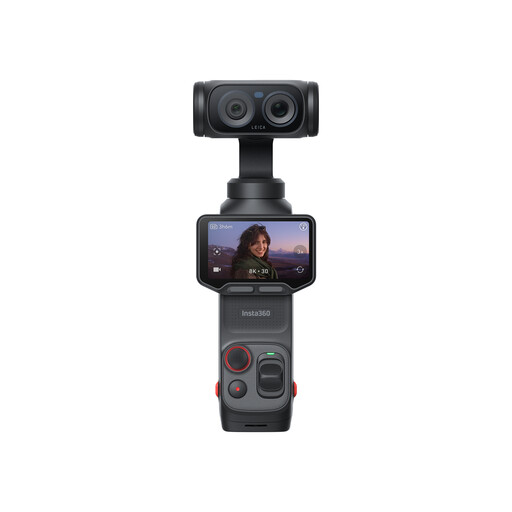
Insta360 Luna Ultra Standard Bundle Cosmic Black
Check that this version’s close-up capabilities suit the size of the seeds or seed pods you want to photograph.
Joybuy
 No image available
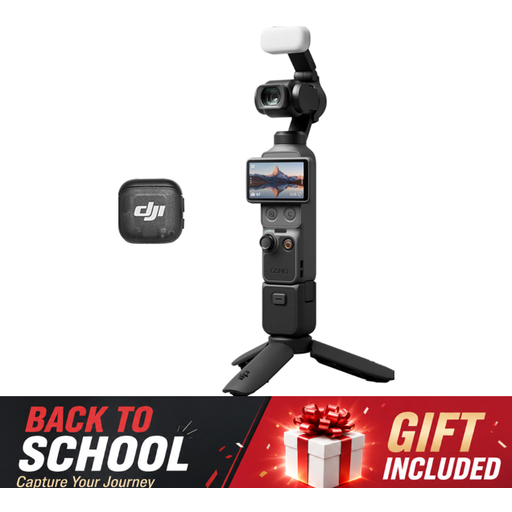
DJI Osmo Pocket 3 Creator Combo
Check whether this vlogging camera is suitable for the close-up you want and the distance from the seed pod.
The product name lists a 1-inch CMOS sensor, 4K/120fps video, 3-axis stabilisation and an included microphone.
Joybuy
 No image available
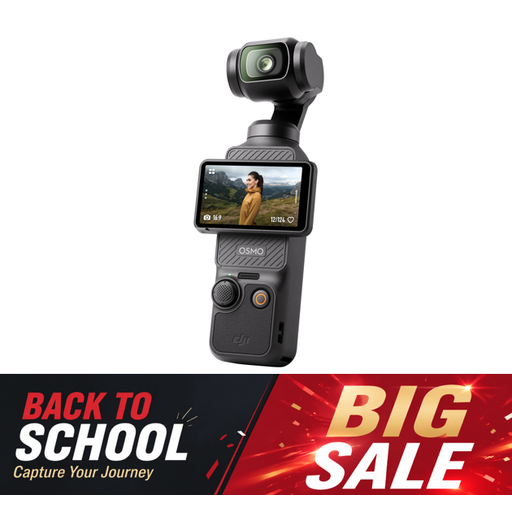
DJI Osmo Pocket 3
Check whether this camera offers the close-up capabilities you need for small seeds or whole seed pods.
The product name lists a 1-inch CMOS sensor, 4K/120fps video, 3-axis stabilisation and a rotatable touchscreen.
Joybuy
 No image available
Sony ZV-E10 + 16-50mm Zoom Black
This mirrorless camera kit includes a lens; check that its magnification and working distance suit your close-up shots.
The product name lists an E PZ 16-50mm zoom lens.
Joybuy
 No image available
Sony ZV-E10 Mirrorless Vlogging Camera - Body Only
This version may suit you if you want to choose a compatible Sony E-mount lens yourself; check in advance which lens you’ll need for close-ups.
The product name specifies body only: no lens is included.
Joybuy
Frequently asked questions
Do I need a 1:1 macro lens for every seed pod?
No. Lower magnification may be enough for a whole seed pod or a larger detail. For very small seeds, compare the magnification of the specific lens: Canon lists a maximum of 0.25× for the RF-S 18-45mm in manual focus mode, while Nikon lists 1:1 for the separate Z MC 50mm f/2.8.
How can I avoid blurry photos in limited window light?
For a still subject, use a tripod or other stable support if needed. Take test shots with different aperture settings and check which parts of the seed pod are in focus; depth of field is shallow when shooting close-ups. Canon Europe recommends stable support for close-ups of still subjects.
What should I check when buying a camera kit or an upgrade?
Check what’s included in the kit, whether the lens is suitable and whether you need any additional accessories. The Consumentenbond lists an extra battery and SD memory card as things to consider; whether you need them depends on what the offer includes and how you plan to use the camera.
What are my returns and warranty rights when buying online in the Netherlands?
According to the Dutch government, when you buy from a business at a distance, you will often have a 14-day cooling-off period; check whether it applies to your purchase. There is no fixed statutory warranty period in the Netherlands: you are entitled to a product that works properly, and the seller is your point of contact if something is wrong. A manufacturer’s warranty is in addition to this.


