
Seller of books showing visible signs of wear
You want to show wear, tears or texture separately, as well as the full cover. In that case, the lens and shooting distance matter just as much as the camera body.


Start by considering the smallest sign of wear you want to show and how much room you have to photograph the book from above. A compact camera with a macro mode keeps lens choices simple. With a mirrorless camera, you can choose a suitable macro lens later, but check whether it’s actually included in the kit. With either option, even lighting and suitable support are important, especially for delicate books.
You want to show wear, tears or texture separately, as well as the full cover. In that case, the lens and shooting distance matter just as much as the camera body.
You’ll benefit most from a repeatable overhead set-up, even lighting and a workflow that avoids putting unnecessary strain on the books.
You want to show the condition of the binding and pages without pressing a fragile spine flat for the photo. The Library of Congress emphasises minimising risks to materials during digitisation.
Suitable if: you want to photograph covers and individual marks without changing lenses, and the shooting distance works for your set-up.
Trade-off: a fixed lens keeps your kit simple, but limits your options for magnification and working distance later on.
Suitable if: you mainly photograph complete covers and spines from a fixed set-up, and might want to add a close-up lens later.
Trade-off: the camera sensor alone won’t tell you whether the included lens can show small areas of damage clearly enough.
Suitable if: you regularly take separate photos of wear, texture or small printed details.
Trade-off: check whether the lens is included and whether there’s room for lighting at your chosen working distance.
| What to consider | What to look for | Who should pay particular attention? |
|---|---|---|
| Small surface marks | Check the magnification of the exact lens, the working distance and a test shot of the smallest relevant flaw. | I want to show a small scratch or area of damage separately, rather than just photograph the whole cover; around 33% of consumers prioritise details like these. |
| Repeatable book set-up | Check that the angle of view and distance work for the largest book, and that you can use stable, suitable support. | If I’m photographing lots of books in a row, I want consistent framing without pressing a delicate binding flat; around 27% of consumers prioritise a repeatable workflow. |
| Colour and surface | Check which file formats the exact model offers, and assess a test shot under the lighting you plan to use. | I want to capture cover colours and surfaces under comparable conditions; around 20% of consumers prioritise how these are rendered. |
| Complete kit | Check what’s included in the offer and whether you’ll need a suitable lens or support for the close-ups you want. | I want to know in advance which components I’ll need for my set-up, rather than just looking at the camera body; around 20% of consumers prioritise the overall kit contents. |
Magnification figures apply to specific lenses, not automatically to a camera body or kit zoom lens.
Before choosing a kit, check the exact lens, mount and a test shot of a small flaw.
A suitable macro lens may be a separate item in the kit.
Focusing distance is measured from the camera; working distance is the clear space in front of the lens. Sony gives an approximate working distance of 2 cm for the separate SEL30M35 lens.
Check that there’s room to position lighting at the magnification you want without touching or obscuring the book.
Pressure on a fragile spine or page can damage the book. The Library of Congress advises considering the risks to materials during digitisation.
Choose support and an opening angle to suit the book’s condition, and don’t apply pressure to flatten it.
The EOS R50 has an RF mount and can be used with RF and RF-S lenses.
The Z50II uses the Z mount; the macro option mentioned is a separate lens.
The ZV-E10 uses an E mount and can be paired with a separate E-mount macro lens.
The X-M5 uses the X mount and can be paired with a separate macro lens.
The Tough TG-7 has a fixed lens and macro modes for close-ups, so you don’t need to put together an interchangeable-lens system.
For these cameras, check which features are listed in the product title, then take a test shot to see whether the smallest relevant mark is in focus and large enough in the frame.
 No image available
Take a test shot to check whether the camera can capture both the full cover and the smallest relevant sign of wear.
The product title lists 64 MP, a 330° rotating lens, a 1.72-inch touchscreen, face recognition, a tripod and Type-C.
 No image available
Take a test shot to assess whether this camera suits the distance and level of detail you want for your book photos.
The product title lists a 1-inch CMOS sensor, 4K/240fps video, 3-axis stabilisation, 2× zoom, 107 GB of built-in storage and a 2-inch rotating screen.
 No image available
Take a test shot to check whether the camera can capture the whole book and its smallest details in focus in your set-up.
The product title lists a 1-inch CMOS sensor, 4K/120fps video, 3-axis stabilisation, fast focusing and an included microphone.
 No image available
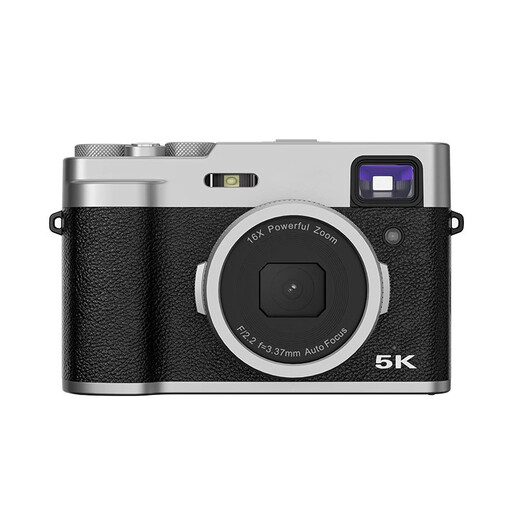
Take a test shot to see whether the camera can capture both a complete cover and a small sign of wear.
The product title lists 48 MP, autofocus, 5K, a 2.8-inch LCD screen and an optical viewfinder.
 No image available
Take a test shot to check whether the included zoom lens shows the smallest relevant book detail large enough in the frame.
The product title lists a Sony ZV-E10 with a 16–50mm zoom lens; the product description specifies a 24.2 MP APS-C sensor.
Not necessarily. First check whether the chosen lens can show the flaw large enough in the frame, and whether you can focus and light the subject at that distance. The macro magnification figures quoted apply to specific lenses, not to the camera body.
Choose support and an opening angle to suit the book’s condition. The Library of Congress highlights the need to minimise risks during digitisation; the Met library describes a V-shaped support for books that require careful handling.
Start by taking a test shot at the distance you’ll actually use. For a subject with depth, you can combine several shots taken at different focus points. This means taking extra shots and may require post-processing, and not every camera model has the same features.
For a standard online consumer purchase, ACM ConsuWijzer says you generally have a statutory 14-day cooling-off period from delivery, subject to applicable exceptions. You also have a statutory right to a product that meets what you could reasonably expect, so the warranty isn’t automatically limited to a fixed two-year period. Assess business purchases separately.
No. Taking a photo doesn’t automatically give you permission to make copyright-protected material available to the public. The Dutch Government distinguishes between a private copy for personal use and distributing or publishing material. Whether you can use a particular cover or page photo in a sales listing depends on how it’s used and the rights involved.