
Photographing craftspeople at work
You want recognisable portraits and sharp pictures of hands at work. So, before focusing on zoom, consider the autofocus, shutter speed and available light.


You don’t automatically need a separate camera. First, take some test shots with the equipment you already have and see whether you can capture portraits, moving hands and the smallest detail you need clearly. For movement, shutter speed and light matter; for fine details, the lens largely determines how close you can focus and how large the subject appears in the frame. A compact camera keeps your kit simple, while a mirrorless camera gives you more choice of lenses – but the supplied lens won’t necessarily be suitable for macro photography.
You want recognisable portraits and sharp pictures of hands at work. So, before focusing on zoom, consider the autofocus, shutter speed and available light.
Your assignment focuses on small joins, stitches or textures. The magnification and minimum focusing distance of the actual lens both affect how clearly these details appear in your pictures.
You don’t want to carry unnecessary equipment for a specific assignment. First, see whether a camera you already own or a compact model will do the job.
Start by taking test shots of a portrait, a working activity and the smallest detail you need to capture. Then decide which camera and lens can deliver the results you want, taking the lighting and the amount of equipment you’re willing to carry into account.
| What to consider | What to look for | Who is this important for? |
|---|---|---|
| Moving craftspeople and hands | Check the adjustable shutter speed and focusing options. If possible, take a test shot of a similar activity. | If I want to capture hands at work sharply, I need to consider movement and focusing. Around 37% of consumers are most concerned about moving craftspeople and hands. |
| Small details and textures | Compare the magnification and minimum focusing distance of the exact lens or camera, not just the camera body’s resolution. | When small stitches, engravings or material textures are the focus, I want to know whether the lens can focus close enough. Around 27% of consumers prioritise these details. |
| Low light in the workspace | Check the maximum aperture of the supplied lens and test the combination in similar lighting. | If the workspace is dark, I want usable pictures – while remembering that moving hands also require an appropriate shutter speed. Lighting is the main consideration for around 18% of consumers. |
| Keeping things simple for one assignment | Test the equipment you have, then check exactly which lens and accessories are included in any kit you’re considering. | For a short school assignment, I don’t want to carry more than I need, and I want to know first whether my current equipment will do. Around 18% of consumers prioritise simplicity and a smaller kit. |
The size of a small detail in the frame also depends on the lens. According to Canon, the Canon RF-S 18-45mm kit lens has a maximum magnification of 0.16× at 45 mm when using autofocus.
Compare the magnification and minimum focusing distance of the exact supplied lens with the detail you want to photograph.
Very small details may require a different, suitable lens, which won’t necessarily be included with the camera kit.
Image stabilisation can help reduce camera shake, but it won’t prevent moving hands from appearing blurred. Shutter speed is still important.
Test a real working activity in similar lighting and check that the shutter speed is fast enough for the movement.
With a mirrorless camera, the supplied lens affects what you can photograph straight away. A compact camera has a fixed lens, while a mirrorless camera may not come with the lens you need for small details.
Check everything included in the kit and work out what equipment your assignment actually requires.
A separate lens, memory card or spare battery may mean you have more items to arrange and carry.
Consumentenbond states that its camera test is out of date and was last updated on 9 October 2025. The order of the test results should therefore not be taken as a current ranking of models.
When looking at test results, check when the original testing took place and verify the exact model and kit separately.
The EOS R50 with an RF-S standard zoom is a mirrorless camera kit for portraits and wider shots.
The Z50II kit with a NIKKOR Z DX 16-50mm is a mirrorless camera option supplied with a standard zoom lens.
The ZV-E10 II kit with an E PZ 16-50mm OSS II is an option if you want to film the creative process as well as take photos.
The Tough TG-7 is a compact camera option with a fixed lens and a built-in close-up function.
These cameras at Joybuy are suited to photographing craftspeople and their work. The selection includes mirrorless cameras with zoom lenses as well as compact cameras.
 Image unavailable
The product title describes this camera as suitable for beginners. Take some test shots to see whether it works for the portraits and details in your assignment.
The title lists 5K, 80MP UHD and 18X zoom. Check which zoom and resolution claims are relevant to how you’ll use it.
 Image unavailable
The product title describes this model as a vlogging camera. See whether its features suit an assignment where you also want to film the creative process.
The title lists a 1-inch CMOS sensor, 4K/120fps video, 3-axis stabilisation and a 2-inch rotating touchscreen.
 Image unavailable
The supplied zoom lens lets you adjust your framing. Test whether the kit lens can focus close enough for the smallest subject you need to photograph.
The product title lists a Sony ZV-E10 with a 16–50mm zoom lens.
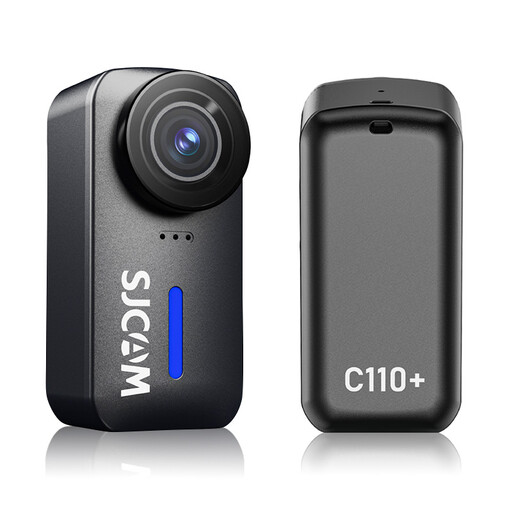 Image unavailable
If you’re considering a compact action camera, take some test shots to see whether its very wide angle of view works for portraits and workpieces.
The product title lists a 170° field of view, an f/1.8 aperture and 20MP photos.
 Image unavailable
The supplied zoom lens gives you room to adjust your framing. Check whether it can focus close enough to capture the details in your assignment.
The product title lists a 16–50mm f/3.5–5.6 OSS II lens.
Not necessarily. First, use the equipment available to take test shots of a portrait, moving hands and the smallest detail you need to include in your report. If the results meet the assignment’s requirements, you won’t necessarily need a new camera.
A stable setup can reduce camera shake, but it won’t prevent blur caused by moving hands. Adjust the shutter speed to suit the movement and check that there’s enough light at that speed.
Check which lens is actually included in the kit and whether it can capture the smallest detail in your assignment. A macro lens and other accessories aren’t automatically included, so consider the complete kit you’ll need.
Contact the seller. According to the Dutch government, there’s no fixed statutory warranty period for all products in the Netherlands; your statutory rights entitle you to a product that works as it should. Any manufacturer’s warranty is in addition to these rights.
Permission is required before publishing. According to the Dutch Data Protection Authority, the school must ask parents for permission for pupils under 16; pupils aged 16 and over give permission themselves. The school must also keep the images secure.
Not necessarily: the rules for pupils don’t automatically apply to adult craftspeople. According to the Dutch Data Protection Authority, it matters who takes the pictures and whether they’re kept private or shared more widely. Discuss how the images will be used with the craftsperson and the school before publishing identifiable photos.