What should you look for when choosing?
First decide whether you’ll mostly be taking handheld photos as you walk, or whether you want to control the composition and shutter speed deliberately. Then compare the lens, stabilisation and protection for the conditions in which you’ll use the camera.
| What to consider |
What should you check? |
Who should pay particular attention? |
| Details in the sky and skyline |
Check RAW capture and exposure controls; assess whether the bright sky is captured well. |
If I want to balance a bright sky and dark buildings later, I look for RAW and exposure control. Around 28% of consumers give tone control top priority. |
| Skyline and river in the frame |
Check the lens mount, the included lens and the angle of view you need. |
If you want to fit buildings, riverbank and water into the frame together, focus on your lens choice and angle of view. Around 22% of consumers prioritise framing. |
| Taking photos without a tripod |
Compare the weight of the body and lens, and check whether stabilisation is in the body, the lens or both. |
For walks along the quay, a portable kit that you can use handheld is important. Around 22% of consumers give mobile photography top priority. |
| Movement in the water |
Check whether you can set the shutter speed and use a stable setup safely. |
If I want to deliberately blur moving river water, I look for shutter speed control and a stable camera. Around 17% of consumers prioritise capturing movement in water. |
| Protection in the rain |
Check the usage conditions and protection claims for both the body and lens. |
If you want to take photos when rain is possible, check the protection offered by the complete kit. Around 11% of consumers give rain protection top priority. |
Joybuy camera for photography
This Joybuy pick is a compact camera that, according to its product name, is also intended for photography. Check that its angle of view and controls suit your skyline shots.
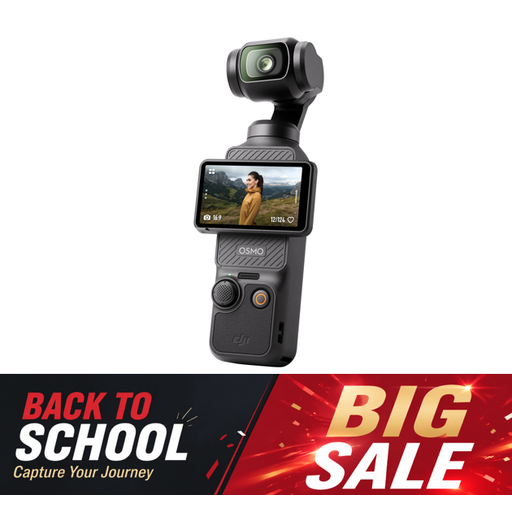 No image available
DJI Osmo Pocket 3
A compact camera option if you’re also looking for photography features. Check in advance that the controls and angle of view suit your composition.
Product name: 1-inch CMOS sensor and 4K/120fps video.
Weight: 179 g. The product information lists mechanical 3-axis stabilisation.
View at Joybuy
Frequently asked questions
Do you always need a tripod for a cloudy skyline?
No, you don’t always need a tripod for everyday handheld shots. Stabilisation can help counter camera movement; for a slow shutter speed that blurs river water, a stable setup is more suitable.
What should you adjust first when the sky is much brighter than the buildings?
Assess the exposure of the sky and, if needed, shoot in RAW as well so you can adjust the tones later. RAW gives you room to edit an image, but it doesn’t replace a carefully exposed shot.
What should you do after taking photos by the river?
Store a camera that has become damp somewhere dry, and follow the usage instructions for the specific body and lens. Don’t assume that a claim covering the body alone means the camera is protected against every amount of water.
What are your rights when buying a camera from a Dutch retailer?
According to the Dutch government, you’re entitled to a product that meets the terms of the agreement; if there’s a fault, the seller must provide a solution. For distance purchases, you’re often entitled to a 14-day cooling-off period. Check the terms that apply to your specific purchase.
Can you publish a skyline photo featuring recognisable passers-by in public?
First check which privacy rules apply to the publication. The Dutch Data Protection Authority considers recognisable people to be personal data; the exception for personal or household use doesn’t automatically apply to public publication or commercial use.


