Start with the smallest detail you need to show clearly in the photo, then consider how far away you’ll need to be to frame the whole radio. A compact camera with a fixed lens keeps your kit simple. With a mirrorless camera, you can choose a suitable close-up lens, but check exactly which lens comes with the kit. A stable set-up, controlled lighting and the right white balance are important with both types of camera.
Who is this choice for?
Restorer focusing on detail shots
You want to capture small lettering or finishing details clearly. So look at the camera-and-lens combination and the lens’s magnification, not just the camera body. Canon Netherlands and Nikon Netherlands provide specifications for their individual lenses.
Creator of exhibition images
You want to show the radio’s shape and colours in a clean, uncluttered image. Framing, a stable set-up and lighting all matter, as well as your choice of camera. Canon Netherlands recommends using a tripod to keep your framing consistent.
Volunteer with a simple set-up
You want to take wide shots and a few close-ups without changing lenses. A compact camera has a fixed lens, so check that it can focus closely enough at the zoom setting you want to use. Sony Netherlands lists different focusing distances for wide-angle and telephoto on the DSC-RX100M7A.
What should you look for when choosing?
Start by considering the smallest details you want to show. Then decide whether a fixed lens will suit your plans or whether you need the flexibility of interchangeable lenses.
Compact camera with fixed zoom lens
Suitable if: you mainly want to photograph the whole radio and a few larger details without changing lenses.
Bear in mind: the lens cannot be changed. Sony Netherlands gives a focusing distance of around 8 cm at the wide-angle setting and around 100 cm at the telephoto setting for the DSC-RX100M7A, measured from the front of the lens.
Mirrorless camera with standard zoom lens
Suitable if: you want to photograph the radio as a whole, with the option to choose a different lens later.
Bear in mind: a standard zoom lens isn’t automatically suitable for the smallest details. Canon Netherlands lists different maximum magnifications for the RF-S 18-45mm at different focal lengths and focusing modes.
Mirrorless camera with a separate macro lens
Suitable if: small lettering, buttons or finishes need to appear clearly in the image and you want to choose a lens specifically for the job.
Bear in mind: Canon Netherlands specifies a maximum magnification of 1:2 for the separate RF 35mm F1.8 MACRO IS STM; Nikon Netherlands lists 1:1 for the separate NIKKOR Z MC 50mm f/2.8. These figures apply to the lenses listed, not automatically to a camera body or standard kit.
| What to consider |
What to look for when buying |
Who is this important for? |
| Getting the whole radio in shot |
Check the field of view of the supplied or built-in lens at the distance available for your set-up. Also think about how to keep the camera steady. |
If I want to show the radio’s shape in one uncluttered frame, I consider the composition and the space available to position the camera. Around 31% of consumers prioritise the overall image. |
| Capturing small details clearly |
Compare the magnification of the exact lens, or the compact camera’s focusing distance at the zoom setting you want to use. Also check which lens is included in the kit. |
If small lettering or components need to remain clear, I look at the lens combination, not just the camera. Around 31% of consumers give close-up shots top priority. |
| Showing colours and finishes accurately |
Look at test shots taken in the available light. Check whether the camera offers adjustable white balance and, if you want to edit your images, RAW shooting. |
If the material’s colour and the restored finish need to remain visible, I consider the lighting and white balance. Around 23% of consumers prioritise colour reproduction. |
| A simple kit for the preparation day |
Check whether the camera is ready to use with the supplied lens. A compact camera has a fixed lens; a mirrorless camera body without a lens may need extra preparation. |
If I want to take the photos without having to choose between lots of lenses, I check whether the kit is ready to use. Around 15% of consumers prioritise keeping their equipment simple. |
Common pitfalls
-
Assuming a camera body or standard kit is a complete macro set-up
The magnification of a separate macro lens doesn’t automatically apply to the lens supplied in a kit.
Check what’s included in the kit and compare the specifications of the exact lens supplied with the smallest detail you want to photograph.
A suitable close-up lens may mean choosing an additional lens and spending more time preparing.
-
Assuming the longest zoom setting is best for close-ups
For the Sony DSC-RX100M7A, the stated minimum focusing distance ranges from around 8 cm at the wide-angle setting to around 100 cm at the telephoto setting.
Check the focusing distance and how much of the frame the detail fills at the zoom setting you plan to use.
-
Focusing only on megapixels and forgetting the set-up
Canon Netherlands says a tripod can help you keep your framing consistent. Changes in lighting can affect how colours appear.
Take test shots with the background and light source you plan to use for the exhibition before deciding whether you need a different camera.
A stable background and set-up may require extra preparation time or equipment.
Camera brands to compare
Canon
The EOS R50 is a mirrorless camera with an RF mount; the kit mentioned includes an RF-S 18-45mm lens.
- Canon Netherlands specifies a 24.2 MP APS-C sensor for the EOS R50.
- The magnification of the supplied RF-S 18-45mm lens is not the same as that of the separate RF 35mm macro lens.
Sony
The RX100 VII variant DSC-RX100M7A is a compact camera with a fixed zoom lens, for anyone who doesn’t want to change lenses.
- Sony Netherlands specifies a type 1.0 sensor of around 20.1 MP and a 24–200 mm equivalent zoom.
- The stated focusing distance differs considerably between wide-angle and telephoto, so check the setting you plan to use for close-ups.
Nikon
The Z50II is a mirrorless camera for anyone who wants to choose their own lens; the NIKKOR Z MC 50mm f/2.8 is a separate macro lens.
- Nikon Netherlands specifies 1:1 magnification for this lens and lists it as compatible with DX-format Z cameras.
- When considering a Z50II offer, check which lens is actually included in the kit.
Fujifilm
The X-M5 is a mirrorless camera with an X mount, so you can choose a suitable lens yourself.
- Fujifilm specifies a 26.1 MP APS-C sensor and RAW shooting for the X-M5.
- These body specifications don’t determine how much space a small radio component takes up in the photo; the lens you choose matters too.
Panasonic
The LUMIX DC-TZ99 is a compact camera option with a built-in zoom lens.
- Panasonic lists 30× optical zoom and Focus Stacking among this model’s features.
- Check availability and the exact version before considering this camera as an option to buy.
Cameras at Joybuy
This selection includes compact and mirrorless cameras with a standard zoom lens or body only. For each model, check whether the lens is suitable for both your desired framing and the smallest details.
 No image available
Songdian pocket camera 4K 44 MP, 16× digital zoom, pink
The product name describes this model as a pocket camera for photography; check whether its fixed lens can handle the close-up shots you want.
The product name lists 44 MP and 16× digital zoom. These are product specifications, not an independent assessment of image quality.
The product description mentions autofocus.
View at Joybuy
 No image available
Sony ZV-E10 with 16–50mm zoom lens, black
This kit includes a zoom lens; check whether it offers enough magnification for the radio’s smallest details.
The product description lists a 24.2 MP APS-C sensor and an E PZ 16–50mm lens.
The description mentions a Product Showcase setting that shifts focus from a face to an object.
View at Joybuy
 No image available
Sony Alpha A6100 with 16–50mm lens
The included kit lens is a starting point for wide shots; check its magnification and focusing distance for small radio components.
The product description lists a 24.2 MP APS-C sensor, a touchscreen and an electronic viewfinder.
The product name lists a 16–50mm lens.
View at Joybuy
 No image available
Sony ZV-E10, body only
This body-only version suits anyone who wants to choose a suitable lens themselves; you’ll need a separate lens to use the camera.
The product description lists compatibility with Sony E-mount lenses.
No lens is included.
View at Joybuy
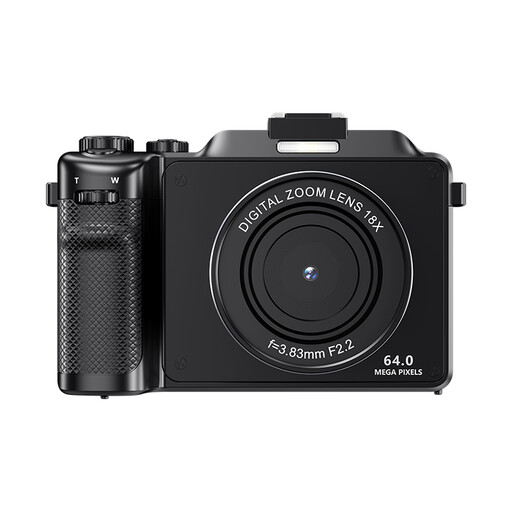 No image available
Komery X9 4K camera, 64 MP, 18× digital zoom
The product name describes this model as a compact camera; check whether its fixed lens can handle the close-ups you want.
The product name lists autofocus and 18× digital zoom.
The product description warns that digital zoom may reduce image quality.
View at Joybuy
Frequently asked questions
Do you need to buy a macro lens straight away to photograph small lettering?
Not before checking how much of the frame the smallest detail fills with your chosen lens. Canon Netherlands specifies different maximum magnifications for the RF-S 18-45mm and the separate RF 35mm macro lens; Nikon Netherlands lists 1:1 for the separate NIKKOR Z MC 50mm. Also check which lens is included in the kit.
How can you keep exhibition photos consistent?
Position the radio and camera securely, and keep the background and framing the same from one shot to the next. Check the white balance under the lighting you’re using. If your camera supports RAW shooting and you want to edit your photos, you can also adjust the white balance later.
What can you do if the camera turns out to be faulty after purchase?
For a consumer purchase in the Netherlands, the seller must provide a solution if the product doesn’t meet the terms of the agreement; the Dutch Government distinguishes this from a manufacturer’s warranty. Many distance purchases also come with a 14-day cancellation period, subject to exceptions. Check which terms apply to your purchase.
Can our organisation photograph identifiable visitors and publish the images?
First consider which legal basis under the GDPR applies when visitors can be identified in the images. The Dutch Data Protection Authority states that an organisation needs a legal basis; consent is often an appropriate basis and requires clear information. This applies when people can be identified in the images, not when you photograph the radio on its own.


