
Detail documenter
You want to capture small markings, parts and textures individually. Compare the magnification and working distance of the specific lens: Canon and Nikon provide these details for their individual lenses.


For overview shots of the whole radio, a camera with a suitable standard zoom lens is a sensible starting point. For small markings and surface textures, focus on the magnification and working distance of the specific lens or close-up mode. A macro lens is not automatically included with a system camera kit, and when photographing a shiny radio, you’ll also need to consider a stable setup, lighting and the space in front of the lens.
You want to capture small markings, parts and textures individually. Compare the magnification and working distance of the specific lens: Canon and Nikon provide these details for their individual lenses.
You want to photograph the whole radio and larger details clearly and consistently. Framing, lighting and a stable setup are all important considerations. The Consumers’ Association of the Netherlands also suggests thinking about your subject, camera size and ease of use when choosing.
You want to take close-ups with a single camera and fixed lens, provided the close-up mode can capture the framing you need. The Consumers’ Association of the Netherlands describes compact cameras as cameras with a fixed lens.
First decide how large the smallest detail needs to appear in the frame. Then compare the lens, the space available for lighting and the setup that best suits your photos.
| What to consider | What to look for | Who is this important for? |
|---|---|---|
| Small details | Compare the maximum magnification and working distance of the specific lens or close-up mode. | If I want small markings or textures to fill the frame, I check the lens first. Around 36% of consumers prioritise small details above all else. |
| Full view of the radio | Check the included lens, its zoom range and the distance you need to frame the radio. | If you mainly want to capture the whole radio clearly, suitable framing is important. Around 29% of consumers prioritise an overall view. |
| Sharpness and lighting | Check whether you can set up the camera securely and position the lighting without distracting reflections. | If I want to capture the finish consistently in indoor light, I consider focus and reflections. Around 21% of consumers put these points first. |
| Simple setup | Check what’s in the box and whether you need a separate lens to capture the detail you want. | If you want to get started without having to choose an extra lens, consider a camera with a fixed lens or a complete kit. Around 14% of consumers prioritise a simple setup. |
A kit lens and a separate macro lens can offer different magnification levels. Canon lists a maximum of 0.25× in MF mode for the RF-S 18-45mm; Nikon specifies 1:1 magnification for the separate NIKKOR Z MC 50mm f/2.8.
Depending on your setup, you may need a separate lens to capture the detail you want.
Measure the smallest detail you want to show and check the specifications of the lens actually included with the camera.
Minimum focus distance and the space between the lens and your subject are two different measurements. Sony lists a minimum focus distance of 9,5 cm and a working distance of 2,4 cm for the SEL30M35.
Check both distances if you also want room to position lighting close to a shiny part.
A short focus distance alone doesn’t guarantee that you can frame the whole radio as you’d like. OM Digital Solutions states that the Tough TG-7 can focus as close as 1 cm.
Assess the framing for the whole radio and the smallest detail separately.
The EOS R system offers a route from a standard zoom to a separate macro lens; the kit contents determine which lens you get straight away.
The Z system offers the NIKKOR Z MC 50mm f/2.8 as a separate option for capturing small details.
The E-mount system includes the separate APS-C macro lens E 30 mm F3.5 Macro SEL30M35.
The Tough TG-7 is a fixed-lens camera for anyone who wants to take close-ups without putting together an interchangeable-lens system.
Joybuy product selections related to cameras for photography. For each model, check that the lens and focusing capabilities suit both the details you want to capture and the framing of the radio.
 No image available
When photographing a stationary radio, it’s important that the camera can capture the framing you want. Check this for the smallest detail you plan to photograph.
 No image available
A photo of the whole radio and a close-up require different framing. Check whether this camera can handle both shots as you want them.
 No image available
If you want to take both an overview shot and a detail photo, check in advance which framing options and focusing capabilities this camera offers.
The product name lists 4K/240fps and 2× lossless zoom.
 No image available
When photographing a radio, the framing you want and the focusing capabilities are important things to check. Assess both for your smallest detail.
The product name lists 12× optical zoom, 4K and 64MP.
 No image available
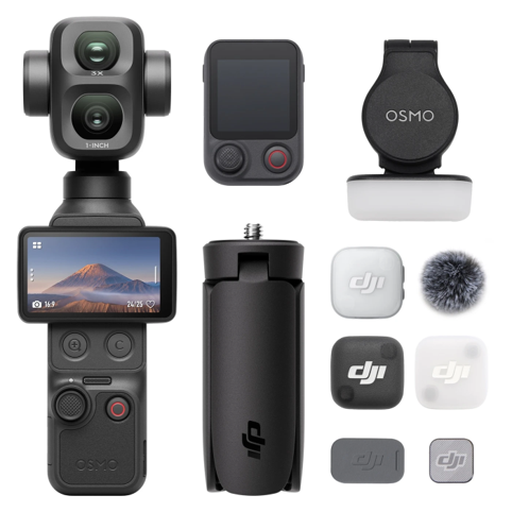
For radio photography, check that the camera offers the framing and focusing capabilities you need for your subject.
The product name lists a 1-inch CMOS sensor, 4K/120fps and 3-axis stabilisation.
Not necessarily: first decide how you want to frame the whole radio. For very small details, the maximum magnification of the lens you use is important. Canon lists a maximum of 0.25× in MF mode for the RF-S 18-45mm, while Nikon specifies 1:1 for the separate Z MC 50mm.
When focusing precisely, keep the camera stable and check the shooting angle around shiny parts. Changing the angle can help reduce visible reflections of the camera or photographer; the result depends on the surface and lighting setup.
That depends on the kit you choose and the level of detail you want to capture. The EOS R50 kit mentioned includes an RF-S 18-45mm, while the RF 85mm Macro discussed is a separate lens. Check what’s in the box and the magnification of the lens you plan to use for your smallest detail.
No. That distance alone doesn’t tell you how large the detail will appear in the frame or how much room you’ll have for lighting. Also compare the maximum magnification and working distance of the lens or close-up mode. For example, Sony lists both 1:1 magnification and a working distance of 2,4 cm for the SEL30M35.