
Creator using a camera on a tripod
You want to choose a compatible shutter release, so you check the full camera model and socket first. Canon and Nikon list different sockets and model-specific compatibility.


Start by checking your exact camera model: make sure it has a compatible socket, supports the Bluetooth remote you’re considering, or offers app control. A cable may be all you need if you’re working next to the tripod; a wireless remote gives you more freedom to move around while arranging your cupcakes. You could also try a compatible camera app before buying a separate remote, but check which features your camera supports.
You want to choose a compatible shutter release, so you check the full camera model and socket first. Canon and Nikon list different sockets and model-specific compatibility.
You want to take several photos with the same framing without touching the camera to release the shutter. Canon and Nikon describe remote controls for compatible cameras.
You want to stay by the cupcakes while the camera remains on the tripod. A compatible wireless remote or camera app may be an option, depending on your camera.
Choose this when: you’re taking photos next to the tripod and your camera has the required socket. Canon lists E3 and N3 sockets, among others; Nikon describes the MC-dc2 for certain cameras with a compatible accessory socket.
The trade-off: there’s no wireless pairing to worry about, but the cable limits where you can work. Check the socket and cable length.
Choose this when: you want to stay by the cupcakes and your camera model supports the remote you’ve chosen. The Canon BR-E1, Nikon ML-L7 and Sony RMT-P1BT are different brand-specific options.
The trade-off: check compatibility, pairing and battery requirements. Canon lists a range of 5 m for the BR-E1; Sony gives an approximate range of 5 m for the RMT-P1BT, depending on conditions.
Choose this when: your camera and phone support remote control together, and you’d like to try using them without a separate shutter release first. Canon Camera Connect and Sony Imaging Edge Mobile offer control for compatible cameras, according to their manufacturers.
The trade-off: the controls available vary by camera model. Test the connection and the features you need before setting out your cupcakes.
| What to consider | What should you check? | Which shoppers is this important for? |
|---|---|---|
| Compatibility | Check the full camera model and, for a cable, the socket type. The camera brand alone isn’t enough. | I want to avoid buying a remote that doesn’t work with my camera. Around 36% of shoppers rank compatibility as their top priority when buying. |
| Keeping the framing consistent | Check whether the remote releases the shutter and whether a cable will reach where you’re standing next to the tripod. Canon lists an effective range of 80 cm for the RS-80E3. | I want to take close-ups without touching the camera when I take a photo. Around 29% of shoppers prioritise keeping the same tripod framing. |
| Taking photos from the decorating table | Check whether your camera supports the remote and test the connection where you’ll be taking photos. A stated wireless range isn’t guaranteed in every room. | I want to arrange cupcakes and control the camera from the table. Around 21% of shoppers prioritise that freedom to move around. |
| Avoiding an extra accessory | Check whether your camera model supports shutter release via an app and test the connection beforehand. | I want to try using my existing phone and camera first. Around 14% of shoppers prioritise avoiding a separate accessory. |
Different sockets and remotes may be made for specific camera models, even within the same brand. The wrong socket or an unsupported connection means the remote won’t work with your camera.
Compare the full camera model with the compatibility information. If you’re buying a cable, check the socket type too.
A listing that mentions iOS or Android phones doesn’t confirm that the button can operate a standalone camera.
Check explicitly that the remote works with your full camera model. Don’t choose based on the product name alone.
A cable may be too short to operate the camera from the decorating table. Wireless range can vary depending on the situation.
Measure the distance between the tripod and your workspace, then test the connection in the room where you’ll be taking photos.
For compatible EOS cameras, Canon lists options including the BR-E1 Bluetooth remote, wired E3 and N3 releases, and control via Camera Connect.
Nikon offers the ML-L7 for specific cameras, as well as the MC-dc2 cable for certain cameras with a compatible accessory socket.
Sony describes the wireless RMT-P1BT, the wired RM-VPR1 for compatible sockets, and control via Imaging Edge Mobile for compatible cameras.
These products include action cameras with remote control and a smartphone tripod with a Bluetooth remote. Check whether each product suits your camera setup: control for a smartphone or action camera doesn’t confirm that it will work with a standalone camera on your tripod.
 No image available
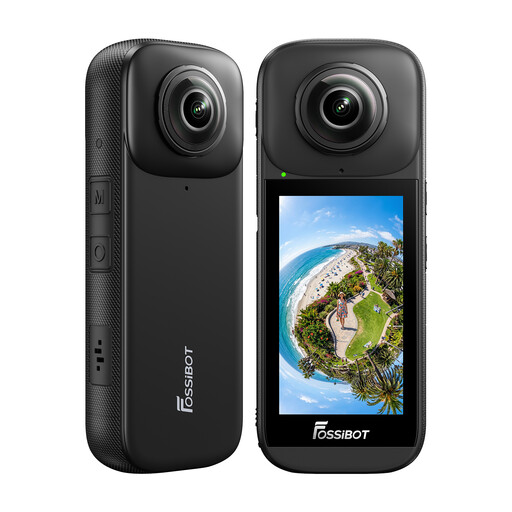
The product listing mentions control via a Bluetooth remote; check whether this action camera suits the setup you want to use.
The product name lists 6 GB of built-in RAM, loop recording, 8K video at 10 fps and IP68.
 No image available
This tripod and remote are designed for a compatible smartphone camera; the product information doesn’t confirm that they can control a standalone camera.
The product name describes a foldable, height-adjustable tripod for phones, tabletops and outdoor use.
 No image available
The product name lists compatibility with Osmo Action 4, Osmo Action 5 Pro, Osmo 360 and Osmo Action 6. Check that your camera model is included.
The product description mentions remote control for photos and for starting and stopping recordings.
No. Try app control first if your camera and phone support it. Canon describes remote control via Camera Connect, and Sony via Imaging Edge Mobile; the features available vary by model.
First check whether your camera model supports the specific remote, then follow the pairing steps for that model. Test the shutter and any focus button before setting out your cupcakes; Bluetooth on the camera alone doesn’t confirm compatibility.
Take used household batteries to a collection point, such as a shop or supermarket that sells batteries, as advised by the Dutch Government. If you buy a new similar device, you can hand in an old electrical appliance at the shop, according to the Dutch Government.
If a product doesn’t meet what you could reasonably expect under normal use, the seller is responsible for the statutory guarantee, according to ACM ConsuWijzer. For online purchases, there is generally a 14-day cooling-off period after delivery; check which exceptions and returns conditions apply to your purchase.
For Bluetooth on licence-exempt frequencies, the Dutch Authority for Digital Infrastructure states that no licence, notification or registration is required. Radio equipment sold in Europe must meet the relevant European requirements and carry a CE mark; this alone doesn’t mean that a specific remote has been assessed against them.