Who is a camera remote shutter release useful for?

Photographers with a fixed tabletop setup

You photograph several tools from the same tripod and want to keep your framing consistent without touching the camera for every shot. Canon Netherlands describes a tripod as a useful way to keep the background consistent.

Photographers who keep rearranging their tools

You’re often standing by your subject and want to take a photo as soon as you’ve made a small adjustment. Nikon Netherlands and Sony Netherlands describe wireless control for specific camera models; check that your camera is compatible.

Photographers capturing small details

You take close-ups or use longer exposures and want to pair a suitable remote shutter release with a stable setup. Nikon Netherlands and Fujifilm Netherlands describe wired options for specific cameras; a remote shutter release doesn’t control the lighting.

What should you look for?

Wired remote shutter release

Choose this if: you’ll be staying by the tripod and your camera model supports the connection.

Bear in mind: the cable and connection limit your freedom of movement; Fujifilm notes that some cameras need an adapter for the RR-100.

Wireless remote shutter release

Choose this if: you want to stay by your subject while arranging it and your camera is explicitly listed as compatible.

Bear in mind: the Canon RC-6 uses infrared and needs to be operated from the front; Bluetooth models such as the Nikon ML-L7 work with specific cameras.

Camera app or self-timer

Choose this if: your camera already offers the control you need and you don’t need a separate remote shutter release.

Bear in mind: features vary by camera model; Canon Camera Connect can also control settings remotely on many compatible cameras.

What to consider What should you check? Who should prioritise this?
Compatibility Check the full camera model, the official compatibility list, the connection and any adapter requirements. I want to make sure the remote shutter release works with my exact camera first; buying one from the same brand is no guarantee. Around 36% of consumers say compatibility is their main reason for buying.
Stable shots Check whether the remote shutter release can operate your camera and whether you need a lockable button. With a tripod setup, I want to take a photo without touching the camera, so the framing doesn’t shift. Around 29% of consumers prioritise reducing camera movement.
Freedom of movement Check whether your camera supports infrared, Bluetooth or app control, and whether your chosen model works with it. If I’m still arranging my tools, I want to be able to take a photo from where I’m standing. Around 21% of consumers say freedom of movement is their main need.
Existing features Try using the camera app or self-timer and decide whether you need direct control. If the app or self-timer already works with my fixed setup, I’d rather not carry an extra accessory. Around 14% of consumers prioritise their camera’s existing features.

Common buying mistakes

  • Assuming a remote shutter release for one camera brand will fit every model

    Manufacturers limit compatibility to certain cameras and connections. If the connection is wrong, the remote shutter release may not work.

    Before buying, compare your full camera model with the manufacturer’s compatibility information.

    Some Fujifilm cameras need a separate 2.5 mm-to-3.5 mm adapter as well as the RR-100.

  • Assuming Bluetooth means the camera is guaranteed to be compatible

    A Bluetooth remote control won’t necessarily pair with your camera just because it uses Bluetooth.

    Check that the manufacturer lists your exact camera model as compatible.

  • Expecting a remote shutter release to replace lighting or a tripod

    A remote shutter release controls when the camera takes a photo, but it doesn’t control the exposure or keep the camera steady.

    Take a test shot with the camera in a stable position and assess the lighting on the tools separately from the dark background.

Camera brands and remote shutter releases to compare

Canon

Canon offers infrared, Bluetooth and wired remote shutter releases for various specifically listed cameras.

  • With compatible models, the RC-6 lets you take photos wirelessly from the front of the camera.
  • The RS-80E3 uses an E3-type connection; check your camera model and connection.

Nikon

Nikon offers, among other options, the wired MC-dc2 and the ML-L7 Bluetooth remote shutter release for specific cameras.

  • The ML-L7 has separate buttons for taking photos and recording video.
  • The right option depends on your camera model; the MC-dc2 and ML-L7 aren’t automatically compatible with every Nikon camera.

Sony

Sony offers, among other options, the wired RM-VPR1 and the RMT-P1BT Bluetooth remote shutter release for compatible cameras.

  • Sony specifies an 800 mm cable, shutter button and lock for the RM-VPR1.
  • The RMT-P1BT doesn’t automatically work with every Sony camera; check compatibility.

Fujifilm

The wired RR-100 is an option for cameras on Fujifilm’s compatibility list.

  • Fujifilm specifies a 2.5 mm connection and a lockable shutter button.
  • Some camera models on the list need a separate 2.5 mm-to-3.5 mm adapter.

Product selection at Joybuy

The product below is for anyone taking photos of tools with a smartphone who wants to operate the phone’s shutter remotely. To control a separate camera, you’ll still need a remote shutter release that’s compatible with your model.
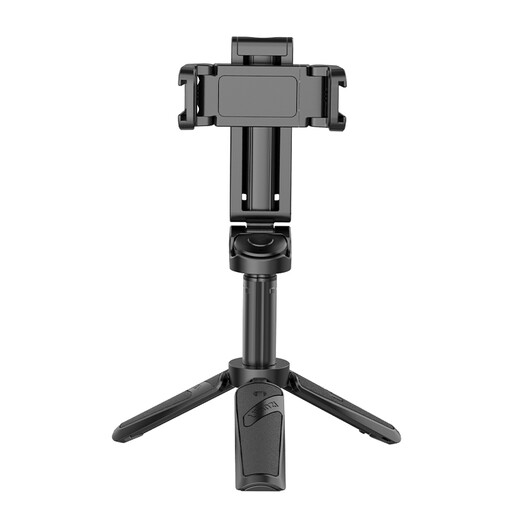
Ulanzi JJ02 Bluetooth selfie stick and 3-in-1 phone tripod

Ulanzi JJ02 Bluetooth selfie stick, 3-in-1 phone tripod

A good choice if you take photos with a smartphone and want to operate its shutter remotely while arranging your subject.

The product name mentions an extendable mini tripod, dual cold shoe mounts and use with iPhone and Android.

View at Joybuy

Frequently asked questions

Will a remote shutter release automatically give me the right exposure for a dark background?

No. A camera remote shutter release controls when the camera takes a photo; check the lighting on your tools and the exposure settings separately. Canon Netherlands notes that a scene with lots of dark tones can affect automatic light metering.

How do I connect a wired remote shutter release?

First check which connection the manufacturer specifies for your camera model. The Fujifilm RR-100 uses a 2.5 mm connection; for some cameras, Fujifilm specifies a separate 2.5 mm-to-3.5 mm adapter.

What should I bear in mind when storing a remote shutter release?

Handle plugs and cables carefully, and follow the instructions for your exact model. For wireless models, also check which battery you need and how to pair the device; Canon specifies a CR2032 battery for the RC-6.

What are my rights when buying online in the Netherlands?

According to the Dutch government, when you buy at a distance, the seller must provide information about the product and the cooling-off period, which is usually 14 days. If a product is faulty, you may have statutory rights to a free repair or replacement; the circumstances determine which solution applies.
