Choose a shutter release based on your exact camera model and the connection or wireless control it supports. A suitable cable may be all you need if you’re staying close to the camera. If you want to rearrange and photograph your toys from another position, a compatible wireless release could be more practical. For a fixed set-up, try the self-timer or a supported camera app first.
Who can benefit from a camera remote shutter release?
Photographers using a tripod
You take toy photos repeatedly from a fixed position and want to avoid touching the camera when you press the shutter. First, check your camera’s connection. Canon Netherlands and Nikon Netherlands describe compatible remote controls for use with a tripod.
Photographers rearranging toys
You move between the table and the camera and want to take photos from another position. Check whether your camera model supports wireless control. Canon Netherlands, Nikon Netherlands and Sony Netherlands list wireless options for specific models.
Photographers who want to try before they buy
You want to see whether the self-timer or a supported camera app will do the job before buying a separate shutter release. Canon Netherlands describes control via Camera Connect for compatible combinations. It also lists the self-timer as a way to avoid touching the camera when taking a photo.
What should you look for in a camera remote shutter release?
Wired shutter release
Choose this if: your camera has the right connection and you can stay within the cable’s reach.
Bear in mind: the cable limits where you can work. Canon lists a cable length of 80 cm for the RS-80E3.
Wireless shutter release
Choose this if: you want to take photos from another position while rearranging your toys, and the manufacturer supports your camera model.
Bear in mind: compatibility and range depend on the camera and conditions. Canon lists a range of up to 5 m for the BR-E1, while Sony describes approximately 5 m for the RMT-P1BT as an estimate.
Supported camera app
Choose this if: your camera can be controlled through the app and you want to adjust the composition or take a photo from your phone.
Bear in mind: available features depend on the camera and app combination. Canon describes Camera Connect for supported cameras.
Self-timer
Choose this if: you can leave your table set-up undisturbed while you wait, and simply want to take a photo without touching the camera.
Bear in mind: you’ll need to wait for the camera to take the photo automatically. Canon lists the self-timer as an alternative to touching the camera when releasing the shutter.
For toy photography on a small table, the key considerations are camera compatibility, how you want to take the photo and how much space you have around your set-up.
| What to consider |
What to look for when buying |
Who is this important for? |
| Compatibility |
Check the full camera model, connection or Bluetooth support, and whether you need an adapter. |
I want to avoid choosing a shutter release that doesn’t fit my camera. Around 33% of consumers say compatibility with their own camera is their main concern when buying. |
| Avoiding camera movement |
Test the self-timer with your fixed set-up. Choose a suitable shutter release if you want to take photos more often without waiting. |
When taking repeated photos, I don’t want to touch the camera as I press the shutter. Around 27% of consumers say avoiding movement is their top priority. |
| Freedom to move |
Measure the distance between the camera and where you’ll take the photo, then compare it with the cable length or stated wireless range. |
When I rearrange toys between shots, I want to be able to take a photo from another position. Around 20% of consumers say freedom to move is their main concern when buying. |
| Existing features |
Try the self-timer and, if your camera supports it, the relevant app before choosing an accessory. |
I want to check whether my camera already meets my needs before buying anything extra. Around 20% of consumers prioritise avoiding an unnecessary purchase. |
Common mistakes when choosing a camera remote shutter release
-
Assuming the same plug or Bluetooth is enough
Having a connection or wireless link doesn’t, by itself, mean a shutter release will work with your camera. Fujifilm lists a separate adapter for some RR-100 combinations. Manufacturers also limit wireless models to specific compatible cameras.
Look up your full camera model in the manufacturer’s compatibility information and check whether you need an adapter.
-
Choosing a cable without measuring the distance you’ll work from
A cable may be too short to take photos from the spot where you arrange your toys. Canon lists a cable length of 80 cm for the RS-80E3.
Measure from the camera’s connection to where you want to stand, then compare the distance with the stated cable length.
-
Buying a separate shutter release without trying the features you already have
A supported camera app or the self-timer may already help you avoid touching the camera when taking a photo.
Try your camera’s features with your table set-up before choosing an accessory.
Camera brands and remote controls for reference
Canon
For compatible EOS cameras, Canon offers options including the wired E3 shutter release and a wireless Bluetooth model. Camera Connect may also be an alternative for supported combinations.
- Canon lists a range of 80 cm for the RS-80E3 and up to 5 m for the BR-E1.
- These details apply to the models listed. Check your camera’s connection and compatibility.
Nikon
Nikon offers the wired MC-DC2 and the wireless ML-L7, among other options, for specific compatible cameras.
- Nikon lists separate photo and video buttons on the ML-L7. According to Nikon, the MC-DC2 can help you avoid touching the camera body when using a tripod.
- Check that your specific Nikon camera supports the remote control you choose.
Fujifilm
The wired RR-100 is designed for the camera models on Fujifilm’s compatibility list.
- Fujifilm says an L-shaped extension cable for the 2.5mm plug is included.
- For the X-S10 and X-T200, Fujifilm lists a separate 2.5mm-to-3.5mm adapter from another manufacturer.
Sony
The RMT-P1BT is a Bluetooth option for cameras that support this type of control.
- Sony describes it as offering control without a cable or extra receiver.
- Sony gives an estimated communication range of approximately 5 m for the RMT-P1BT, depending on conditions. This doesn’t confirm compatibility with every Sony camera.
Panasonic
With certain compatible cameras, the LUMIX DMW-SHGR2 combines wired shutter control with a grip and mini tripod.
- Panasonic lists USB Type-C and a maximum combined load of 1.2 kg for the camera, lens, battery and other accessories.
- Check the camera model, firmware and total weight before considering this model as a tabletop tripod.
Joybuy product for remote control
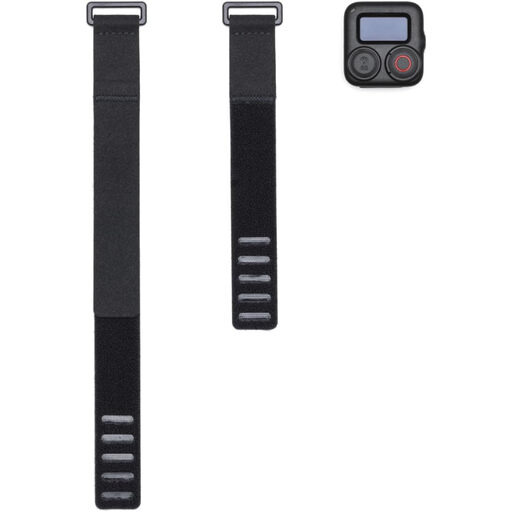
This product card is for a Bluetooth remote control for the Osmo cameras listed. Check that your camera appears in the compatibility information.
 No image available
Osmo Action GPS Bluetooth Remote Controller
This Bluetooth remote control is designed for wireless control of the Osmo cameras listed.
The product title lists compatibility with Osmo Action 4, Osmo Action 5 Pro, Osmo 360 and Osmo Action 6.
View at Joybuy
Frequently asked questions
Will a remote control from the same brand automatically work with my camera?
No. Check your full camera model and the connection or wireless support required. For example, Canon distinguishes between E3 controls and a compatibility list for the BR-E1. Fujifilm lists an extra adapter for two RR-100 combinations.
How should I set things up if I don’t want to touch the camera?
Set the camera up securely, choose your composition, then use a supported remote control or the self-timer. This helps you avoid touching the camera button when taking a photo, but a shutter release can’t replace a stable set-up.
What should I check if a wireless shutter release isn’t responding?
First, check that your camera model supports the shutter release, then follow the manufacturer’s pairing instructions. Sony describes approximately 5 m for the RMT-P1BT as an estimate that depends on conditions.
Can I try the self-timer or camera app first?
Yes, if your camera supports the feature. Canon lists the self-timer as a way to avoid touching the camera when taking a photo, and describes remote control via Camera Connect for compatible cameras.
Can I return a shutter release bought online if it doesn’t fit?
For online consumer purchases, ACM ConsuWijzer says you generally have a statutory cooling-off period of up to 14 days after delivery, with some exceptions. Check who the seller is and what return conditions and any costs apply, especially if the seller is based abroad.


