Who might need a camera remote?

Photographing static model trains

If you’re photographing small details from a fixed tripod, a compatible remote release lets you take the shot without touching the camera. Canon Netherlands describes this as a way to avoid camera movement caused by touching it.

Photographing moving model trains

If you want to choose exactly when to take the shot, a remote lets you do so without having to return to the camera. Railhobby points out that shutter speed also matters when it comes to motion blur; a remote release won’t freeze the train in motion.

Looking for a remote release for your camera

First, check your full camera model, its connection and the control methods it supports. Nikon Netherlands and Canon Netherlands describe accessories with model-specific compatibility, so a remote release for a different camera system isn’t automatically a suitable alternative.

What should you look for?

Wired remote release

A good choice if: you’re working beside the tripod and your camera supports the relevant connection.

Bear in mind: the cable length and plug type. Connections for different camera models aren’t interchangeable.

Infrared or Bluetooth

A good choice if: you want to take the shot from another position and your camera supports the remote you’ve chosen.

Bear in mind: infrared and Bluetooth each have their own compatibility requirements; wireless control isn’t a universal standard.

Camera app or self-timer

A good choice if: your camera’s existing features meet your needs, particularly for a static setup.

Bear in mind: app controls vary by camera model, and a self-timer gives you less direct control over when to take the shot if the train is moving.

What to consider What to check Who it matters to
Compatibility Check your camera model, its connection or wireless feature, and the compatibility list for the specific remote release. If I want to avoid buying an accessory that won’t control my camera, I check the model number first. Around 36% of consumers give compatibility top priority.
Vibration in close-up shots Check whether the remote release or self-timer can trigger your camera’s shutter, and use a stable setup. When photographing small details of a static model on a tripod, I don’t want to touch the camera as I take the shot. Around 29% of consumers prioritise avoiding camera shake.
Where you can operate it and timing Compare cable lengths and, for infrared, the direction the remote needs to point. Check wireless compatibility too. If the train is moving, choose a shutter speed to suit its movement. If I want to stay by the model railway and choose when to take the shot, where I can operate the camera matters. Around 21% of consumers prioritise this flexibility and timing.
Existing camera features Before choosing a separate accessory, check whether your camera has a suitable app or self-timer. If my existing camera can already be operated remotely or with a delay for a static setup, I may not need an extra remote release. Around 14% of consumers prioritise avoiding an unnecessary accessory.

Common buying mistakes

  • Assuming a brand name guarantees full compatibility

    Accessories from the same camera brand can have different connections or compatibility lists. A remote release for one model won’t necessarily work with every camera from that brand.

    Before buying, compare your full camera model and the specific remote release with the manufacturer’s compatibility information.

  • Expecting a remote release to freeze movement

    Remote operation means you don’t have to touch the camera, but it won’t by itself prevent motion blur when photographing a moving model train.

    Choose a shutter speed to suit the movement and available light; use the remote release to operate the shutter only.

  • Choosing a wireless set without checking the cable

    A transmitter and receiver set may still need a connection cable to attach it to the camera. For example, JJC describes the ES-628F3 as a set with a transmitter, receiver and connection cable.

    Check which cable comes with the exact set and whether it fits your camera’s connection.

Brands to compare

Canon

Canon offers infrared and Bluetooth remotes, among other options. The right choice depends on your specific EOS or PowerShot model.

  • Canon Netherlands states that the RC-6 has a range of up to around 5 m from the front of compatible cameras.
  • The BR-E1 uses Bluetooth and has its own compatibility list, so check your exact camera model.

Nikon

The MC-DC2 is a wired option for certain cameras, while the ML-L7 is a Bluetooth option for specific Nikon cameras.

  • Nikon Netherlands describes the MC-DC2 as a way to operate the shutter without touching the camera body. The ML-L7 has separate photo and video buttons.
  • Nikon states that compatibility depends on the model, so check which connection or Bluetooth controls your camera supports.

Sony

The RM-VPR1 offers wired control for compatible connections, while the RMT-P1BT is a separate Bluetooth option.

  • Sony Netherlands specifies an 800 mm cable and shutter control for the RM-VPR1.
  • The RMT-P1BT works via Bluetooth with a compatible camera. Check the connection or compatibility before choosing between these models.

Fujifilm

The RR-100 is a wired remote release for the cameras Fujifilm lists as compatible.

  • Fujifilm lists a 2.5 mm connection and a right-angle extension cable included in the box.
  • For models including the X-S10 and X-T200, Fujifilm states that a third-party 2.5 mm to 3.5 mm adapter is required. Check the footnote for your model.

JJC

JJC offers modular cable solutions and wireless sets for different camera systems.

  • According to JJC, the ES-628F3 includes a transmitter, receiver and connection cable.
  • The right cable and compatibility depend on your exact camera model; a product described as suitable for several brands doesn’t guarantee a universal connection.

Joybuy products for remote operation

These product suggestions are designed for smartphone cameras and the Osmo cameras named below; they aren’t universal remote releases for interchangeable-lens cameras.

KINSI selfie stick with tripod and Bluetooth remote

KINSI Selfie Stick with Tripod, 170 cm

With a compatible smartphone camera, you can use the Bluetooth remote. The built-in tripod is designed for a static setup.

The title mentions an adjustable shooting angle, a rotating phone holder for smartphones from 4.7 to 6.0 inches, and a stainless-steel extendable stick.

Joybuy

KINSI smartphone tripod with Bluetooth remote

KINSI Smartphone Tripod with Bluetooth Remote Control

This tripod is designed for use with a compatible smartphone camera; the description doesn’t mention control of a separate camera.

The title describes a foldable, height-adjustable phone tripod for use on a table or outdoors.

Joybuy
Bluetooth remote for the Osmo cameras listed

Osmo Action GPS Bluetooth Remote Controller

The title describes remote control for specific Osmo cameras; this isn’t a general-purpose remote release for other camera models.

The listed compatible models include Osmo Action 4, Osmo Action 5 Pro, Osmo 360 and Osmo Action 6.

Joybuy
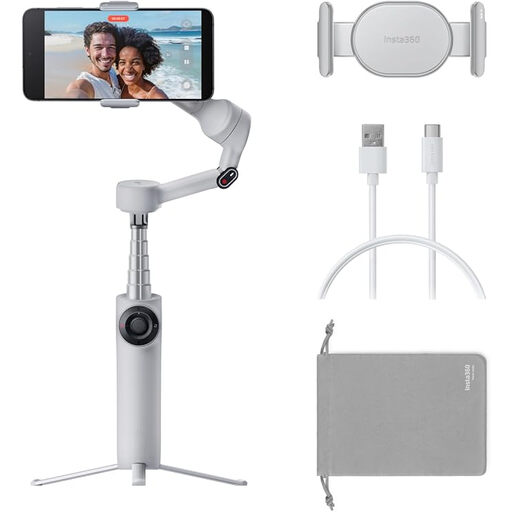
Insta360 Flow 2 Gray smartphone gimbal with built-in tripod

Insta360 Flow 2 Gray

This smartphone gimbal is designed for use with a smartphone; the description doesn’t mention control of a separate camera.

The title mentions a built-in tripod and use with iPhone and Android smartphones. The description mentions control via a second phone and gesture control for taking a photo.

Joybuy

Frequently asked questions

Do I need a wireless remote release for a static model train?

No. If your camera is on a tripod, a compatible cable release or the self-timer can also help you avoid touching the camera when you take the shot.

How can I stop a white background or dark train details from looking wrong?

Consider exposure, lighting and focus separately from the remote release. Railhobby recommends paying attention to soft light, focus and a tripod when photographing model railways; the remote release doesn’t control the background exposure.

Do I always need only the supplied cable for a Fujifilm RR-100?

No, it depends on your camera model. For models including the X-S10 and X-T200, Fujifilm states that a third-party 2.5 mm to 3.5 mm adapter is required. Check the compatibility information for your model.

What are my rights in the Netherlands if a remote release bought online is unsuitable or faulty?

For an online purchase from a business, you generally have a 14-day cooling-off period, according to the Dutch government. Different rules apply when you buy from a private individual. You’re also entitled to a product that works as it should, although there’s no fixed statutory warranty period in the Netherlands. If there’s a compatibility issue, check what was promised about suitability and which returns terms apply to your purchase.
