
Creators with a fixed photo setup
If you photograph several prints from the same camera position, you can release the shutter without touching the camera. Canon and Nikon describe wired shutter releases for supported cameras.


Start with your exact camera model and check which connection or wireless control it supports. For a fixed setup, the right cable can help you avoid touching the camera. If you move between the camera and your work surface, a compatible wireless remote or camera app may be more practical. A shutter release won’t adjust the exposure, white balance or alignment of your linocut for you.
If you photograph several prints from the same camera position, you can release the shutter without touching the camera. Canon and Nikon describe wired shutter releases for supported cameras.
If you regularly move between your work surface and the camera, being able to operate it from a distance can be useful. This only works if your camera supports the wireless remote you choose; Canon and Nikon list specific compatible camera models.
If you’d rather not buy a separate shutter release, first check whether your camera app or built-in self-timer offers the controls you need. Canon describes control via Camera Connect for supported cameras; Panasonic lists self-timer modes for the DC-G97.
Choose this if: your camera has the right connection and you’re taking photos from a fixed position.
Bear in mind: the cable limits your movement and must not pull on the camera or setup.
Choose this if: you want to move around your work surface and your camera model is explicitly supported.
Bear in mind: pairing, power and available features vary between cameras and remotes.
Choose this if: an existing camera feature is enough for remote control or a delayed shot.
Bear in mind: app features depend on the camera; with a self-timer, you first press the button on the camera.
| What to consider | What should you check? | Who is this important for? |
|---|---|---|
| Compatibility | Check the full camera model, its connection or wireless support, and whether you need an adapter. | If I want to make sure the shutter release works with my camera, I check the model details first; around 36% of consumers prioritise compatibility. |
| Avoid touching the camera | Check that the shutter release operates the shutter and that the cable can run alongside the setup without being pulled taut. | For repeated shots on a tripod, I want to leave the camera alone when releasing the shutter; around 29% of consumers mainly want a fixed setup. |
| Freedom of movement | Check the supported camera model, features and stated operating range. | If I move between the camera and my prints, I want to be able to operate the shutter from somewhere else; around 21% of consumers prioritise freedom of movement. |
| Avoid extra accessories | Try your camera’s app or timer, and check whether a cable needs an adapter. | I first check whether the camera can handle the controls itself, so I don’t buy an accessory I don’t need; around 14% of consumers want to avoid extra purchases. |
Manufacturers limit support to specific cameras or connections. A wireless connection or matching brand name alone doesn’t confirm that the shutter release will work with your model.
Before buying, compare your full camera model with the compatibility information for the exact shutter release.
Cameras can use different connections. Fujifilm lists a separate adapter for certain combinations with the RR-100; Canon, for example, distinguishes between E3 and N3 connections.
Check the connection, plug and any adapter requirements for your camera model.
The shutter release operates the shutter; exposure and white balance are separate settings.
Take a test shot and assess exposure and white balance separately from your choice of shutter release.
Canon offers wired and wireless shutter releases for specific cameras.
Nikon lists the wired MC-DC2 and wireless ML-L7 for certain Nikon cameras.
The RMT-P1BT is a Bluetooth remote for supported Sony cameras.
The RR-100 is a wired shutter release for the cameras listed on Fujifilm’s Netherlands product page.
For the LUMIX DC-G97, Panasonic lists both a self-timer and support for the separately available DMW-RS2.
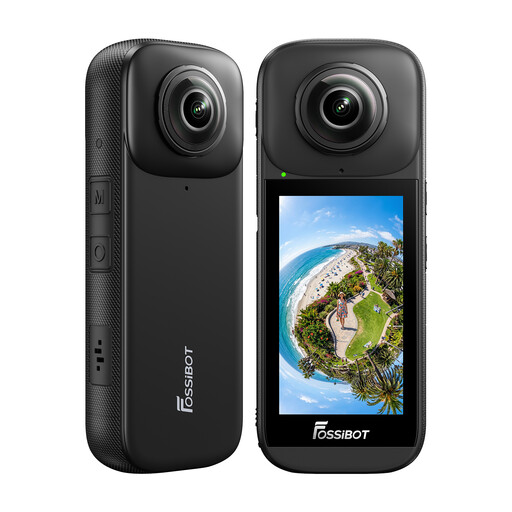
These products are designed for remote control with specific action cameras or a compatible smartphone. Before buying, check that the solution suits your device: compatibility with a camera used to photograph a linocut hasn’t been confirmed.
 No image available
This is an action camera solution with remote control; don’t assume it’s compatible with another camera you use for your linocut.
The product name lists 6 GB of built-in RAM, 8K video at 10 fps and a Bluetooth remote.
The product description advises keeping away from medical implants and avoiding exposure to high temperatures or liquids.
 No image available
This tripod with remote is designed for a compatible smartphone camera, not as a confirmed shutter release for a separate camera.
The product name describes a foldable, height-adjustable tripod for tabletop and outdoor use.
According to the product description, the remote is designed for a compatible smartphone.
 No image available
This remote is designed for the Osmo cameras listed in the product name; check whether your model is included.
The product name lists compatibility with Osmo Action 4, Osmo Action 5 Pro, Osmo 360 and Osmo Action 6.
The product description mentions remote control for photos and starting or stopping recordings.
Not necessarily. Canon describes controlling the shutter and certain settings via Camera Connect on supported cameras. Check whether your exact model supports the app features you need, then try them out with your photo setup.
First, check that the plug fits your camera’s connection. Route the cable so it doesn’t pull on the camera or tripod, then operate the shutter without touching the camera body. Fujifilm says the RR-100 can be half-pressed to focus and fully pressed to take the photo.
Take a test shot and check the exposure and white balance separately: the shutter release won’t adjust them for you. The Smithsonian describes white balance as a separate part of its digitisation workflow; this doesn’t guarantee the same result for your linocut.
For applicable Dutch consumer distance sales, you generally have 14 days from delivery to change your mind, with some exceptions. This is separate from your statutory guarantee: if a product doesn’t perform as you could reasonably expect under normal use, contact the seller for an appropriate solution. ACM ConsuWijzer explains these rights; different rules may apply to business purchases.