
Photographer with a fixed tabletop setup
When taking repeated close-up shots, you don’t want to touch the camera to release the shutter. A compatible cable release can work well if you can route the cable away from your work area.


Before buying a separate camera remote, check whether your camera model’s app can already release the shutter remotely. For a fixed setup, a compatible cable release may be all you need. If you want to keep your small worktable clear, a supported wireless remote could be more practical. In every case, exact camera compatibility is essential; for wireless use, where you operate the remote from matters too.
When taking repeated close-up shots, you don’t want to touch the camera to release the shutter. A compatible cable release can work well if you can route the cable away from your work area.
You move tools and your hands around a small table, and want to see whether a compatible wireless remote can keep the release cable out of the way.
You want to check whether your camera model’s app can release the shutter remotely before buying a separate accessory.
Suitable if: your camera has the right socket and you can keep the cable clear of your small work area.
Keep in mind: the socket and cable length. A plug that looks as though it fits doesn’t prove it’s compatible.
Suitable if: you want to keep a release cable off the table and your camera model supports the remote you’ve chosen.
Keep in mind: you need the right combination of devices and must pair them. Having Bluetooth on both devices doesn’t automatically mean they’ll work together.
Suitable if: your camera supports the remote and you can point it from the required position.
Keep in mind: where you operate it from may be important. Canon specifies that the RC-6 is used from the front of the camera.
Suitable if: your camera model supports remote shutter release through an app and you want to try shooting without an extra accessory first.
Keep in mind: you’ll need a phone and must set up the feature for your specific model.
First, compare the full name of your camera model with the manufacturer’s compatibility information. Then decide whether a cable will work on your table, or whether a supported wireless remote or app would suit your setup better.
| What to consider | What to check before buying | Who is this important for? |
|---|---|---|
| Avoid touching the camera | Check that the remote activates the shutter on your camera model, and set the camera up securely. | When I take close-up shots with a fixed setup, I don’t want to touch the camera to release the shutter. Around 34% of consumers say avoiding camera contact is their top priority. |
| Compatibility | Check the full model name and, if you’re using a cable, the required socket type. | I want to make sure the release fits my exact camera and socket before choosing one. Around 33% of consumers put compatibility first. |
| Keep the work area clear | Consider where the camera, tools and your hands will be, then compare this with the cable route or the requirements for wireless operation. | When I move tools around a small table, I don’t want a cable across the work area. Around 20% of consumers say keeping their work area clear is their top priority. |
| Avoid an extra purchase | Check with the manufacturer whether your camera model supports remote shutter release through an app, and try that feature first. | I want to check whether my camera app can already release the shutter before buying an accessory. Around 13% of consumers put avoiding an unnecessary extra purchase first. |
Manufacturers often specify which camera models or sockets their shutter releases work with. For some FUJIFILM cameras, the manufacturer also specifies that the RR-100 needs an additional adaptor.
Before buying, compare the full model name, socket and any adaptor requirements with the manufacturer’s information.
Infrared and Bluetooth are different ways of controlling a camera. Canon specifies that the RC-6 is used from the front; a Bluetooth remote needs to be supported by the camera it’s paired with.
Think about where you’ll be standing when you take photos, and check which wireless technology your camera model supports.
For supported cameras, a phone app can release the shutter remotely, but this feature isn’t available on every model.
If the feature is available, check and try the app function for your specific model first.
Worth considering if you have a Canon camera and are looking for a wired, infrared or Bluetooth remote designed for your model.
Worth considering if you have a Nikon camera and are looking at a compatible cable, the ML-L7 Bluetooth remote or a supported SnapBridge feature.
Worth considering if you have a Sony camera and are looking for a wired or Bluetooth release for that camera model.
Worth considering if you’re looking at an RR-100 cable release for a compatible X or GFX model.
These Joybuy products are designed for controlling smartphone cameras and the listed Osmo Action models, or for taking photos and videos on a smartphone with a gimbal. Before buying, check that the product can control your specific camera or phone. This selection isn’t a compatibility list for all cameras.
 Image unavailable
For controlling a compatible smartphone camera wirelessly, with an integrated tripod.
The title specifies a Bluetooth remote and a rotating phone holder for smartphones from 4.7 to 6.0 inches.
 Image unavailable
For taking photos remotely with your smartphone when you want to set it up on a table.
The title specifies a foldable, height-adjustable tripod for tabletop and outdoor use; the description mentions a Bluetooth remote.
 Image unavailable
For remotely controlling an Osmo camera included in the listed compatible models.
The product title lists Osmo Action 4, Osmo Action 5 Pro, Osmo 360 and Osmo Action 6. The description says you can control photos and start and stop video without touching the camera.
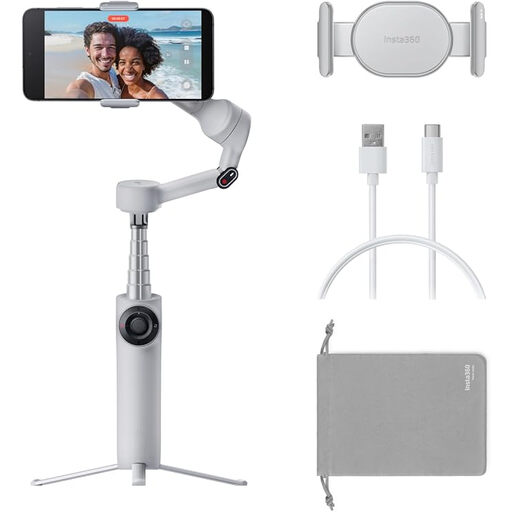 Image unavailable
For smartphone photography when you want to view and control the shot remotely using a second phone.
The product title specifies support for iPhone and Android, as well as an integrated tripod. The product description mentions remote control of the preview and recording.
You can if your camera model supports the feature. Canon describes control through Camera Connect for many cameras; Nikon says the SnapBridge shutter release function is only available for supported cameras. Look up the feature for your full model name and try it with your tabletop setup.
First check compatibility with your full camera model, then compare the socket type or supported wireless remote. For example, Canon explicitly specifies an N3 socket for the RS-80N3, while Nikon limits the ML-L7 to specific cameras. Follow the manufacturer’s setup instructions too.
The Dutch Authority for Digital Infrastructure states that equipment meeting the applicable European requirements receives a CE marking, and that only CE-marked equipment may be sold in Europe. Check the marking and follow the instructions. A CE marking on its own doesn’t tell you whether the release will work with your camera.