Start by checking your exact camera model: only choose a remote shutter release if its connection or wireless support is confirmed for your camera. A cable, wireless remote or compatible camera app lets you take photos from a tripod without touching the camera; an app could save you buying a separate accessory. A remote release won’t correct the colour of fabric: you’ll also need to pay attention to the lighting and white balance.
Who is a camera remote shutter release for?
Photographer with a fixed tripod setup
You photograph fabric swatches from the same position and don’t want to touch the camera when taking a shot. Canon Netherlands recommends using a tripod for consistent product photos; Nikon Netherlands explains that the MC-dc2 can help prevent camera shake.
Maker working around the fabric setup
You switch swatches or arrange them differently and want to take photos without having to stand next to the camera. Check whether your camera model supports a suitable remote control or app; Canon Netherlands describes Camera Connect as an option for many Canon cameras.
Online shop owner looking to avoid buying an accessory
You already have a suitable camera and phone, and want to check first whether a camera app will do the job. Canon Netherlands describes Camera Connect as an option for many Canon cameras, though support varies by model.
What should you look for when choosing one?
Wired remote shutter release
When: Choose a cable if your camera has the right connection and you usually work with a fixed tripod setup.
The trade-off: The cable limits where you can stand. Fujifilm lists a 2.5 mm connection for the RR-100 and specifies a 2.5-to-3.5 mm adapter for models including the X-S10 and X-T200.
Wireless Bluetooth remote shutter release
When: This option suits you if your exact camera model supports the remote and you want to move freely while changing or arranging fabrics.
The trade-off: Check the compatibility list and pairing method for your model. Canon lists a range of up to 5 m for the BR-E1; this applies to this model and isn’t guaranteed in every space.
Camera app on a phone or tablet
When: Try the app first if your camera and phone support remote shutter control together.
The trade-off: Available features vary by camera, so check that the app can operate the shutter in your setup.
| What to consider |
What should you check? |
Who is this important for? |
| Camera compatibility |
Compare the full camera model name with the manufacturer’s compatibility information. If you’re using a cable, check the connection and whether you need an adapter. |
If I buy a remote release, I want to be sure it works with my existing camera. Around 36% of consumers say camera compatibility is their main concern. |
| Taking photos without touching the camera |
Check that your chosen method operates the shutter on your camera model, and use a stable setup too. |
I want to take a photo on a tripod without touching the camera or shifting the frame. Around 29% of consumers prioritise taking photos without touching the camera. |
| Freedom to move around the fabrics |
Check which camera models are supported, how the remote works and whether its stated range suits your setup. |
If I regularly stand next to the camera to change swatches, I want to take photos from where I’m working. Around 21% of consumers give freedom of movement their highest priority. |
| Avoiding an unnecessary or incomplete purchase |
Check whether a compatible camera app will do the job and whether you need an adapter for a cable. |
I want to know first whether I can use the equipment I already have and what I’ll need for my chosen connection. Around 14% of consumers focus on avoiding an unsuitable or incomplete purchase. |
Common buying mistakes
-
Assuming a Bluetooth remote works with every camera
Manufacturers specify compatibility for each remote and camera model. Having the same brand or seeing Bluetooth listed on your camera doesn’t confirm that the two will pair.
Before buying, compare the full model name with the manufacturer’s compatibility information.
-
Assuming a wired remote will always fit straight away
Connections can vary between cameras. For the RR-100, Fujifilm specifies a 2.5-to-3.5 mm adapter for models including the X-S10 and X-T200.
Check the guidance for your camera model and see whether the version you’ve chosen includes any adapter you need.
-
Using a remote release to solve a colour problem
A remote release operates the camera from a distance; colour reproduction requires separate attention to lighting and white balance.
Assess sharpness and framing separately from the colour of the fabric swatch, and check the lighting conditions and white balance independently.
Camera brands to consider
Canon
Canon cameras have model-specific remote control options, including the BR-E1 and Camera Connect.
- Canon lists Bluetooth control up to 5 m for the BR-E1 and publishes a list of compatible models.
- Check that your exact camera model is on the list; the range and compatibility don’t automatically apply to other Canon remotes or cameras.
Nikon
Nikon describes both a Bluetooth option, the ML-L7, and a wired option, the MC-dc2, for certain cameras.
- The ML-L7 offers shutter control; the MC-dc2 connects to the accessory terminal on certain Nikon SLR cameras.
- These two models aren’t interchangeable. Check support for your specific camera model.
Fujifilm
The RR-100 is a wired remote release for the Fujifilm X and GFX cameras listed as compatible.
- The RR-100 has a 2.5 mm connection, and Fujifilm publishes a compatibility list.
- For models including the X-S10 and X-T200, Fujifilm specifies a third-party 2.5-to-3.5 mm adapter.
Sony
The RMT-P1BT is a Bluetooth remote control for cameras that support this model.
- Sony lists Bluetooth control and a status indicator for the RMT-P1BT.
- Check compatibility with your specific camera before choosing this model.
Joybuy products for remote control
These products are intended for smartphone setups or the Osmo setups named in their descriptions. They’re not confirmed options for Canon, Nikon, Fujifilm or Sony cameras, so check compatibility with your device.
 No image available
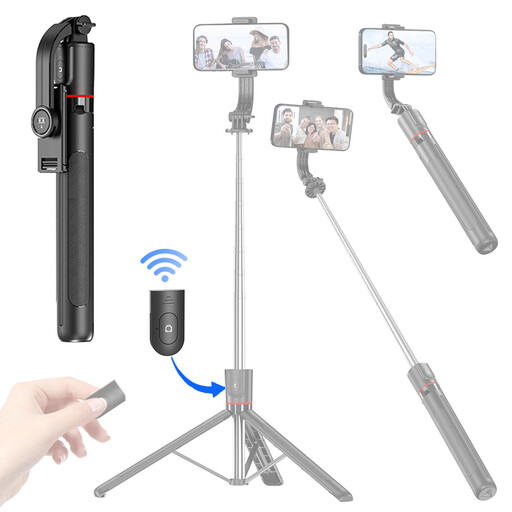
KINSI Selfie Stick with Tripod, 170 cm, Bluetooth Remote Control
For smartphone photos taken from a fixed position, the product title lists a Bluetooth remote control and a tripod.
The title specifies a length of 170 cm, a 360° rotating phone holder and support for smartphones from 4.7 to 6.0 inches.
View at Joybuy
 No image available
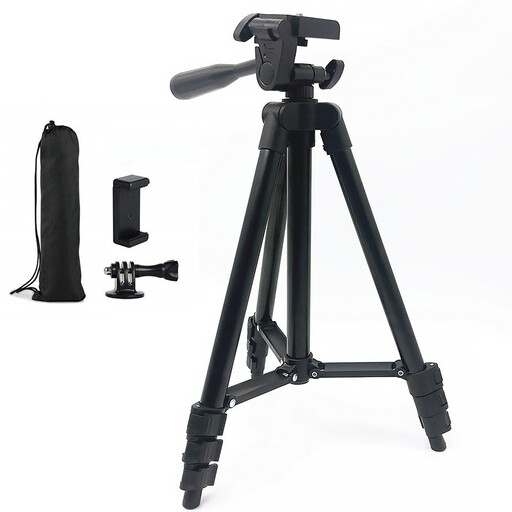
KINSI Smartphone Tripod with Bluetooth Remote Control
For hands-free smartphone photography, the product description says you can control a compatible smartphone camera remotely.
The title describes a foldable, height-adjustable tripod for use on a table or outdoors.
View at Joybuy
 No image available
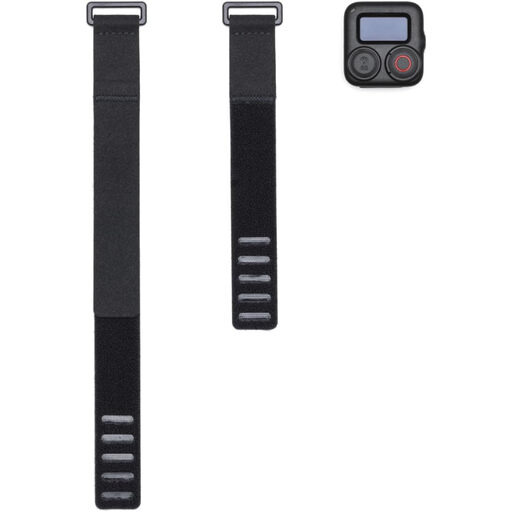
Osmo Action GPS Bluetooth Remote Controller
According to the product title, this remote control is designed for the Osmo models named there.
The title lists Osmo Action 4, Osmo Action 5 Pro, Osmo 360 and Osmo Action 6. Check that your model matches the stated compatibility.
View at Joybuy
 No image available
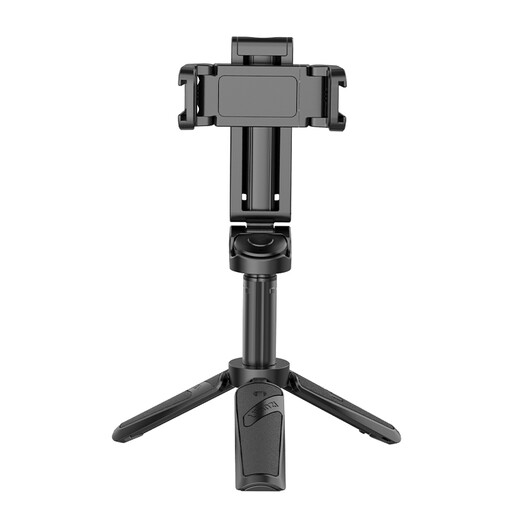
Ulanzi JJ02 Bluetooth Selfie Stick, 3-in-1 Phone Tripod
For a smartphone setup, the product title lists a Bluetooth remote control and compatibility with iPhone and Android.
The title specifies an extendable tripod and two cold shoe mounts.
View at Joybuy
Frequently asked questions
Can I photograph fabric swatches without a separate remote release?
Yes, if your camera supports an app that lets you operate the shutter remotely. Canon Netherlands describes Camera Connect as an option for many Canon cameras; check support for your exact model.
Will a remote control make the fabric colour accurate automatically?
No. A remote release operates the camera from a distance, but doesn’t correct colour reproduction. Changing light can affect the colour captured, so check the lighting and white balance separately.
What should I check before connecting a cable?
Check the connection required for your camera model and follow the manufacturer’s compatibility information. For the RR-100, Fujifilm specifies a 2.5-to-3.5 mm adapter for models including the X-S10 and X-T200.
Do consumer protection rules automatically apply if I buy a remote release for my online shop?
Don’t assume they do if you’re using it mainly for business. ACM ConsuWijzer states that entrepreneurs don’t have consumer protection for agreements used mainly or exclusively for business, although exceptions may apply, for example if the product is used mainly for private purposes. Check which terms apply to your agreement.


