
Photographer of high-contrast skies
Wants to retain detail in both the bright sky and dark reeds, and is happy to edit RAW files or use exposure bracketing.


Choose a mirrorless camera if you want to use different angles of view and have more control over exposure and RAW files. A compact camera is a better fit if you want to head out without changing lenses. In high-contrast light, RAW files and exposure bracketing can help you capture detail in both highlights and shadows, while the shutter speed determines how moving reeds appear. A heavier or better-stabilised body won’t automatically freeze movement in the reeds.
Wants to retain detail in both the bright sky and dark reeds, and is happy to edit RAW files or use exposure bracketing.
Wants to decide whether reed stems stay sharp or appear blurred in the wind; shutter speed is an important factor.
Carries a camera for long periods along damp paths and weighs portability and protection against the lens and image quality they want.
A good fit if: you want to choose between different angles of view and value control over RAW files and exposure.
Bear in mind: the body and lens make up the complete kit, so you may need to change lenses and carry extra weight.
A good fit if: portability and shooting without changing lenses are your priorities, and the fixed lens suits your compositions.
Bear in mind: you can’t fit a different lens later, so assess the specific camera rather than looking at the zoom range alone.
| What to consider | What should you check? | Who is this important to? |
|---|---|---|
| Contrast in changing light | RAW capture and exposure bracketing; consider whether moving reeds will make it harder to merge the images. | If I want to capture detail in both a bright sky and dark reeds, I look for RAW capture and exposure bracketing. Around 36% of consumers prioritise retaining detail in high-contrast scenes. |
| Movement in the reeds | Control over shutter speed and the effect you want: freezing movement sharply or showing motion blur. | If I want to choose between sharp stems and motion blur in the wind, I pay attention to shutter speed. Around 29% of consumers prioritise control over movement. |
| Portability and moisture | The weight of both the body and lens, and the stated weather resistance of each. | On longer walks along damp paths, I want to know how much the complete kit weighs and what protection it offers. Around 21% of consumers prioritise portability and moisture resistance. |
| Angle of view and kit cost | For a mirrorless camera: the mount and lens options. For a compact camera: the fixed lens and whether its zoom range is suitable. | If I want to weigh up both my preferred angle of view and the combined cost of the body and lens, I check the lens options and what’s included in the kit. Around 14% of consumers prioritise angle of view and the cost of the complete kit. |
Resolution alone doesn’t determine how well a camera handles changing contrast or which angle of view you can capture.
Compare the complete kit and check for RAW capture, exposure bracketing and the angle of view you need.
A kit that doesn’t suit your preferred angle of view may require an extra lens or more editing.
Stabilisation helps reduce camera shake, but it won’t stop reeds moving during a longer exposure.
Choose a shutter speed to achieve the effect you want, and assess stabilisation separately as a way to reduce camera shake.
The stated protection and weight of a body don’t automatically tell you the same about the lens or complete setup.
Check the usage guidance for both the body and lens. You may need a suitably weather-protected lens or additional protection.
The Z5II is a full-frame mirrorless camera to consider if you shoot handheld and are looking for a landscape lens with a Z mount.
The EOS R7 offers an APS-C system with an RF mount, allowing you to weigh up resolution, lens choice and moving subjects.
The OM-5 Mark II is worth considering if you pay attention to low body weight and specified protection on walks.
The α7 IV (ILCE-7M4) is a full-frame E-mount option to consider if you want to pair RAW capture with a suitable lens.
This selection includes compact cameras and mirrorless cameras sold for photography. Check whether each model’s features, lens and protection suit the way you shoot in changing light and along damp paths.
 No image available
Its stated weight of 179 g may be useful if you want to carry as little as possible on a walk.
The description lists a 1-inch CMOS sensor and 3-axis mechanical stabilisation.
The product title lists 4K/120fps video; check whether the other features suit the landscape shots you want to take.
 No image available
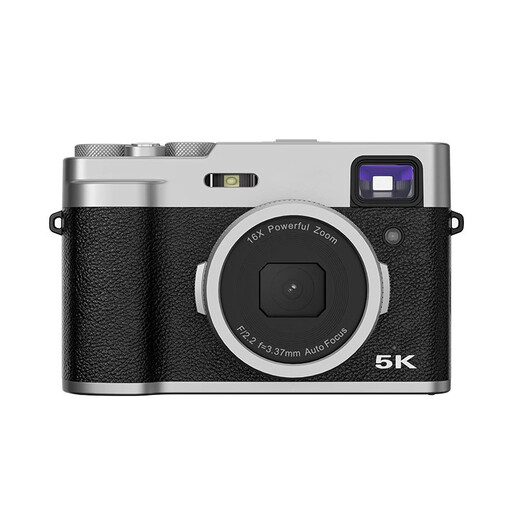
This digital camera is described as compact and has an optical viewfinder, making it worth considering if you want a fixed-lens camera with a viewfinder.
The product information lists autofocus, an optical viewfinder and a 2.8-inch LCD screen.
The title lists 48MP and 5K; these figures alone don’t tell you whether the image quality will meet your needs.
 No image available
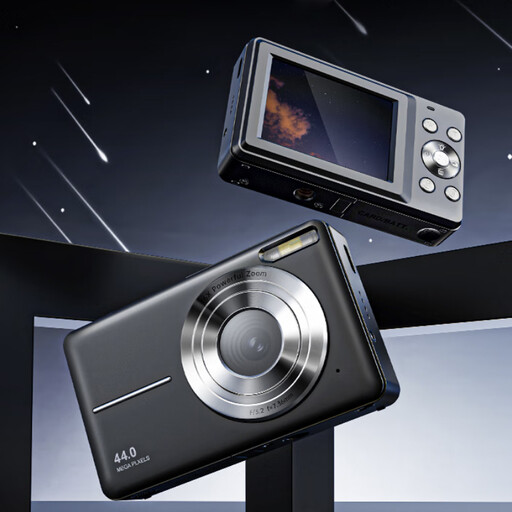
This compact camera is worth considering if you’re looking for a built-in fixed lens for taking both photos and videos.
The title lists 4K, 44MP and 16X digital zoom. The product information lists autofocus.
Digital zoom is no substitute for checking the angle of view and the results you want with your chosen subject.
 No image available
The supplied 16–50mm lens gives you a choice of angles of view in a single kit; check that it suits your landscape compositions.
The product information lists an APS-C sensor, 24.2 MP and a Sony E mount.
The product information warns against exposing the camera to moisture, so bear this in mind when shooting along wet paths.
 No image available
The supplied 16–50mm lens is worth considering if you want to try different landscape angles of view with one kit.
The product information lists an APS-C sensor, 24.2 MP and continuous shooting at up to 11 fps.
The product information warns against exposing the camera to rain or moisture, which is worth bearing in mind on walks along wet paths.
First, check the exposure and, if you like, shoot in RAW. If there’s a large difference in brightness, you can take multiple exposures if your camera supports it; when merging them, watch out for reeds that move between shots.
No. Image stabilisation helps reduce camera movement, but it won’t freeze moving reeds. Sony Netherlands explains that a faster shutter speed can freeze movement, while a slower shutter speed can capture it as blur.
Follow the care instructions for your camera and lens, and check for moisture and dirt before storing your equipment or changing lenses. Canon Netherlands warns that dust and dirt can get inside when you change lenses and cause marks on your images.
For online consumer purchases made at a distance, you generally have a statutory cooling-off period of up to 14 days after delivery, with some exceptions. ACM ConsuWijzer also explains that if a product doesn’t meet what you could reasonably expect under normal use, the seller must offer an appropriate solution. Check the terms for your specific purchase.
It depends on the rules for that specific location. The Dutch Government states that provinces set the rules for their areas; Staatsbosbeheer directs visitors to access signs and designated paths in its nature reserves. Check the local rules and stay out of reed beds that are closed to visitors.