
Landscape walker
You want to capture the reeds, water and sky together. So check the wide-angle setting of the lens actually supplied with the camera.


For a reed-bed landscape, the lens’s field of view matters. If you also want to capture birds or distant details, check the telephoto range of the complete kit. A compact camera with a fixed lens means you don’t have to change lenses, while a mirrorless camera gives you more choice but may require extra equipment. A bridge camera offers a wide fixed zoom range, but that range alone doesn’t tell you how suitable the camera is for every shot.
You want to capture the reeds, water and sky together. So check the wide-angle setting of the lens actually supplied with the camera.
You want to take photos quickly on the move without carrying several lenses. Compare a camera with a fixed lens against the weight of a complete mirrorless camera kit.
You want to photograph distant subjects as well as the landscape. Check that the complete kit includes the telephoto range you need.
First decide what field of view you need. Then consider the zoom range, carrying weight, handheld use and the cost of the complete kit.
Choose this if: you don’t want to change lenses during your walk. Sony lists the RX100 VII as having a 24–200 mm full-frame equivalent range.
Trade-off: the lens is fixed and can’t be replaced with one offering a different field of view.
Choose this if: long-distance reach is a priority and you don’t want to change lenses. Panasonic lists the FZ82D as having a fixed lens with a 20–1200 mm full-frame equivalent range.
Trade-off: a wide zoom range alone doesn’t show how well the camera performs at every setting. The Consumentenbond also highlights how difficult it can be to handle a camera at high zoom.
Choose this if: you want to select a lens that suits your composition. Canon says the EOS R50 supports RF and RF-S lenses.
Trade-off: the supplied lens determines the field of view. Canon doesn’t list in-body image stabilisation for the R50.
Choose this if: you want to photograph landscapes and distant subjects on the same walk. Nikon lists the Z50II kit as including a 16–50mm VR lens and a 50–250mm VR lens.
Trade-off: you’ll carry two lenses and switch between them.
| What to consider | What should you look for? | Who will this matter most to? |
|---|---|---|
| Wide composition | Compare the wide-angle setting of the complete camera-and-lens combination, and note the difference between focal length and full-frame equivalent. | If I want to capture the reeds, water and sky together, I start with the lens’s field of view. Around 29% of consumers put a wide landscape composition first. |
| Distant subjects | Check the optical telephoto range and which lenses are actually included in the kit. | If I also want to photograph birds or distant details, I check whether the kit includes a telephoto lens. Around 22% of consumers prioritise long-distance reach. |
| Easy to carry | Compare the weight of the complete kit, not just the camera body. | For a weekend walk, I want to keep the weight down, even if that means less choice of lens. Around 21% of consumers put ease of carrying first. |
| Handheld photography | Check the stabilisation in your chosen camera-and-lens combination and what protection applies to the complete kit. | If I’m heading out without a tripod, I want to know what stabilisation my combination offers. Around 14% of consumers prioritise ease of handheld use. |
| Complete kit | Check what’s included, and factor in any extra lenses, batteries and memory cards you’ll need. | I want to know in advance what equipment I’ll need for my photos, not just which camera body I’m buying. Around 14% of consumers first consider everything they’ll need to buy. |
The field of view and zoom range depend in part on the lens. A camera body on its own doesn’t tell you what the advertised combination can capture.
Before comparing, note the full model name and every lens included.
A long telephoto range won’t suit every composition and can make it harder to keep a distant subject in the frame.
Compare both the wide-angle setting and the telephoto range with the subjects you want to photograph.
A weight specification for the camera body alone doesn’t include the lens or other essentials.
Compare the weight of the exact combination you plan to take on your walk.
The EOS R50 is a mirrorless camera body for anyone who wants to choose their own RF or RF-S lens.
Nikon says the Z50II kit includes a 16–50mm VR lens and a 50–250mm VR zoom lens.
According to Sony, the RX100 VII has a fixed zoom lens with a 24–200 mm full-frame equivalent range.
Panasonic describes the LUMIX FZ82D as a bridge camera with a fixed 20–1200mm lens, expressed as a full-frame equivalent.
According to Fujifilm, the X-S20 is a mirrorless camera with an X mount and in-body image stabilisation.
These cameras from Joybuy are suited to landscape photography on a walk, with a range of lens and zoom set-ups.
 No image available
The product description mentions landscapes and 12× optical zoom for subjects at different distances.
The product name lists 4K, 64 MP and Wi-Fi.
 No image available
The kit includes a 16–50mm zoom lens. Check that its range suits the field of view you want for your landscape shots.
 No image available
The included lens is a 16–50mm zoom. Compare its wide-angle setting with the composition you want to create.
 No image available
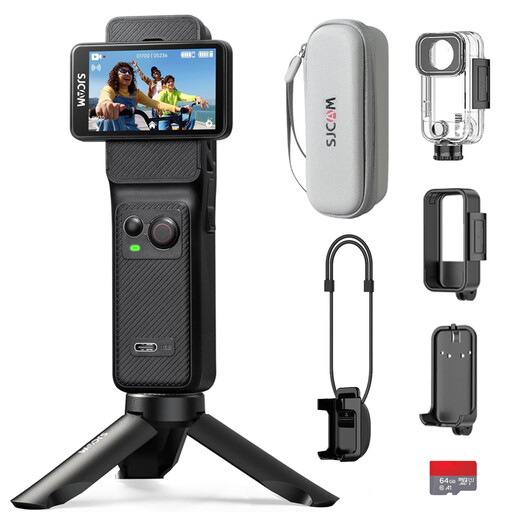
The product description lists a 154° lens and photos up to 16 MP. These details may be useful if you want to capture a wide scene.
The product name lists 6-axis stabilisation, water resistance to 30 metres and an included 64 GB card.
 No image available
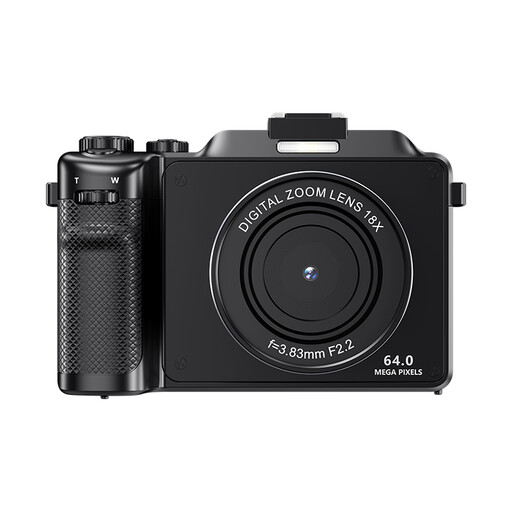
The camera is described as compact for taking photos on an outing.
The 18× zoom is digital; the product description warns that this may reduce image quality. So don’t assume from the zoom figure alone that it replaces optical telephoto reach.
For the whole landscape, check the wide-angle setting; for birds or distant details, look at the telephoto range. Check the lens supplied with the exact camera or kit, not just the camera body.
Check what stabilisation your chosen camera-and-lens combination offers. Stabilisation helps reduce camera shake, but it won’t freeze a moving subject on its own; adjust your shooting settings to suit the movement.
First check which lenses are included with the camera and whether you’ll also need a suitable memory card or spare battery. The Consumentenbond lists lenses, memory cards and batteries as separate things to consider when buying.
According to the Rijksoverheid, you’re entitled to a product that works as it should, and there’s no fixed statutory guarantee period in the Netherlands. The retailer is your point of contact if there’s a problem; a manufacturer’s guarantee is additional.
That depends on the access rules for the particular nature reserve, not on your camera. The Rijksoverheid outlines the protection of nature reserves, while Staatsbosbeheer refers visitors to the access signs at its sites. Check the local rules and stay within the areas you’re allowed to enter.