Which camera option is right for you?

Photographing small details

You want to capture lettering, small parts and signs of restoration. Compare magnification and the mode in which the stated focusing distance applies, not just the megapixel count. OM SYSTEM, Canon and Nikon describe the relevant features and lens specifications for the models mentioned.

Photographing the whole radio

You want to photograph the entire radio from repeatable angles, while sometimes getting closer to a particular detail. Consider the framing options offered by the standard zoom and how you can position the camera securely. Canon describes a tripod as a useful aid for maintaining consistent framing.

Working with limited space

You share the workbench and want to set up and put away your camera and lighting quickly. Measure the space around the radio: focusing from very close up can limit room for soft lighting. What’s more, the stated distance sometimes applies only in a particular camera mode.

What should you look for when choosing?

Compact camera with a close-up mode

Best for Small lettering or parts are your main subject and you don’t want interchangeable lenses on the workbench. OM SYSTEM says the Tough TG-7 has a Microscope mode that can focus from 1 cm away.

Consider The 1 cm distance applies in that mode, not to every shot. The lens is fixed, so also consider the lighting and whether the camera can frame the whole radio as you’d like.

Mirrorless camera with a standard zoom

Best for You want to frame the whole radio and might choose a different lens later. The Canon EOS R50 with RF-S 18-45mm lets you achieve different framings with the same zoom lens.

Consider Canon specifies a maximum magnification of approximately 0.14× to 0.26× for this lens, depending on the focal length and focusing method. That doesn’t automatically make it a macro lens.

Mirrorless camera with a separate macro lens

Best for You want to photograph both the whole radio and small details, and are happy to choose a lens for each task. Nikon specifies a maximum optical reproduction ratio of 0.67× for the separately sold Z DX MC 35mm f/1.7.

Consider The macro lens isn’t included in the Z50II standard zoom kit reviewed here. At the closest focusing distance, the distance from the front of the lens to the subject is approximately 7.2 cm, according to Nikon.

Compact camera with built-in macro lights

Best for You want to document small parts quickly and prefer integrated lighting to an interchangeable lens system. Ricoh says the PENTAX WG-90 has a Digital Microscope function that works from 1 cm away, as well as six LED macro lights.

Consider Try the lights on shiny buttons or metal parts to check for reflections. Ricoh’s Dutch product page states that its website is intended for B2B businesses only.

Mirrorless camera if video is important

Best for You want to film restoration steps as well as take photographs. Sony confirms that the ZV-E10 II kit includes the E PZ 16-50mm F3.5-5.6 OSS II.

Consider Sony specifies a maximum magnification of 0.215× for this lens. Check the full model number: the ZV-E10 and ZV-E10 II are different cameras.

What to consider What to look for when buying Who is this important to?
Small restoration details Compare magnification and focusing distance in the specific mode or with the lens you’ve chosen. If I want to capture small lettering or parts, I need to know how much detail will actually be visible. Around 36% of consumers say small details are their top buying priority.
Overall view of the radio Check the zoom range of the supplied lens and whether you can keep enough distance from the subject in your workspace. To take a consistent series of photos of the whole radio, I want to be able to repeat a useful frame. Around 29% of consumers give overall shots their highest priority.
Room for the camera and lighting Measure the available workspace and allow for shooting distance, camera controls and lighting. If I share the workbench, my setup must fit without getting in anyone else’s way. Around 21% of consumers name available workspace as their top priority.
Process video Decide whether filming is a main task and check the exact camera body and lens included in the kit. If my main aim is to film restoration steps while also taking photographs, video needs to factor into my choice. Around 14% of consumers say process video is their top priority.

Camera-buying pitfalls for radio photography

  • Focusing only on megapixels or close-up distance

    A short focusing distance doesn’t tell you how much of a small part will fill the frame. Magnification, the lens and the selected camera mode all matter too.

    Compare the magnification with the size of your smallest part, and take a test shot of the whole radio as well.

    A separate lens also needs space to be stored safely and changed over.

  • Confusing the Sony ZV-E10 with the ZV-E10 II

    The option reviewed here is the ZV-E10 II with the SELP16502 lens. A product called the ZV-E10 isn’t necessarily the same camera body or bundle.

    Before buying, compare the full model number, lens version and bundle contents.

Camera brands to compare

OM SYSTEM

The Tough TG-7 is a compact option for close-ups, without the need to change lenses at the workbench.

  • OM SYSTEM documents a Microscope mode for the TG-7 that can focus from 1 cm away, along with a fixed lens offering a 25-100mm-equivalent range.
  • The stated close-up distance applies in that mode and isn’t an independent comparison of image quality with mirrorless cameras.

Canon

The EOS R50 with RF-S 18-45mm is a mirrorless option for overall shots, with the flexibility to choose a different lens later.

  • Canon documents the lens’s compatibility and different maximum magnifications for each focal length and focusing method.
  • The standard zoom isn’t automatically a macro lens. Accessories included may vary by bundle.

Nikon

The Z50II standard zoom kit can be paired with a separately selected NIKKOR Z DX MC 35mm f/1.7.

  • Nikon specifies a maximum optical reproduction ratio of 0.67× for this separate macro lens.
  • The standard zoom kit doesn’t include the macro lens. Choosing a lens and making room for your setup are separate considerations.

PENTAX

The WG-90 is a compact option with a Digital Microscope function and built-in macro lights.

  • Ricoh says the WG-90 can take photographs from 1 cm away and has six LED macro lights.
  • The Dutch product page states that its website is intended for B2B businesses only. The lights don’t guarantee that shiny radio parts will be well lit in every setup.

Sony

The ZV-E10 II with SELP16502 is a mirrorless option if you want to make process videos as well as take photographs.

  • Sony confirms that the ZV-E10 II kit includes the E PZ 16-50 mm F3.5-5.6 OSS II zoom lens.
  • Sony specifies a maximum magnification of 0.215× for this lens, so check whether that’s enough for your smallest details.

Joybuy cameras for workbench photography

These compact cameras are designed for taking photos and recording video. For radio photography, it’s worth checking specifically whether the focusing and magnification suit your smallest details.
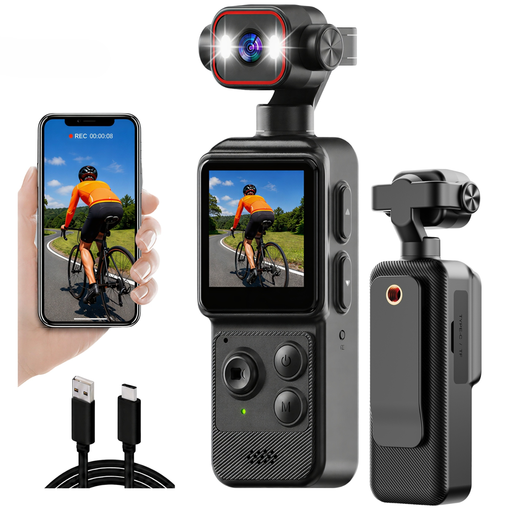
Mini Action Camera 4K with Clip

Mini Action Camera 4K with Clip

The clip attachment listed may be useful if you’re looking for a compact mounting option. For radio photography, also check whether the camera can focus from your preferred distance.

The product name lists a 1.54-inch display, a 140° wide-angle lens, LED light, app control and a 1200 mAh battery.

Joybuy

Songdian Pocket Camera 4K 44MP, Pink

Songdian Pocket Camera 4K 44MP, Pink

This pocket camera is listed for photography and video. Check whether its focusing and shooting distance suit the small parts of your radio.

The product name lists 4K, 44MP and 16× digital zoom. The description mentions autofocus; digital zoom isn’t a substitute for optical magnification.

Joybuy
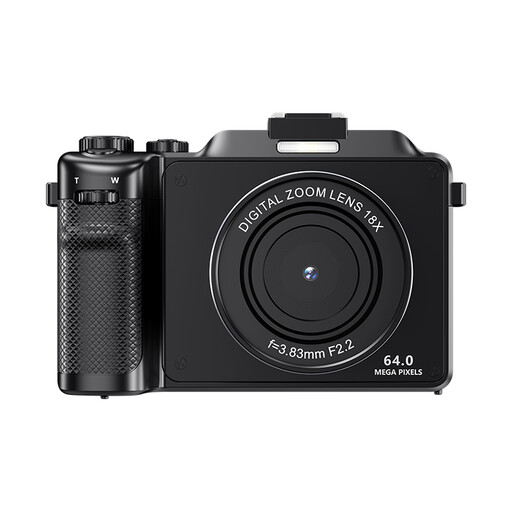
Komery X9 4K 64MP Autofocus Camera

Komery X9 4K 64MP Autofocus Camera

Autofocus is listed for this camera. Also check whether the lens can focus from the distance you’ll be using to photograph small radio parts.

The product name lists 4K, 64MP and 18× digital zoom. The product description warns that digital zoom can reduce image quality, so don’t rely on it to capture extra detail.

Joybuy

Frequently asked questions

Is a short focusing distance the same as having a good macro lens?

No. Also compare the stated magnification and the setting in which it applies. Canon specifies different maximum magnifications for the RF-S 18-45mm, depending on the focal length and focusing method; Nikon gives a maximum optical reproduction ratio of 0.67× for the separate Z DX MC 35mm lens.

How can you frame the whole radio the same way each time on a shared workbench?

Place the stationary radio, background and camera in recognisable positions, and use a stable support where possible. Canon says a tripod can help you maintain consistent framing. When setting up, also leave enough room for other people to work.

Do you need to buy anything besides the camera body with a mirrorless camera?

Check the contents of the exact bundle. The Canon bundle reviewed here includes an RF-S 18-45mm lens and accessories. The Nikon Z50II standard zoom kit includes a 16-50mm lens, but not the separately discussed 35mm macro lens. Other bundles may contain different items.

Are you automatically entitled to exactly two years’ legal guarantee on a camera in the Netherlands?

No. According to the Dutch government, consumers are entitled to a product that works properly, but there’s no fixed statutory guarantee period in the Netherlands. If a product is faulty, contact the seller; a manufacturer’s guarantee is additional.

Can you always return a camera bought online in the Netherlands within 14 days?

For eligible distance purchases from a business, the Dutch government says you’ll generally have a 14-day cooling-off period. This doesn’t automatically apply to every transaction, such as an online purchase from a private seller. Check whether the rules apply to your purchase.
