Choose a mirrorless camera with a suitable lens if you want to control the exposure of a bright sky and dark foreground, and have flexibility over your field of view. A compact camera with a fixed zoom may suit you better if you want to travel light. In either case, compare the complete kit, including the lens, controls and protection against moisture. Also check that your chosen location is accessible before sunrise.
Who should consider these camera options
Photographer of bright skies and dark foregrounds
Wants to assess exposure at sunrise and take multiple exposures if needed. Nikon describes bracketing as a way to capture images at different exposures, while Consumentenbond points out that both the sensor and lens affect image quality.
Lightly equipped polder walker
Wants to make sure they actually take the camera along, weighing the convenience of a compact kit against the choice offered by interchangeable lenses. With a compact camera, the lens is fixed to the camera, as Consumentenbond explains.
Photographer working in dew and changeable weather
Often takes photographs outdoors and wants to consider the protection offered by the complete camera-and-lens combination they use. OM Digital Solutions, for example, lists IP53 protection for the OM-5 body; this does not automatically say anything about an attached lens.
What to look for when choosing
Mirrorless camera with interchangeable lens
A good fit if: you want to choose between different fields of view and set the exposure yourself.
Trade-off: an extra lens gives you more options, but also means more to carry. Check which lens is included in the kit.
Compact camera with fixed zoom
A good fit if: you want to head out with minimal camera gear and without changing lenses.
Trade-off: the built-in lens cannot be replaced, so check that its range suits your viewpoint.
System with protection for outdoor use
A good fit if: you often take photographs in dew or changeable weather and put a high priority on protection.
Trade-off: a body specification does not automatically apply to the lens or other parts of the kit.
| What to consider |
What to look for when buying |
Who should prioritise this |
| Exposure in backlit conditions |
Check the exposure controls and whether the exact model supports bracketing. |
If I want to retain detail in both the bright sky and dark foreground, I look at the exposure options; around 36% of consumers give exposure control their highest priority. |
| Portability and lens choice |
Compare the weight of the complete kit and the range of the included lens. |
If you want to carry as little as possible on an early walk, a fixed lens may be important; around 29% of consumers put portability first. |
| Protection against moisture |
Check the usage conditions for both the body and the lens you choose. |
For consumers who often take photographs in dew or changeable weather, protection for the whole kit matters; around 21% give protection against moisture their highest priority. |
| What’s included in the complete kit |
Check whether the offer includes a lens and whether the mount is compatible with lenses you already own. |
If I want to avoid missing essential items, I compare everything included in the kit; around 14% of consumers put the contents of the kit first. |
A high megapixel count alone does not tell you how a camera will capture a bright sky and dark foreground. Consider the exposure, lens and sensor together. Taking multiple exposures can help capture both bright and dark areas, but it requires extra shots and potentially some post-processing.
Common pitfalls
-
Focusing on megapixels alone
The lens and the way it works with the sensor also affect image quality. A resolution figure alone therefore will not tell you whether the complete camera kit is right for this scene.
Compare the lens included with the kit and the specifications of the complete camera, not just its resolution.
-
Mistaking a body-only offer for a complete kit
A camera body may be offered without the lens you need for your preferred field of view. Nikon, for example, offers the Z50II with different lens combinations.
Check the exact version and everything included before you choose.
Depending on what you already own, you may still need a suitable lens or adapter.
-
Assuming body protection covers the whole kit
The IP53 protection specified by OM Digital Solutions applies to the OM-5 body and does not automatically cover every lens combination.
Check the specifications and usage conditions for both the body and the lens you choose.
-
Assuming a nature reserve is open before sunrise
Staatsbosbeheer states that most of its areas are open from sunrise to sunset and are generally accessible only via roads and paths. Rules may vary from one area to another.
Check the information and access signs for your specific location in advance, and choose an accessible spot if needed.
Camera brands to consider
Canon
The EOS R50 is a mirrorless camera with an RF mount, while the PowerShot G7 X Mark III is a compact camera with a fixed zoom lens.
- Canon lists RF and RF-S support for the EOS R50; EF and EF-S lenses require a suitable adapter.
- According to Canon, EF-M lenses are not compatible with the EOS R50. The PowerShot G7 X Mark III has a built-in, non-interchangeable zoom lens.
Nikon
The Z50II is worth considering if you want to compare a mirrorless camera with different lens kit options.
- Nikon lists an electronic viewfinder that lets you see how photos will look with your chosen settings.
- The lenses included vary by kit. The combination with 16–50 mm and 50–250 mm lenses is included with the relevant two-lens kit.
Fujifilm
The X-S20 is an APS-C mirrorless camera that lets you consider RAW storage and in-body stabilisation.
- Fujifilm specifies RAW storage and five-axis sensor stabilisation for the X-S20.
- According to Fujifilm, the specified 7.0-stop compensation is based on test conditions and is not a guaranteed gain for every shot. Also check which lens is included with the kit you choose.
OM SYSTEM
The OM-5 is worth considering if a compact kit and the stated body protection matter for outdoor photography.
- OM Digital Solutions lists IP53 protection and operation down to −10 °C for the OM-5 body.
- These specifications describe the body and do not confirm the protection of any lens or complete camera kit.
Sony
The ILCE-6400 is an APS-C camera with an E mount, so you can consider compatible lenses and RAW storage.
- Sony specifies an APS-C sensor, E mount and RAW storage for the ILCE-6400.
- Check the full model name and kit contents when looking at an offer; a different model designation does not necessarily mean it is the same version.
Joybuy cameras for this setting
This selection includes compact cameras for photography and Sony mirrorless cameras, available as body-only options or with a zoom lens. Check what is included with each version and whether the lens suits the composition you have in mind.
 No image available
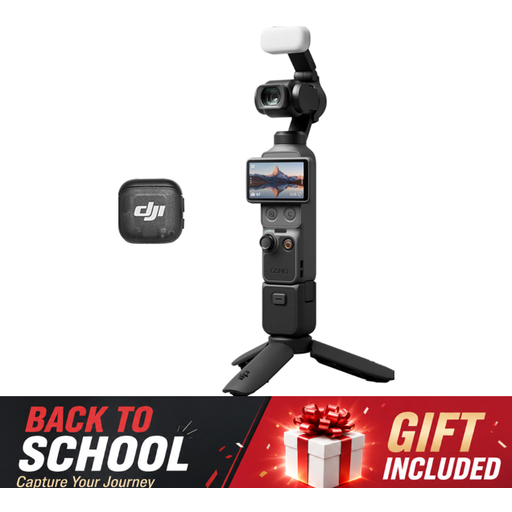
DJI Osmo Pocket 3 Creator Combo
This product version is described as a small camera for photography; check whether its controls and lens solution suit the way you take landscape photos.
The product name lists a 1-inch CMOS sensor, 4K/120fps video, 3-axis stabilisation and an included microphone.
Joybuy
 No image available
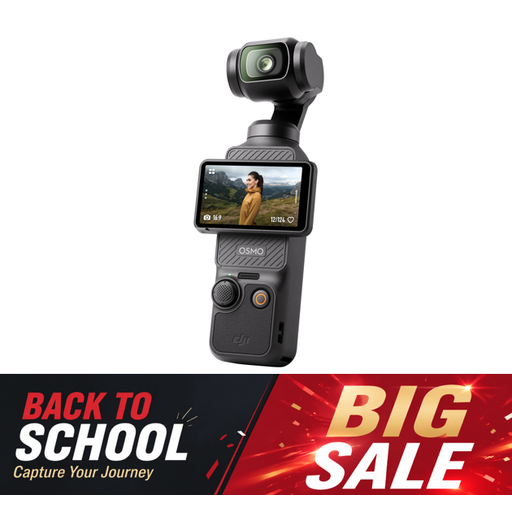
DJI Osmo Pocket 3
This version is described as a small camera for photography; check whether its controls suit taking photographs of a wide-open landscape.
The product name lists a 1-inch CMOS sensor, 4K/120fps video, 3-axis stabilisation and a 2-inch rotating touchscreen.
Joybuy
 No image available
Sony ZV-E10 + 16-50mm Zoom Black
This version is offered with a zoom lens; compare the lens included in the kit with the field of view you want to capture from your chosen spot in the polder.
The product name lists a 16–50 mm zoom lens.
Joybuy
 No image available
Sony Alpha A6100 + 16-50mm f/3.5-5.6 OSS II
The product name says this kit includes a zoom lens; compare its stated range with the compositions you want to create.
The product name lists a 16–50 mm f/3.5–5.6 OSS II lens.
Joybuy
 No image available
Sony ZV-E10 mirrorless camera body, without lens
According to the product name, this version includes the body only. You’ll need a compatible lens, so it’s mainly worth considering if you already own one.
Lens not included.
Joybuy
Frequently asked questions
Should I automatically use HDR for a bright sky and dark foreground?
No, HDR is not necessary for every shot. Start by assessing a single exposure. If you want to retain detail in both bright and dark areas, you can take multiple exposures with a camera that has the required function and combine them if you wish. Nikon describes bracketing and HDR as techniques, not requirements.
Will my existing lens fit a Canon EOS R50?
That depends on the lens mount. Canon lists direct support for RF and RF-S lenses, a suitable adapter for EF and EF-S lenses, and no compatibility with EF-M lenses.
What should I check after a damp photo session?
Follow the usage and care instructions for the specific body and lens. The IP53 protection specified by OM Digital Solutions for an OM-5 body does not automatically apply to every attached lens.
Can I enter a nature reserve before sunrise to photograph the polder?
Check the rules for the specific location before you set off. Staatsbosbeheer states that most of its areas are open from sunrise to sunset and are generally accessible only via roads and paths; access signs and any area-specific rules take precedence. This is not a general statement that photography before sunrise is prohibited everywhere.


