
Tile sellers who care about colour
You take repeatable product photos that show both the tile colour and the white background clearly. Controllable lighting and consistent white balance are important, as Adobe and Canon Netherlands explain.


Start with even, controllable lighting and a fixed set-up: a new camera body won’t automatically solve colour casts or distracting reflections. Choose a mirrorless camera if you need more control or a suitable lens, and check that the complete camera-and-lens combination can capture both the whole tile and the details you want from your working distance.
You take repeatable product photos that show both the tile colour and the white background clearly. Controllable lighting and consistent white balance are important, as Adobe and Canon Netherlands explain.
You want to minimise distracting reflections without losing the look of the glazed finish. Test the lighting direction and, if needed, take a test shot with a suitable filter; Orbitvu and Nikon Netherlands outline points to consider when photographing ceramics and reflections.
You switch between photographing a whole tile and capturing visible surface details. So check the framing and lens against the working distance you actually have available.
Start with lighting and colour, then check whether your camera and lens can achieve the framing you want from your working distance.
| What to consider | What should you look for? | Who should pay extra attention? |
|---|---|---|
| Colour against a white background | Check the white balance and image format of the exact model; keep the lighting set-up as consistent as possible between photos. | If I want the tile colour and background to look consistent across a product range, I start with stable lighting. Around 33% of consumers prioritise colour consistency. |
| Reflections and shine | Test different lighting angles and, if necessary, a filter that fits the lens. | With glossy tiles, I want to control reflections without making the glaze invisible. Around 27% of consumers prioritise controlling reflections. |
| Whole tile and details | Compare the tile size and working distance with the angle of view and close-up capabilities of the exact camera-and-lens combination. | When I need both an overall shot and a surface detail, I consider framing and focusing distance from my work area. Around 20% of consumers put this combination first. |
| Complete set-up | Check which components are included and whether the set works with your tripod, lens and lighting. | If I want to get started without finding that key components are missing, I check everything included in the kit before choosing. Around 20% of consumers prioritise a complete, usable set-up. |
Lighting and white balance affect how the tile colour and white background appear in your photos. Simply choosing a different body won’t automatically give you consistent results.
First, test a fixed lighting set-up and check the white balance with your existing camera.
A camera body’s specifications won’t tell you whether the supplied lens suits your tile size and working distance.
Check exactly what’s included in the kit and assess whether the lens works for both an overall shot and the details you want to show.
The EOS R50 is an APS-C mirrorless camera for anyone looking for a compact body and a choice of RF and RF-S lenses.
The Z50II is a mirrorless camera with interchangeable lenses. Lens choice and a fixed set-up are important considerations for repeatable tile photos.
The α6400 is an APS-C option with interchangeable lenses; the α7 IV is a separate full-frame model. Choose between models based on what you need to shoot, not just the pixel count.
The options shown are compact or digital cameras. For each model, compare the listed features with your tile size, desired framing and working distance.
 No image available
The product name describes a camera with a storage case. Check whether the framing and focusing distance work for both an overall tile shot and the details you want to capture.
 No image available
The listed zoom is one feature to consider when deciding on your framing. The zoom specification alone doesn’t confirm whether the camera is suitable for close-ups at your working distance.
The product name lists 12× optical zoom, 4K, Wi-Fi and 64 MP.
 No image available
Assess the listed features in the context of your tile set-up; video specifications don’t automatically determine the colour reproduction of still photos.
The product name lists a 1-inch CMOS sensor, 4K/120fps video, 3-axis stabilisation and a 2-inch rotating touchscreen.
 No image available
Compare your intended tile size and working distance with the framing you need; the zoom specification alone doesn’t confirm whether it’s suitable for capturing details.
The product name lists 4K, 44 MP and 16× zoom; the colour option is pink.
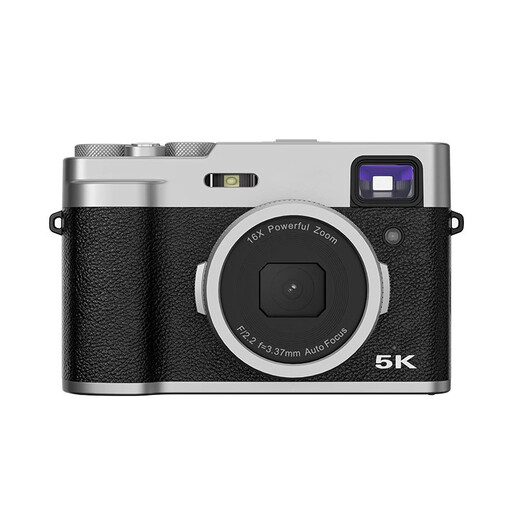 No image available
Check whether the camera and the listed viewfinder suit the framing and details you need; the megapixel count alone doesn’t guarantee a particular result when photographing tiles.
The product name lists 48 MP, autofocus, 5K and an optical viewfinder. The colour option is black.
Keep the lighting as consistent as possible and check the white balance again if the lighting changes. RAW can make later colour correction easier, but assess the tile colour and background separately; Canon Netherlands describes white balance as a way to achieve more natural-looking colour.
No, not necessarily. First, try changing the angle of the light, tile and camera. If needed, compare shots taken with and without a filter that fits your lens. Nikon Netherlands describes filters as a way to reduce reflections, but that doesn’t mean every tile or shot will respond in the same way.
Use a fixed tripod position and check the framing before taking the whole series. Canon Europe describes a tripod as a way to keep product photo framing and backgrounds consistent.
Not necessarily. For distance purchases, consumers usually have a 14-day cooling-off period; ACM ConsuWijzer states that consumer protection does not apply if you use the agreement mainly or exclusively for business. The ACM also describes the right to receive a product that meets the expectations you were entitled to have. So check the intended use and the agreement before relying on consumer rights.
Make sure your images don’t give a misleading impression or hide important information. The Netherlands Authority for Consumers and Markets describes these limits for information about an offer; it doesn’t require a specific camera model or photography technique.