You don’t necessarily need a new camera to photograph preserves under artificial light. Start by taking some test shots, then adjust the white balance, exposure and angle of the light. A camera with a fixed lens keeps your set-up simple; an interchangeable-lens camera is worth considering if you need a suitable lens for close-ups or different viewpoints. Nikon USA explains that shooting in RAW gives you more scope to adjust the white balance afterwards, while Canon Europe notes that a tripod can be useful for overhead shots and extreme close-ups.
Who is this camera set-up suitable for?
Makers who want to capture colours accurately
You photograph jars of preserves under artificial light and want the contents, lid and label to look true to colour. Sony describes white balance as the setting that helps whites appear white in a photo, so assess the results under your own lights.
Makers who want to capture label details and textures
You want to capture small lettering, herbs or textures up close. Consider the working distance and lens: Canon Europe discusses lens choice for food photography, while Which? explains that compact cameras have a fixed lens.
Makers with a permanent tabletop set-up
You photograph whole jars or several jars from a consistent angle. Nikon USA and Canon Europe mention a tripod as an option for overhead shots and low-light conditions, among other situations; check that there’s room for one in your set-up.
What factors should guide your camera choice?
Camera with a fixed lens
Choose this option if: you mainly photograph whole jars and simple lifestyle shots, and don’t want to change lenses.
Consider: a fixed lens limits your choice of focal length and how close you can focus. Test the framing you want from your working distance.
Interchangeable-lens camera with a suitable lens
Choose this option if: you want to capture small labels or textures in detail as well as whole jars, or take photos from different viewpoints.
Consider: an interchangeable lens gives you more choice, but the camera body or kit zoom alone doesn’t guarantee that you can take close-ups from your working distance. A macro lens or tripod may be an additional part of your set-up.
Keep using your current camera
Choose this option if: your current camera already captures the jar and label in sharp focus.
Consider: a fixed lens may still not offer enough magnification or adjustment options. Assess this using test shots with your intended set-up.
| Factor |
What to look for when buying |
Who should consider this? |
| Colour and exposure |
Compare automatic and adjustable white balance under your own lights. Check the exposure on both the label and the contents. |
If I photograph jars under artificial light, I want the white label and the contents to retain their colour. Around 36% of consumers say colour and exposure are their main buying concern. |
| Sharp detail |
Test focus and framing from your intended working distance, and check which lens comes with the camera. |
If I want to capture small lettering or herbs clearly, I check whether the lens can show those details sharply and at a large enough size from my working distance. Around 29% of consumers prioritise details like these. |
| Repeatable set-up |
Check whether the camera, lens and, if needed, tripod can achieve the angle and framing you want. |
If I photograph several jars or take overhead shots regularly, I want to be able to recreate my composition. Around 21% of consumers prioritise repeatability. |
| Cost and ease of use |
Compare what’s included in the camera kit and whether you need a fixed or interchangeable lens. |
If I want a straightforward purchase without choosing more components than necessary, I look at the complete kit and how easy it is to use. Around 14% of consumers prioritise simplicity and a complete purchase. |
Common pitfalls when choosing a camera
-
Assuming a kit zoom is a guaranteed macro lens
A photo of a whole jar and an extreme close-up don’t necessarily require the same magnification. A lens that works well for a wide shot may not capture small lettering or textures at the same size.
Test the supplied lens from your intended working distance before choosing another one.
A separate lens may be needed to fill the frame with small details. Check which lens is included in the kit and whether it meets your needs.
-
Buying a different camera body when the artificial light is the visible problem
A colour cast, flat lighting or shadows may also be related to the white balance and the direction of the light. Changing cameras won’t automatically fix these issues.
Take comparable test shots with adjusted white balance and light angles before deciding to replace your camera. Sony describes white balance as a tool for colour reproduction.
-
Assuming the manufacturer’s warranty covers all your legal rights
The Dutch government states that there is no fixed statutory warranty period in the Netherlands, and that if a product is faulty, you should contact the seller.
Keep your proof of purchase and compare the terms of any extended warranty with your statutory rights.
Camera brands to consider
Canon
Canon describes the EOS R50 as an interchangeable-lens camera with an RF mount; the body supports RF and RF-S lenses. This may be relevant if you’re considering different lenses for wide shots and close-up details.
- Canon Netherlands lists a 24.2 MP APS-C sensor.
- According to Canon, the EOS R50 doesn’t have in-body image stabilisation. Whether you can take close-ups also depends on the lens you choose.
Sony
Sony describes the ZV-E10 as a model with an E-mount that supports RAW photos. Lens choice and post-processing are worth considering if you want to fine-tune photos of your jars.
- The interchangeable lens and RAW shooting give you options for tailoring your set-up and editing your photos.
- Sony markets this model for vlogging. The standard zoom doesn’t guarantee that small details will appear large enough from your working distance.
Nikon
Nikon presents the Z 30 as an interchangeable-lens camera for video and content creation, among other uses. It may be worth considering if you also want to make videos of your preparation process.
- Nikon Netherlands lists a 20.9 MP DX sensor and a tilting screen.
- If you only want to take still photos of preserves, consider whether the video features mentioned are useful to you, and which Z lens suits your working distance.
OM SYSTEM
OM SYSTEM describes the OM-5 Mark II as a compact interchangeable-lens camera. Portability may be a factor if you also use the camera away from your permanent tabletop set-up.
- OM SYSTEM lists a weight of 418 g, including the battery and SD card, and a resolution of 20 MP.
- For tripod-mounted photos of preserves, portability and the features listed by the manufacturer may not be decisive. The lens is a separate consideration.
Joybuy cameras for photographing preserves
The Joybuy options below are digital cameras, including pocket and vlog models, as well as a Sony ZV-E10 kit. Above all, check that the lens and controls suit your jars, labels and lighting set-up.
 No image available
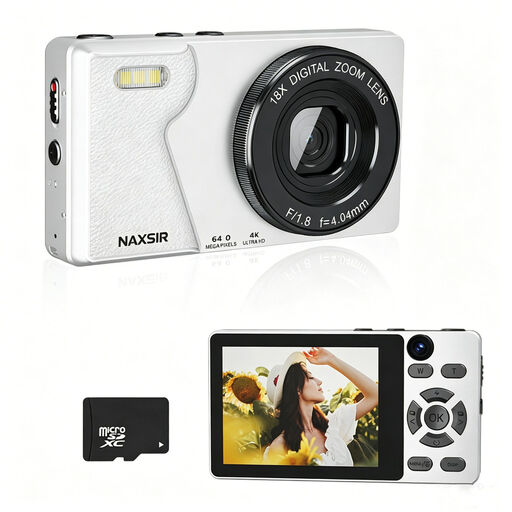
NAXSIR 4K Ultra HD camera, 64 MP, 18x digital zoom, autofocus, 32 GB memory card
The product title mentions photography. Take a test shot of the label and contents under your own lights before choosing this camera for the job.
The title lists 64 MP photo resolution, autofocus, 18x digital zoom and a 32 GB memory card. Digital zoom doesn’t prove that the camera offers macro magnification.
Joybuy
 No image available
KOMERY G7 5K camera, 80 MP, 18x zoom, white
The product title mentions photography. Take a test shot to check whether the jar and label text you want to capture are in sharp focus from your working distance.
The title lists 5K, 80 MP and 18x zoom. It also describes the model as a portable vlog camera for beginners.
Joybuy
 No image available
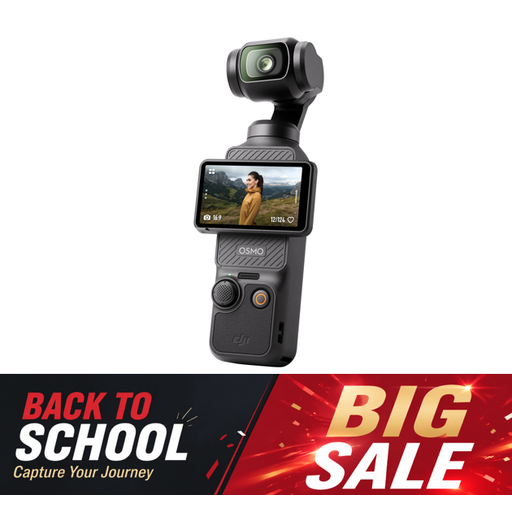
DJI Osmo Pocket 3 with 1-inch CMOS sensor
The product title mentions photography as a use. Take a test shot to see whether the controls and framing suit your permanent tabletop set-up.
The title lists 4K/120fps video, 3-axis stabilisation, tracking and a rotating 2-inch touchscreen.
Joybuy
 No image available
Songdian Pocket Camera 4K, 44 MP, 16X Zoom, pink
The product title mentions photography. Take test shots under your own lights to check whether the colours of the label and contents look as you want them to.
The title lists 4K, 44 MP and 16X Zoom, and mentions photography and video as uses.
Joybuy
 No image available
Sony ZV-E10 with 16–50mm zoom lens, black
This kit includes a 16–50mm interchangeable zoom lens. Test whether it captures the jar and small details well enough from your working distance.
Sony Netherlands lists a 24.2 MP APS-C sensor and E-mount for the ZV-E10. Sony also lists support for RAW photos, and the kit name specifies a 16–50mm zoom lens.
Joybuy
Frequently asked questions
How can I prevent a colour cast on a white label?
Take a test shot under your own lights and adjust the white balance if the label looks discoloured. Nikon USA explains that RAW gives you more scope to correct the white balance afterwards; check whether your camera supports RAW.
Do I need the same lens for a whole jar and a small label?
Not necessarily. First, test whether your current lens captures both subjects sharply and at a large enough size from the distance you want to shoot. Canon Europe mentions a macro lens as an option for very small details, but you won’t need one for every photo of a jar.
Can I return a camera bought online and use other people’s photos of my preserves?
For many eligible distance purchases from a business in the Netherlands, you have 14 days to change your mind; the Dutch government lists some exceptions. The Dutch government also states that you need the creator’s permission to use copyrighted photos publicly.


