
Detail enthusiast
You want to capture the veins, cap and texture of an acorn clearly. Look at the magnification of the complete camera-and-lens combination, not just the focusing distance.


For spontaneous close-ups on a walk, a compact camera with a dedicated close-up mode is a practical choice if you don’t want to change lenses. If you want to capture tiny details at a larger size and have more control over focus, compare a mirrorless camera with a suitable macro lens. Check the magnification of the complete camera-and-lens combination, as a short minimum focusing distance alone won’t tell you how large an acorn will appear in the frame.
You want to capture the veins, cap and texture of an acorn clearly. Look at the magnification of the complete camera-and-lens combination, not just the focusing distance.
You want to take a quick photo of an acorn while you’re out walking, without changing lenses. A camera with a fixed lens keeps your kit simple, but gives you less choice of lenses.
You take photos on damp or muddy paths too. Check the protection claims and usage conditions for the exact camera model and, with a mirrorless camera, for the lens as well.
Choose this option: if you want to quickly take photos close to the ground while walking, without changing lenses. OM SYSTEM lists a microscope mode on the TG-7 that focuses from 1 cm; Ricoh lists a digital microscope function on the PENTAX WG-90 that also focuses from 1 cm.
The trade-off: a fixed lens keeps your kit simple, but a 1 cm focusing distance isn’t a measure of magnification and won’t guarantee the framing you want.
Choose this option: if you want to capture small details at a larger size and have a choice of lenses. Canon specifies a maximum magnification of 1:2 for the separate RF 35mm F1.8 MACRO IS STM; Nikon specifies 1:1 for the NIKKOR Z MC 50mm f/2.8.
The trade-off: you’ll need a compatible body and lens, and have to carry both; the Canon EOS R50 kit doesn’t include the separate RF macro lens.
Choose this option: if you want to capture a variety of compositions on your walk, as well as acorns. Sony lists a 24–200 mm full-frame equivalent range for the DSC-RX100M7A.
The trade-off: the stated focusing distance of around 8 cm applies in wide-angle mode. It isn’t a guarantee for every zoom setting or for 1:1 macro magnification.
| What to consider | What should you look for? | Who is this most important to? |
|---|---|---|
| Detail in your photos | Compare the close-up mode or maximum magnification of the complete camera-and-lens combination. | I want to capture the veins and texture of an acorn at a large enough size, not just focus from close up. Around 33% of consumers put magnifying details first. |
| Easy to carry | Consider the size, controls and whether the built-in lens can capture both a wider view and a close-up. | When I want to take quick photos on the go, I’d rather not carry separate lenses. Around 27% of consumers give top priority to lightweight, ready-to-use equipment. |
| Protection in wet weather | Check the protection and usage conditions for the exact model; with a mirrorless camera, check the body and lens separately. | On damp or muddy paths, I want to know what protection my camera equipment has. Around 20% of consumers put protection in wet weather first. |
| Sharpness in woodland light | Check the model’s settings and whether focus stacking is done in the camera or requires post-processing. | I want to get the parts of an acorn that matter to me in focus in changing woodland light. Around 20% of consumers make sharpness in these conditions their top priority when choosing. |
Focusing distance and magnification ratio describe different features. A short distance therefore doesn’t guarantee that an acorn will appear at the size you want in the frame.
Compare sample framing or assess the complete camera-and-lens combination at the distance you plan to shoot from.
The Canon EOS R50 kit includes the RF-S 18-45mm zoom lens, not the separate RF 35mm macro lens. For the kit lens at 45 mm, Canon specifies a maximum magnification of 0.16× with autofocus or 0.26× with manual focus; for the separate RF 35mm F1.8 MACRO IS STM, Canon specifies a maximum of 1:2.
Before buying, check the full lens name, compatibility and what’s included in the order.
A compatible macro lens may need to be bought separately.
The protection offered by a camera and its lens isn’t necessarily the same. Canon doesn’t specify dust and moisture resistance for the RF-S 18-45mm kit lens.
Check each component separately and follow the usage conditions for the exact model.
A manufacturer’s or retailer’s guarantee doesn’t automatically replace your statutory rights. In the Netherlands, these depend on what you could reasonably expect from the product under normal use.
Keep your proof of purchase and distinguish between a commercial guarantee and your statutory rights against the seller.
The Tough TG-7 is a fixed-lens compact camera for walkers looking for a close-up mode and rugged features.
The Ricoh Imaging WG-90 is another rugged compact camera to consider for close-ups on walks.
The EOS R50 is a mirrorless camera option for anyone wanting to use a compatible RF macro lens.
The NIKKOR Z MC 50mm f/2.8 is worth considering if you own or are looking at a compatible Nikon Z camera.
The RX100 VII is a compact camera with zoom for anyone who wants to capture other compositions on the same walk.
This Joybuy selection features cameras for photography on the go. For close-ups of acorns, check that the capabilities of the complete camera-and-lens combination suit the framing you want.
 No image available
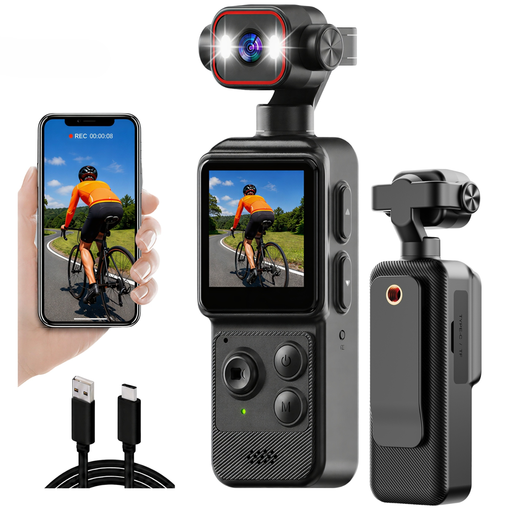
Worth considering if you want to take a camera with a clip on your walk; check separately whether its close-up capabilities are suitable for acorns.
The product name lists 4K, a 140° wide-angle lens, a 1.54-inch display, app control, LED light and a 1200 mAh battery.
 No image available
Worth considering if you want to shoot video as well as take photos on a walk; check whether its close-up framing is suitable for small subjects.
The product name lists a 1-inch CMOS sensor, 4K/120fps video, 3-axis stabilisation and a 2-inch rotating touchscreen. The product description gives its weight as 179 g.
 No image available
Worth considering if you’re looking for a camera with a zoom lens for different compositions on the go; check its close-up capabilities for acorns before buying.
The product description lists a 24.2 MP APS-C sensor and a 16–50mm kit lens. It warns against exposing the camera to moisture.
 No image available
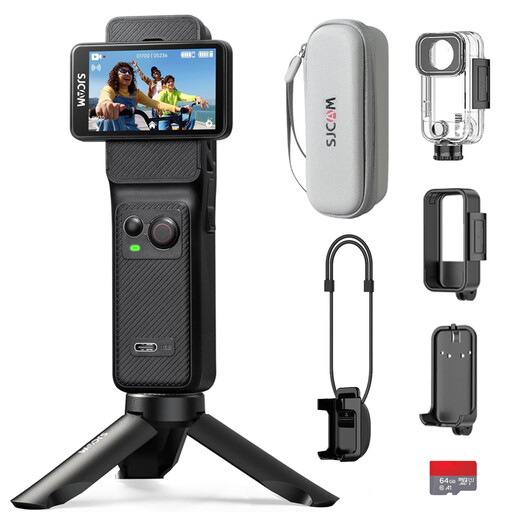
An option for anyone wanting to capture still images on the go; check the close-up framing before choosing this camera for acorn photography.
The product name lists a 7-hour battery life, 6-axis stabilisation and two touchscreens. The stated water resistance to 30 m requires the supplied waterproof housing; the camera body itself isn’t waterproof. The set also includes a 64GB card.
No. OM SYSTEM lists a shooting distance from 1 cm for the TG-7, and Ricoh does the same for the WG-90, in a close-up mode; Nikon specifies 1:1 as the magnification ratio for a particular lens. So, assess the framing you want using the complete camera-and-lens combination.
Start by choosing your focus point and the depth of field you want. Canon describes focus stacking, which combines several shots taken at different focusing distances. A stable setup helps keep the images aligned; check whether your chosen camera model has the feature you need.
It depends on the area. Staatsbosbeheer directs visitors to the access signs and local rules for its nature reserves; check these on site before leaving the path.
Online consumer purchases generally come with a statutory cooling-off period of up to 14 days after delivery, subject to legal exceptions; ACM ConsuWijzer explains how this period works. In the Netherlands, statutory guarantees also apply if a product doesn’t meet what you could reasonably expect under normal use. The ACM states that there is no general fixed two-year period for this.