First, choose a camera and lens combination that lets you frame the whole patchwork from where you’ll be shooting. Then check whether the lens can focus closely enough to capture the smallest details. A compact camera with a macro mode keeps your kit simple, while a mirrorless camera gives you more choice of lenses and may need an extra lens for close-ups. Whichever route you take, a stable setup, suitable lighting and careful attention to white balance are important.
Who is this camera choice for?
Patchwork maker capturing the whole piece
You want to show the whole piece clearly alongside small display objects and are looking for a suitable camera and lens combination. The Consumers’ Association (Consumentenbond) recommends considering what you photograph and the zoom range you need when choosing a camera.
Maker showcasing fabric details
You want to photograph seams, textures or embellishments up close, so you’ll need to consider the lens’s magnification and working distance. Sony Netherlands explains that working distance is the distance between the subject and the front lens element.
Maker creating consistent product photos
You photograph your work regularly and want to minimise differences in colour and blur between the fabric and objects placed higher up. Canon Netherlands explains the role of white balance in colour, while Nikon explains that depth of field can be shallow in macro photography.
What should you look for in a camera for patchwork?
Compact camera with macro mode
A good fit if: you want to try both wide shots and close-ups without lots of separate accessories.
Bear in mind: the lens can’t be changed, so check that the framing and working distance suit your workspace.
Mirrorless camera with interchangeable lens
A good fit if: you want to match the lens to the size of your patchwork and capture small details later on.
Bear in mind: a standard zoom lens doesn’t guarantee macro magnification; you may need a separate lens and a stable setup.
| What to consider |
What to look for when buying |
Who is this important for? |
| Framing the whole piece |
Check the lens and what’s included in the kit, and see whether you can frame the patchwork from where you’ll be shooting. |
If I want to show the whole patchwork and its small objects in one shot, I want to be able to check the framing from my workspace. Around 33% of consumers prefer a wide composition. |
| Comparing fabric colours |
Look for adjustable white balance and consider whether you can work with a fixed lighting setup. |
When I photograph the same fabric at different times, I want to minimise colour casts caused by changing light. Around 27% of consumers prioritise consistent colour above all. |
| Small details up close |
Compare the magnification and working distance of the specific lens; minimum focusing distance is not the same as the clear space in front of the lens. |
For fine seams or small embellishments, I want to know how large they’ll appear in the frame and whether there’ll be room for lighting. Around 20% of consumers prioritise close-up details. |
| Sharpness at different heights |
Decide whether a single plane of focus is enough and check focus stacking for the specific camera model and setup. |
If small objects are in front of or above the fabric, I want to know whether both the fabric and the objects can be shown in focus. Around 20% of consumers prioritise depth of field. |
Common mistakes when choosing
-
Assuming a camera body or zoom kit is a complete macro setup
The camera body’s name doesn’t tell you how large a small detail will appear with the supplied lens. You may need a separate, compatible close-up lens and a stable setup.
Check the exact kit contents, lens mount, magnification and working distance before you choose.
-
Confusing minimum focusing distance with clear working space
Minimum focusing distance isn’t measured from the front of the lens. This can leave very little room for lighting when shooting close-ups.
Compare the working distance of the specific lens with the space you need around your smallest subject.
You may need a different lens or lighting setup to leave enough room around your subject.
-
Assuming an automatic shot proves fabric colour is true to life
Different light sources or shooting times can create different colour casts, even when you photograph the same fabric.
Take comparison shots in lighting that’s as even as possible and check the white balance.
Following a consistent approach to lighting and white balance takes extra preparation time.
Camera brands and features to consider
Canon
The EOS R50 is an interchangeable-lens camera for wide shots and potential close-ups with a suitable separate lens.
- Canon Netherlands lists a 24.2-megapixel APS-C sensor and an RF mount for the EOS R50.
- According to Canon, the separately sold RF 35mm F1.8 MACRO IS STM offers up to 1:2 magnification. This specification applies to the lens, not automatically to an EOS R50 kit.
Nikon
The Z50II offers a mirrorless camera option where you can choose a lens to suit the composition you want.
- The twin zoom kit described by Nikon Netherlands includes a Z DX 16–50mm lens and a Z DX 50–250mm lens.
- The kit contents don’t confirm that a macro lens is included or that the camera offers a particular benefit for rendering fabric colours.
Sony
Sony Alpha cameras offer an interchangeable-lens option for both wide shots and close-ups.
- Sony Netherlands shows the Alpha 6700 paired with an E 30mm F3.5 Macro for close-up photography.
- A supplied standard lens and a separate macro lens serve different purposes; the combination shown doesn’t mean the macro lens is included in a camera kit.
OM SYSTEM
OM SYSTEM offers both a compact camera with a fixed lens and a mirrorless camera with an interchangeable lens.
- OM SYSTEM lists a Microscope macro mode for the TG-7 and focus stacking for the OM-5 Mark II.
- The TG-7 doesn’t have an interchangeable lens. The OM-5 Mark II’s stacking function doesn’t replace a suitable lens or stable setup.
Joybuy products to consider
These product options include a camera with a storage case and a mirrorless camera with a zoom lens. Check whether the framing and close-up distance of each product suit your patchwork.
 No image available
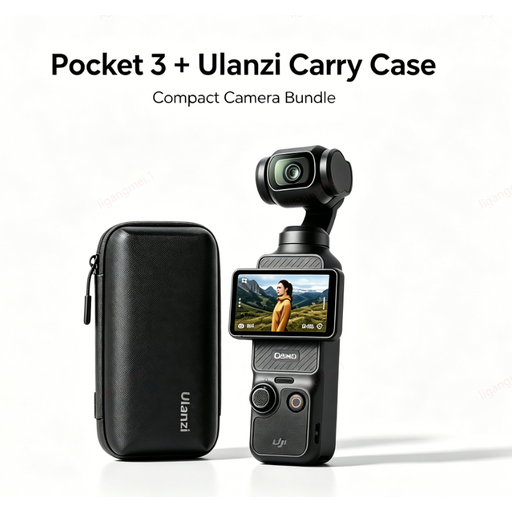
DJI Pocket 3 Camera with Ulanzi Custom Storage Carry Case
The product name describes a camera with a storage case. Check whether this type of camera and the framing you want suit your photography setup.
View at Joybuy
 No image available
Sony Alpha A6100 + 16-50mm f/3.5-5.6 OSS II
The product name describes a mirrorless camera with a 16–50mm zoom lens. Check whether it lets you frame your work from your workspace and whether you’ll need a different lens for small details.
View at Joybuy
Frequently asked questions
Do I need a macro lens to photograph the whole patchwork?
No, you don’t necessarily need a macro lens for a wide shot. First check whether the lens you have can frame the whole piece from your shooting distance. Magnification and working distance become more important for filling the frame with small seams or objects.
How can I get the fabric and small objects in focus at the same time?
Set up your camera securely and check the focus with your chosen settings. Depth of field can be shallow in extreme close-ups. Focus stacking is another option on supported models, including the OM-5 Mark II, according to OM SYSTEM.
How can I keep fabric colours consistent?
Use lighting that’s as even as possible and set the white balance appropriately. Canon says RAW gives you the flexibility to adjust white balance later, but this won’t automatically compensate for changing lighting.
What should I do if a product is faulty, and do I have a cooling-off period for online purchases?
According to the European Union, consumer purchases are covered by a legal guarantee of at least two years, and the seller is your point of contact if a product doesn’t meet requirements. The Dutch government states that online purchases from a business generally come with a 14-day cooling-off period. Check the applicable terms and exceptions, especially if you’re not buying from a business.


