Who is this buying guide for?

The detail-focused miniature painter

You want to capture small brushstrokes clearly. Compare the magnification of the lens you’ll actually use with the framing you want. Lens specifications from Canon Netherlands and Nikon Netherlands can help you do this.

The maker of consistent collection photos

You photograph several miniatures in the same home setup and want to keep sharpness, lighting and colour as consistent as possible. Canon Netherlands notes that ambient light can affect colour reproduction.

The beginner with little time to set up

You want to get started with photos of the whole miniature and a few close-ups, without complicated lens changes. A compact camera or kit zoom can be a good starting point, but first check that the framing with the actual lens works for your miniatures.

What should you look for when buying?

Compact camera with macro mode

Choose this if: you want to photograph both the whole miniature and close-ups without changing lenses, and the framing works for your setup. OM SYSTEM lists several macro modes for the TG-7.

Bear in mind: the fixed lens limits your options later; a short minimum focusing distance doesn’t guarantee that your lighting will reach the subject properly.

Mirrorless camera with kit zoom

Choose this if: you mainly want to capture complete miniatures and scenes, and would like to try the supplied zoom lens first to see how much detail it can capture.

Bear in mind: the kit zoom isn’t automatically a macro lens. Canon specifies a maximum magnification of 0.16× at 45 mm with autofocus, or 0.26× with manual focus, for the RF-S 18-45mm.

Mirrorless camera with a separate macro lens

Choose this if: you want to fill the frame with tiny painted details or have the flexibility to use different lenses later.

Bear in mind: check the mount, what’s included in the box and whether there’s room for lighting. Focus stacking with multiple focus points requires a stable setup.

What to consider What should you check? Who is this most relevant to?
Small painted details Compare the magnification of the exact lens with the framing you want, and check that there’s still room for lighting. If I want to make small brushstrokes appear large in the frame, I compare the lens with my smallest subject. Around 25% of consumers give detail magnification their highest priority.
Sharpness across multiple depth layers Check the focusing options on the exact model and whether it can take a focus sequence if you want to combine the images. If I need my miniature to be sharp from front to back, I check whether one shot is enough or whether I need multiple focus points. Around 20% of consumers prioritise depth of field.
Consistent colour Check the white balance settings and, if you want to adjust colour afterwards, whether RAW shooting is supported. If I want to capture the same paint consistently across different sessions, I also keep the lighting as constant as possible. Around 20% of consumers give colour consistency their highest priority.
A complete setup Check what’s included in the box and the lens mount; assess the supplied lens before deciding whether you need a separate macro lens or a stable mount. If I want to put together a usable camera setup in one go, I check which lens is actually included. Around 20% of consumers prioritise a complete kit.
Getting started quickly Try a photo of the whole miniature and a close-up, checking the framing and looking out for possible shadows. If I want to take quick photos of the whole miniature and close-ups without changing lenses, I test both framings with the same camera. Around 15% of consumers give ease of getting started their highest priority.

Common pitfalls

  • Assuming a camera body or kit zoom is a complete macro setup

    Magnification depends on the lens you use. The Canon RF-S 18-45mm and the separate RF 35mm macro lens have different stated maximum magnifications.

    Check which lens comes with the camera and, if possible, take a test shot of the smallest detail you want to photograph first.

  • Confusing a short minimum focusing distance with enough room for studio lighting

    When the camera is close to the miniature, the lens or camera may block the light and cast a shadow on the subject.

    Check both the framing and where the light falls in your own setup. A stated focusing distance isn’t automatically the distance at which you should take your photos.

  • Thinking image stabilisation can replace a fixed setup for focus stacking

    Shots taken at different focus points need to line up properly when you combine them. Canon Netherlands highlights the importance of a sturdy tripod for focus stacking.

    Keep the camera and miniature stable, and don’t move the miniature between shots.

Camera brands to consider

Canon

The EOS R50 can be paired with an RF-S kit zoom, then with a separately chosen RF macro lens later.

  • Canon Netherlands specifies 24.2 megapixels for the EOS R50 and focus bracketing for this model.
  • According to Canon, the RF-S 18-45mm reaches a maximum of 0.16× at 45 mm with autofocus, or 0.26× with manual focus. The separate RF 35mm F1.8 MACRO IS STM is specified at 0.5×.

OM SYSTEM

The TG-7 is a compact camera with built-in macro shooting modes, for those who don’t want to attach a separate lens.

  • OM SYSTEM lists RAW shooting, a 12-megapixel sensor and several macro modes. For Microscope mode, the brand specifies focusing from 1 cm.
  • The lens is fixed. Check whether the framing works in your own lighting setup and whether the camera or lens casts an unwanted shadow.

Nikon

The Z50II can be paired with a separately chosen Z macro lens.

  • Nikon specifies a maximum reproduction ratio of 0.67× on the sensor for the NIKKOR Z DX MC 35mm f/1.7.
  • Nikon describes this ratio as equivalent to 1:1 in FX format; that’s not the same as a physical 1:1 ratio on the DX sensor. Also check whether the lens is included in the set on offer.

Sony

The α6400 is an APS-C mirrorless camera with an E-mount, for those who want to choose their own suitable close-up or macro lens.

  • Sony specifies an E-mount, approximately 24.2 effective megapixels and RAW shooting for the ILCE-6400.
  • These body specifications alone don’t tell you anything about macro magnification; check the details for the exact lens and set.

Joybuy products

The selection below includes compact action, vlog and instant cameras. Check whether each model’s focusing and framing are suitable for photographing your painted miniatures.
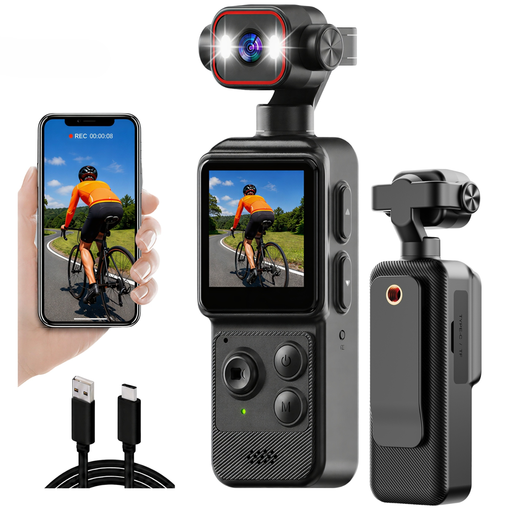
Mini Action Camera 4K with Clip, with 1.54-inch display

Mini Action Camera 4K with Clip

The product name describes this as a mini action camera; for miniature photography, check whether it can frame the close-up you want.

The title lists 4K, a clip, a 1.54-inch display, a 140° viewing angle, app control, LED light and a 1200 mAh battery.

View at Joybuy
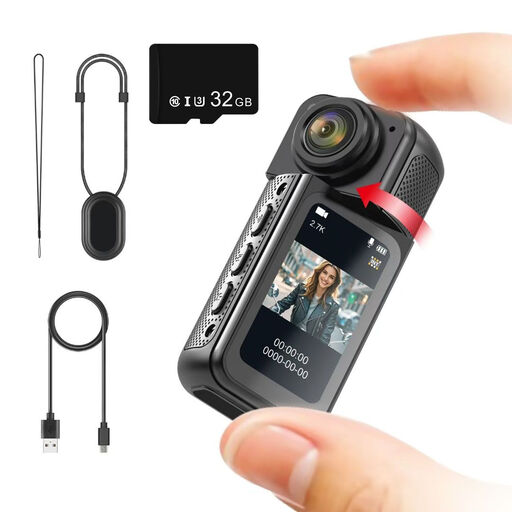
NAXSIR Mini Action Camera 2.7K with rotating lens

NAXSIR Mini Action Camera 2.7K

The product name describes this as a mini action camera; for miniatures, check whether the focus and framing suit your close-up shots.

The title lists a 180° rotating lens, a magnetic mount, a 1.47-inch IPS screen and an included 32 GB memory card.

The product description lists a built-in 1/4-inch thread for attaching the camera to a tripod.

View at Joybuy
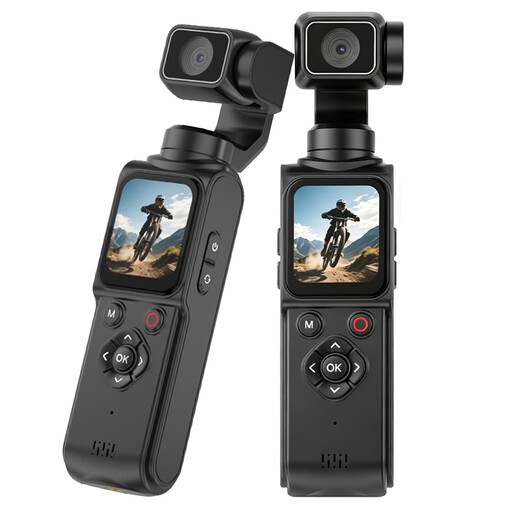
KINSI Mini Vlog Camera 4K with rotating lens

KINSI Mini Vlog Camera 4K

The product name describes this as a mini vlog camera; check whether this model can capture the close-ups you want of your miniatures.

The title lists Wi-Fi, 64 MP, a 330° rotating lens, a 1.72-inch touchscreen, face recognition and Type-C.

A mini tripod is included, according to the product description.

View at Joybuy
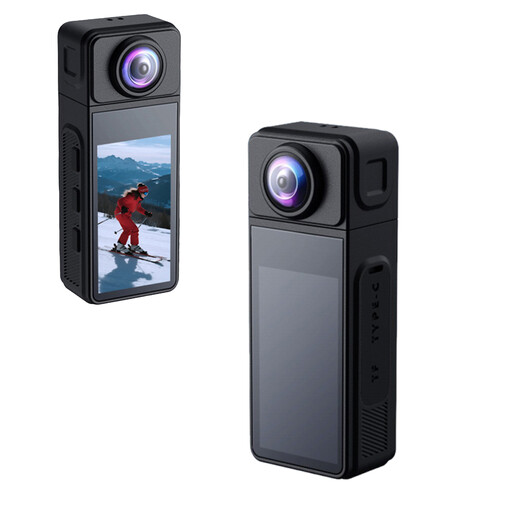
NAXSIR 2K Mini Action Camera with rotating wide-angle lens

NAXSIR 2K Mini Action Camera

The product name describes this as a mini action camera; check the focusing and framing against the size of your miniatures.

The title lists a 270° rotating wide-angle lens, a magnetic housing and electronic image stabilisation.

The product description lists a photo mode with one-touch control.

View at Joybuy
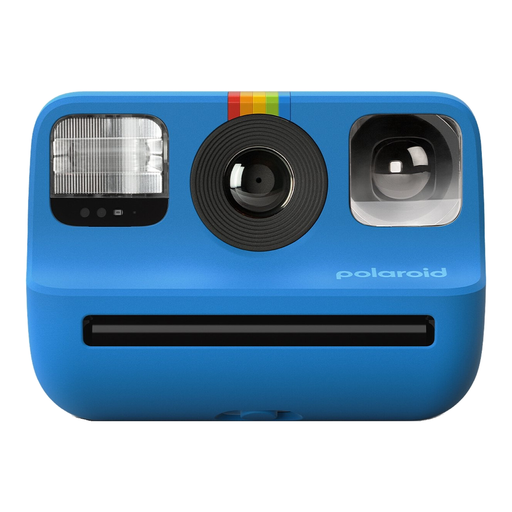
Polaroid Go Gen 2 instant camera in blue

Polaroid Go Gen 2 - Blue

This is an instant camera; check whether this type of camera offers the framing and focus you need for photographing your miniatures.

The product description lists a built-in flash, manual exposure settings, a self-timer and double exposure.

This camera uses Polaroid Go film.

View at Joybuy

Frequently asked questions

Do I need a separate macro lens for every painted miniature?

No. First, take a test shot of your smallest miniature with the lens actually supplied. If the details don’t appear large enough in the frame, compare suitable macro lenses. Canon lists different maximum magnifications for the RF-S 18-45mm and the RF 35mm macro lens.

How can you get a miniature sharp from front to back?

Keep the camera and miniature stable, and check where the camera is focusing. If one shot doesn’t give you enough depth of field, you can take several images at different focus points and combine them. Canon describes focus bracketing for the EOS R50 and emphasises the importance of a sturdy tripod.

How can you stop the same paint looking different in every photo?

Keep the lighting as consistent as possible and set the white balance to suit the light you’re using. Canon Netherlands explains that the colour temperature of ambient light affects how the camera captures colours.

What are your rights in the Netherlands if your camera turns out to be faulty after purchase?

When you buy as a consumer, you’re entitled to a product that meets reasonable expectations, and the seller is your point of contact if something is wrong. According to the Dutch government, there is no fixed statutory guarantee period in the Netherlands; a manufacturer’s guarantee is in addition to your statutory rights.

Can you publish a photo of someone else’s work without further ado?

Don’t assume that you can. The Dutch government says that, in principle, you need permission to use and publish other people’s copyright-protected photographs. This general guidance doesn’t automatically determine what rights apply to each individual miniature, design or depicted work.
