What should you look for when buying?
Start with the size of the detail you want to capture, then check whether the lighting, focusing and kit contents suit your workspace.
| What to consider |
What should you look for? |
Who is this important for? |
| Magnifying fine carving marks |
Check the magnification and minimum focusing distance of the lens actually included in the kit. As examples of separate lenses, Canon Netherlands lists 0.5× for the RF 85mm F2 Macro and Nikon Netherlands lists 1:1 for the Z MC 50mm f/2.8. These specifications apply to the lenses mentioned, not automatically to a camera body or kit lens. |
If I want to show small grooves individually, the lens needs to make them appear large enough in the image. Around 33% of consumers prioritise magnifying details. |
| Managing shadows in window light |
Nikon Netherlands recommends using a tripod for small subjects. Canon Europe suggests placing a reflector or white card opposite the window if one side is too dark. |
When taking photos next to a window, I want to be able to brighten the shadowy side without moving the camera each time. Around 27% of consumers prioritise control over window light. |
| Getting the relief into focus |
Check whether the exact camera model offers focus bracketing or manual focusing. Canon Europe lists focus bracketing for the EOS R50; Nikon Netherlands recommends precise manual focusing for macro photography. |
When an ornament has depth, I want more than just the front edge to be sharp: I also want to show the grooves behind it. Around 20% of consumers prioritise sharpness across the relief. |
| Choosing a simple, complete kit |
Check which lens is actually included and whether it fits the mount. According to the Consumers’ Association, a compact camera has a fixed lens, while a mirrorless camera uses interchangeable lenses. |
I’d prefer a simple kit and don’t want to discover after buying that I need a separate lens as well. Around 20% of consumers prioritise simplicity and complete kit contents. |
Cameras on Joybuy
This selection includes general compact and pocket cameras. For each model, check whether the lens can focus at the distance you want to photograph your ornaments from; zoom and resolution figures don’t, on their own, tell you anything about macro magnification.
 Image unavailable
KOMERY G7-A camera, pink
If you’re considering this camera for small carved details, check that the lens can focus at your desired working distance.
The product name lists 4K, 80MP and 18× zoom; these figures don’t specify how close the camera can focus.
View on Joybuy
 Image unavailable
Songdian 4K 44MP pocket camera, pink
If you’re looking at a pocket camera for photographing ornaments, check that the minimum focusing distance suits the details you want to capture.
The product name lists 4K, 44MP and 16× zoom; these figures don’t indicate macro magnification.
View on Joybuy
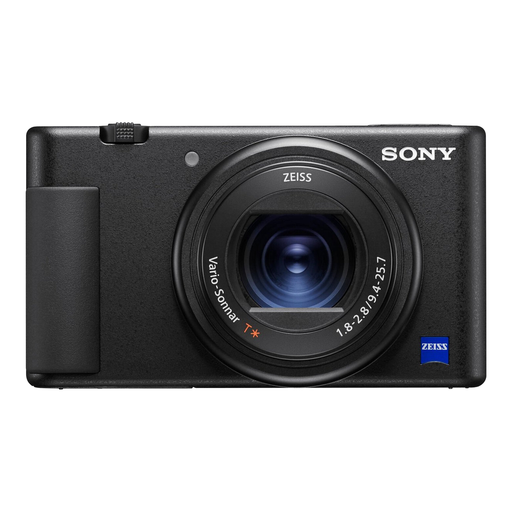 Image unavailable
Sony ZV-1 compact camera
For close-ups of carvings, it’s still important to check the minimum focusing distance of the camera you choose.
The product information lists a 1-inch sensor, a maximum aperture of f/1,8–2,8, 2,7× optical zoom and a focal length of 24–70 mm. These figures alone don’t specify macro magnification.
View on Joybuy
Frequently asked questions
Do I need to buy a true 1:1 macro lens for every ornament?
No, not necessarily. First compare the size of the detail with what your existing or included lens can capture to fill the frame. 1:1 magnification is especially relevant if you want to show very small details at a large size; check this specification for the exact lens.
How do I get started taking photos by a window?
Set up the ornament and camera securely, then focus carefully. Next, check the shadowy side. If it’s too dark, Canon Europe recommends placing a reflector or white card on the opposite side of the subject.
What should I check is included in a camera kit?
Check which lens, battery and memory card are included, and whether the lens fits the camera mount. According to the Consumers’ Association, a compact camera has a fixed lens; a mirrorless camera has an interchangeable lens.
When buying online in the Netherlands, am I always entitled to exactly two years of legal protection?
No. According to the Dutch government, there is no fixed statutory warranty period in the Netherlands. You’re entitled to a product that meets the standards you can reasonably expect. Any manufacturer’s warranty is in addition to this, and the retailer is your point of contact if there’s a fault.
Can I always return a camera bought online within 14 days?
Not always. According to the Dutch government, purchases made at a distance from a business are often subject to a 14-day cooling-off period. Not every online transaction is covered, such as a purchase from a private seller.


