
Photographers of fine folds
You want to show off texture and small creases. So, check the close-up capabilities of both the camera and the lens. OM SYSTEM states that the Tough TG-7 can focus as close as 1 cm in macro mode.


If you want to photograph fine folds up close without changing lenses, look for a compact camera with a clearly specified close-up function, such as the macro mode on the OM SYSTEM Tough TG-7. For models of different sizes, a mirrorless camera with a zoom lens gives you more options for framing the whole model. Check the close-up capabilities of that specific lens, though; a separate macro lens may be needed for detailed work. A stable set-up and movable lighting are important, whichever camera you use.
You want to show off texture and small creases. So, check the close-up capabilities of both the camera and the lens. OM SYSTEM states that the Tough TG-7 can focus as close as 1 cm in macro mode.
You want to fit origami models of different sizes into the frame on a small table. A useful zoom range and a stable set-up are worth considering alongside magnification; Nikon lists the Z50II with the NIKKOR Z DX 16-50mm as a kit.
You want to take consistent photos without lots of equipment around your model. Think in advance about space for a tripod, a plain background and movable lighting; Nikon describes using a small adjustable lamp for macro photography.
A good fit if: you have little room for extra equipment and mainly want to photograph small folds. OM SYSTEM lists macro modes for the Tough TG-7.
Worth noting: the lens is fixed, so check that you can move far enough back to frame the whole model.
A good fit if: you want to frame complete models in different sizes. The Canon EOS R50 kit comes with an RF-S 18-45mm lens; the Nikon Z50II kit comes with a NIKKOR Z DX 16-50mm lens.
Worth noting: a standard zoom is not automatically a macro lens. Nikon lists a minimum focus distance of 0.2 m for the 16-50mm lens.
A good fit if: small details are your main focus and you want to pair a suitable camera body and lens. Canon lists a maximum magnification of 0.5× for the RF 35mm F1.8 MACRO IS STM; Sony lists 1:1 for the E 30mm F3.5 Macro.
Worth noting: check the lens mount and the space available for lighting. Sony lists a working distance of 2.4 cm at the closest focusing distance for the E 30mm F3.5 Macro.
| What to consider | What to look for | Who is this important for? |
|---|---|---|
| Fine folds up close | Magnification and focusing distance for the exact camera-and-lens combination; also check there is room in front of the lens for lighting. | If I want to show small creases and the texture of the paper, I compare the close-up capabilities with the size of my subject. Around 33% of consumers put detail reproduction first. |
| Framing the whole model | Check the zoom range of the included lens and how much space you have behind the table. | When I want to fit origami models of different sizes into the frame, I check which lens actually comes with the kit. Around 27% of consumers prioritise photographing complete models. |
| Controlling sharpness and lighting | Check whether you can position a tripod and movable lighting; assess the sharpness of several folds in a test shot. | If I want to take consistent photos with controllable lighting, I consider depth of field and the space available for a lamp. Around 20% of consumers prioritise controlled focus and exposure. |
| A simple table-top set-up | Measure the space available for the camera and lighting, and check which lens and accessories are included in the kit. | When space is limited and I do not want lots of separate items around my model, I consider the size of the set-up. Around 20% of consumers put simplicity and compactness first. |
The Canon EOS R50 kit includes an RF-S 18-45mm lens. Canon's stated maximum magnification of 0.5× applies to the separate RF 35mm F1.8 MACRO IS STM, not the kit lens.
Check which lens is in the box and compare its own close-up specifications with the size of your subject.
A separate macro lens may be needed if you choose this route for detailed work; check the mount and what is already included in the kit.
Focusing distance and working distance are not the same. For the E 30mm F3.5 Macro, Sony lists a minimum focusing distance of 9.5 cm and a working distance of 2.4 cm.
Check the working distance and make sure light can reach the paper folds without being blocked by the camera.
You may need to spend time repositioning the light source if the lens leaves little room in front of the subject.
Depth of field can be shallow in close-up photography. Canon notes that precise focusing requires care when shooting macro photos.
Take test shots at different aperture settings and check whether both the front and back folds are sharp.
The Tough TG-7 is a compact camera with a fixed lens, for anyone who wants a close-up function without changing lenses.
The EOS R50 with the RF-S 18-45mm kit lens gives you a zoom option; the separate RF 35mm F1.8 MACRO IS STM is an option for detailed work with a compatible RF camera body.
The Z50II kit with the NIKKOR Z DX 16-50mm offers a zoom option for complete models; the separate Z DX MC 35mm f/1.7 is designed for detailed shots.
Sony offers the separate E 30mm F3.5 Macro for anyone who wants to pair a compatible E-mount camera body with a lens designed for detailed work.
These product picks are pocket cameras for photos and videos. For photographing origami on a small table, it is worth checking whether the camera can focus at the distance you need and frame the model as you want.
 Image unavailable
The product title mentions photography and video; check whether the camera can focus on the details you want at your table.
1″ CMOS sensor, 4K/240fps, 3-axis stabilisation, 2× lossless zoom, 107GB built-in storage and a 2″ rotatable screen.
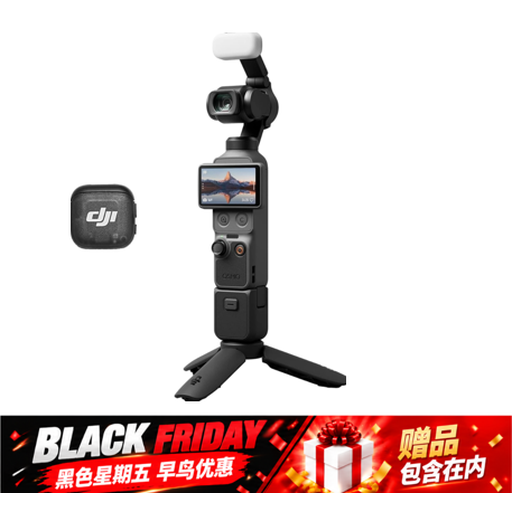 Image unavailable
The product title mentions photography and video; check whether the camera can focus on the details you want at your table.
1″ CMOS sensor, 4K/240fps, 3-axis stabilisation, 2× lossless zoom, 14-stop dynamic range, 107GB built-in storage and a handle with a 1/4″ thread.
 Image unavailable
The product title mentions photography and video; check whether the camera can focus on the details you want at your table.
1″ CMOS sensor, 4K/120fps, 3-axis stabilisation, fast focusing and a 2″ rotatable touchscreen.
 Image unavailable
The product title mentions photography and video; check whether the camera can focus on the details you want at your table.
4K, 44MP, 16× zoom and a pink finish.
No. Start by considering how large you need the details to appear in the frame. Manufacturers also list close-up capabilities below 1:1; compare the magnification and working distance of the specific lens with your subject, rather than relying on the word ‘macro’ alone.
Position the camera securely, use a plain background and move a small lamp around to see how the shadows affect the folds. Check which areas are in focus in a test shot; these are shooting tips, not features guaranteed by any particular model.
According to the Dutch government, the seller must provide a solution if a product is faulty. The Netherlands has no fixed statutory guarantee period; what you can expect from a product depends, among other things, on the product itself and the information provided.
According to the Dutch government, a 14-day cooling-off period applies in many cases when consumers buy at a distance. Check whether your purchase actually qualifies as a distance sale; the Dutch government gives an online purchase from a private individual as an example that does not.