
Online retailer with a changing seasonal range
You regularly take new catalogue photos and want successive product ranges to look consistent and recognisable.


Start with consistent lighting and repeatable framing if you mainly photograph recurring product ranges; a more expensive camera body won’t solve inconsistent lighting on its own. Canon Netherlands describes a tripod as a useful way to keep the composition consistent across a series of photos. A mirrorless camera with a suitable lens may be a good choice if you want more control over editing or small details, but check what’s included in the kit and the cost of buying a macro lens separately.
You regularly take new catalogue photos and want successive product ranges to look consistent and recognisable.
You want to show textures and small details up close, so you consider the lens’s magnification rather than just the camera body.
You want to create effective online shop images without having to buy a complete camera kit straight away.
First decide whether you mainly want to photograph whole products consistently or fill the frame with small details. Then compare the lens, lighting setup and kit contents; the camera body alone won’t tell you what complete setup you need.
| What to consider | What to look for when buying | Who is this most important for? |
|---|---|---|
| Colour in changing light | Check whether the model supports RAW and how to set the white balance; also consider your lighting setup. | If I want product colours to remain recognisable across different ranges, I look at both the settings and the lighting. Around 36% of consumers say colour reproduction is their top purchase priority. |
| Small details | Compare the mount, maximum magnification and working distance of the exact lens; don’t assume a kit zoom offers the same capabilities. | If, for example, I want to fill the frame with a berry or leaf texture, I consider the lens and the space available for lighting. Around 29% of consumers give detail reproduction top priority. |
| Repeatable framing | Consider whether the camera is practical to use in your intended shooting spot and on a tripod; plan your background too. | If I regularly photograph new products in similar conditions, I want to be able to repeat my shooting position quickly. Around 21% of consumers put this consistency first. |
| Overall starting costs | Compare packages with the same contents, such as the body, lens, battery and storage; also factor in any lighting and a tripod. | If I want to start with the equipment I already have or a limited setup, I check exactly what’s included in the kit. Around 14% of consumers name low starting costs as their top priority. |
The camera body isn’t the only thing that affects how product photos look: framing, lighting and the lens all play a part. A body with a standard lens isn’t automatically suitable for close-ups.
Compare complete setups and check which lens and accessories are included with the version you choose.
You may need a separate or different lens to achieve the crop you want.
KVK points out that business buyers have less protection than consumers, and that a possible exception for small businesses is not an automatic right.
Before buying, check whose name the purchase is made in and which terms apply to the warranty, repairs and returns.
The EOS R50 is an APS-C mirrorless camera with an RF mount. The RF 35mm F1.8 MACRO IS STM is a separate lens for close-ups.
The Z50II has a Z mount. The NIKKOR Z MC 50mm f/2.8 is a separate macro lens for detailed shots.
The α6700 is an APS-C camera with an E mount and RAW shooting. The E 30mm F3.5 Macro is a separate lens.
The X-S20 with an X mount supports RAW. The XF30mmF2.8 R LM WR Macro is a separate lens for detailed shots.
This selection at Joybuy includes pocket cameras and APS-C cameras with zoom lenses. The listed video, zoom and sensor information doesn’t prove that a model is suitable for macro photography; check the capabilities of the exact lens for that.
 No image available
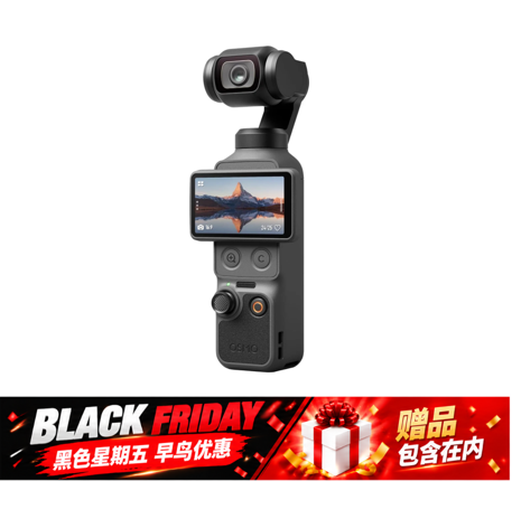
A pocket camera for anyone looking for a rotating screen and built-in storage. The product name lists a 1-inch CMOS sensor, 107 GB of built-in storage, 2× lossless zoom and 4K/240fps video; these details don’t indicate maximum macro magnification.
 No image available
An option if you’re looking for a digital camera with optical zoom. The product name lists 12× optical zoom and 4K video; the description mentions a 64MP sensor. Zoom specifications don’t tell you how close you can get to small details.
 No image available
A pocket camera for anyone looking for features such as a rotating screen and fast focusing. The product information lists a 1-inch CMOS sensor and 4K/120fps video; these video specifications don’t tell you what magnification you can achieve for close-ups.
 No image available
An APS-C camera supplied with a 16-50mm kit lens, for anyone who wants to choose from different framing options. The product information lists a 24.2 MP sensor and a Product Showcase Setting; check separately whether the lens can deliver the close-up shots you want.
 No image available
An APS-C camera supplied with a 16-50mm kit lens, for anyone looking for a camera and lens in one package. The product information lists a 24.2 MP sensor; check whether the lens offers the shooting distance and framing you want.
No, not if you mainly photograph whole products. If you want to fill the frame with small details, check the maximum magnification and shooting distance of the exact lens.
Use a fixed shooting spot and framing, and check the lighting and white balance in every session. Canon Netherlands describes a tripod as a useful way to repeat the composition; RAW gives you more scope for later adjustments, but requires post-processing.
No, not automatically. KVK distinguishes between business and consumer purchases; a small business may be able to rely on consumer law only in certain circumstances. So before you buy, check the terms for the warranty, repairs and returns.
Not without checking first. According to KVK, photos are protected by copyright, and using an image from the internet without permission may infringe those rights. Take your own photos or arrange the necessary usage rights, and make sure the images accurately represent what you offer.