Who is this choice relevant to?

Painters with glossy work

If you want to capture pigment and brushstrokes clearly, you also need to consider reflections and light placement. The Canadian Conservation Institute explains how even lighting and raking light can reveal different aspects of an object.

Photographers capturing tiny details

If you want a small area of paint to fill the frame, it’s worth checking the magnification and working distance of the exact lens or compact camera you’re considering. Canon Europe and OM Digital Solutions describe close-up capabilities for specific products.

Filming in a shared studio

If you’re recording the creative process, you’ll need suitable framing and a manageable set-up. Also check whether other people could be recognisable in the footage or audible in the recording.

What should you look for?

Mirrorless camera with a suitable close-up lens

Good for: a small paint detail for which you want to choose the lens, framing and shooting distance separately.

Trade-off: you’ll need to check the mount and magnification of the exact lens. The camera, lens and lighting together also require more room to set up.

Compact camera with a close-up function

Good for: a simple set-up where you don’t want to change lenses.

Trade-off: the fixed lens limits your options. A short minimum focusing distance doesn’t automatically mean you can position lights freely or illuminate the detail well.

Compact video camera for the creative process

Good for: moving hands and the painting process, when video matters more than a frame-filling photo of a tiny detail.

Trade-off: a fixed wide-angle lens doesn’t offer the same choice of lenses for very small details as a mirrorless camera with a suitable macro lens.

Consideration What should you check? Who should pay particular attention?
Reflections and colour Test the lighting from the intended position and check whether the white balance is adjustable. A polarising filter can help reduce reflections, but it’s no substitute for a suitable lighting set-up. If I’m photographing glossy paint, I want to be able to assess the pigment and brushstrokes without reflections overpowering the detail. Around 36% of consumers prioritise colour and reflection control.
Tiny details Compare the magnification and working distance of the exact camera-and-lens combination. Also check whether the lens you want is included in the kit. For a small brushstroke detail, I want to know whether the lens will capture the subject large enough and leave room for lights. Around 29% of consumers prioritise magnification and working distance.
Process video Check the video mode, focusing and framing from your planned shooting position; decide in advance whether you need audio. If I want to film moving hands and the painting process, practical framing and a suitable shooting position matter more than maximum magnification for a still detail photo. Around 21% of consumers make process video their top priority.
Space and privacy Test the camera position, viewing angle and background; also check whether conversations could be recorded. In a shared studio, I want to be able to position the camera and lighting without unintentionally including other people in the footage or audio. Around 14% of consumers prioritise space requirements and privacy.

Avoiding common buying mistakes

  • Comparing only the camera body or megapixel count

    How large a small paint detail appears in the frame depends partly on the lens you choose. Sensor resolution alone doesn’t tell you how much of the frame the detail will fill.

    When comparing mirrorless cameras, check the kit contents, mount, magnification and working distance of the lens you’re actually considering.

  • Expecting a polarising filter to remove every reflection

    Reflections also depend on the position of the light. Raking light can bring out the texture of the paint, while even lighting serves a different purpose.

    Take a test shot with your intended lighting and decide whether you want to bring out the colour, reflections or texture. Check that the filter fits the exact lens.

  • Assuming a compact video camera is automatically suitable for macro photography

    A fixed wide-angle lens may be suitable for recording the creative process, but it won’t necessarily capture a tiny paint detail so that it fills the frame.

    Compare your desired framing at the actual shooting distance with that of a compact camera with a close-up function or a suitable macro lens.

  • Forgetting about the background and audio in a shared space

    Other people may be recognisable in footage you share or audible in a recording.

    Frame the painting, check the audio and, before sharing, review which privacy rules and studio agreements apply to your use of the footage.

Camera brands to consider

Canon

The EOS R50 is a mirrorless camera with an RF mount. You’ll need to assess the lens you choose separately for close-up work.

  • Canon Europe lists a 24.2 MP APS-C sensor for the EOS R50.
  • Canon Europe does not list in-body sensor-shift image stabilisation for this camera body. The maximum magnification of 0.5× applies to the separate RF 35mm F1.8 MACRO IS STM lens, not automatically to an EOS R50 kit.

Sony

The ZV-E10 II is a mirrorless camera for anyone looking for a single camera for photography and configurable video.

  • Sony Netherlands specifies an E-mount, RAW photos and several 4K video modes. The listed lens kit includes a 16–50mm power zoom lens.
  • For a very small paint detail, assess whether that exact lens is suitable or check whether you’ll need a separate close-up lens.

Nikon

The Z50II is a mirrorless camera with a Z mount. The lens you choose will partly determine its close-up capabilities.

  • Nikon Netherlands lists 20.9 million effective pixels, 4K/30p and cropped 4K/60p.
  • These model specifications alone don’t show how suitable the camera-and-lens combination is for capturing a painting detail.

OM SYSTEM

The Tough TG-7 is a compact camera with a fixed lens and a stated close-up function.

  • OM Digital Solutions lists focusing down to 1 cm, approximately 12 MP and 4K/30p video.
  • At close range, lighting and positioning it in front of the lens can be tricky. Check your intended framing; the minimum focusing distance alone doesn’t guarantee a good result.

DJI

The Osmo Pocket 3 is a compact video camera for recording the painting process.

  • DJI specifies a gimbal, a fixed lens with a 20 mm full-frame equivalent and focusing from 0.2 m.
  • The fixed lens doesn’t offer the choice of lenses you get with a mirrorless camera for a very small paint detail. Check the framing at your available shooting distance.

Cameras for paintings and the creative process

These Joybuy products are options for photographing or filming a painting or the creative process. For a small paint detail, always check the framing and focus at your intended shooting distance.
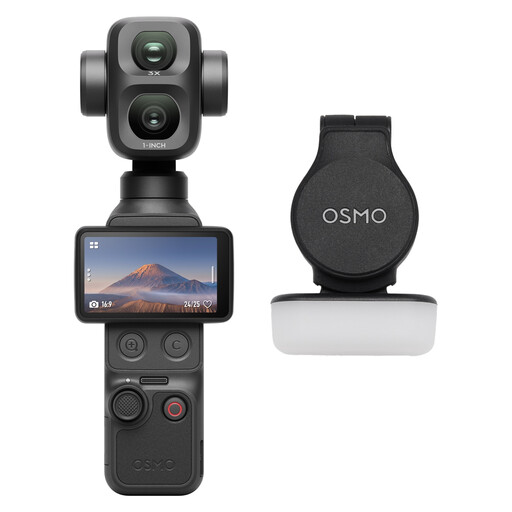
Osmo Pocket 4P Standard Combo in black

Osmo Pocket 4P – Standard Combo – Black

For anyone considering a Pocket camera for video recording. Check from your planned distance that the painting detail appears large enough in the frame.

View at Joybuy

KOMERY G7 5K camera with 80MP and 18X zoom

KOMERY G7 5K, 80MP, 18X zoom

For photographing and filming a painting. The product name lists 5K, 80 MP and 18X zoom; these figures alone don’t tell you whether a small detail will fill the frame. Check the framing and focus for your shot.

View at Joybuy
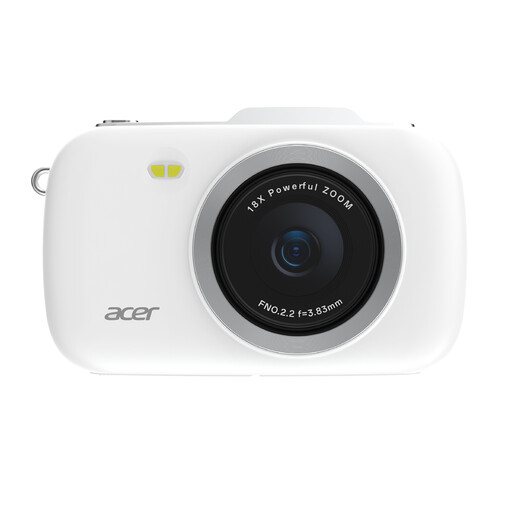
KOMERY G7-A 4K camera with 80MP and 18X zoom

KOMERY G7-A 4K, 80MP, 18X zoom

For photographing and filming a painting. The product name lists 4K, 80 MP and 18X zoom; check whether the framing and focus suit the size of the detail you want to capture.

View at Joybuy

DJI Osmo Pocket 3 camera

DJI Osmo Pocket 3

For filming the painting process with a compact set-up. The product name lists 4K/120fps and 3-axis stabilisation; check whether the fixed lens captures your chosen paint detail large enough from your shooting position.

View at Joybuy
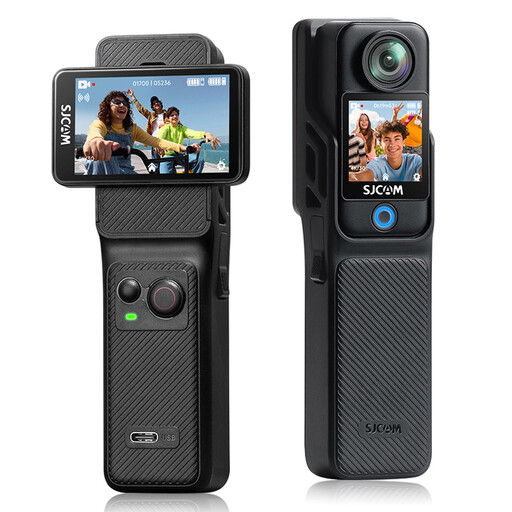
SJCAM C400 4K action camera with 16MP photos and a 154° wide-angle view

SJCAM C400 4K, 16MP, 154° wide-angle

For photographing and filming with an action camera. The product name lists 4K video, photos up to 16 MP and a 154° field of view. Check how much of the studio will appear in shot and whether the painting detail will remain large enough.

View at Joybuy

Frequently asked questions

Will changing the lighting do more to reduce glare than choosing a camera with more megapixels?

Start by assessing the position of the light. The Canadian Conservation Institute describes even lighting from two sides and raking light as ways to show different aspects of an object. Choose a set-up that suits your purpose; neither option guarantees accurate colour reproduction on its own.

Can you capture a brushstroke so it fills the frame with any kit lens?

No, close-up capability depends on the exact lens. Canon Europe, for example, lists a maximum magnification of 0.5× for the separate RF 35mm F1.8 MACRO IS STM lens. Check the magnification, working distance and kit contents for the lens you’re considering.

How do you set up a shot in a shared studio?

From your planned camera position, test the framing, reflections and space for lights. Before recording, check whether anyone else will appear in the frame or be picked up by the audio. Don’t automatically use the same settings for a detail photo and a video of the creative process.

Can you film other people in the studio and publish the footage?

It depends on who is recording and what happens to the footage. According to the Dutch Data Protection Authority, people who can be identified may be considered personal data. An exception applies to strictly personal or household use, as long as the footage stays private or is shared with a very limited group. That exception doesn’t apply to wider publication or business use, where the relevant GDPR legal basis must be assessed. Consent isn’t necessarily the only possible legal basis.

What can you do if the camera doesn’t work properly after you buy it?

For a consumer purchase in the Netherlands, the retailer is your point of contact if a product doesn’t meet the legal requirements. The Dutch Government states that the Netherlands has no fixed statutory two-year warranty period; a manufacturer’s warranty is an additional benefit. Before buying, also check which lens and accessories are included in the offer.
