
Mosaic sample seller
You want to show several samples with recognisable colours, the same white background and consistent framing. Canon UK describes using a fixed setup for consistent product photos.


Start with even lighting, a fixed camera setup and a controlled white balance. A new camera won’t automatically fix colour casts or inconsistent framing. Canon UK describes using a fixed setup for consistent product photos, while Nikon recommends keeping lighting constant for an even white balance. For small grout lines and surface texture, choose a camera with a close-up mode or a suitable macro lens. If you’re buying a camera kit, check which lens is actually included and whether it can focus close enough.
You want to show several samples with recognisable colours, the same white background and consistent framing. Canon UK describes using a fixed setup for consistent product photos.
As well as the complete sample, you want to show grout lines and small surface details. Check the close-up capabilities of the specific camera and lens combination; Nikon, OM SYSTEM and Sony describe different options for this.
You want to see whether a fixed setup with your current camera will do the job before buying a camera or an extra lens. Canon and Nikon offer practical guidance on product photography and white balance.
Choose this if: the whole sample already fits in the frame at a large enough size and is in focus, but the colour, background or framing varies.
Bear in mind: a fixed setup can improve consistency, but it won’t provide optical magnification if details are still too small.
Choose this if: you want to capture small details without changing lenses. According to its manual, the OM SYSTEM Tough TG-7 has a close-up mode for shooting as close as 1 cm.
Bear in mind: check separately that the whole sample fits in the frame. Close-up capabilities don’t guarantee accurate colour reproduction.
Choose this if: you want to take an overview shot and adjust the framing with a zoom lens. The Canon EOS R50 kit comes with an RF-S 18–45mm lens.
Bear in mind: a kit isn’t automatically a macro setup. Check that the included lens can capture your chosen details in focus.
Choose this if: you need grout lines or surface texture to appear large in the frame. Nikon and Sony specify 1:1 magnification for the macro lenses mentioned.
Bear in mind: check whether the lens needs to be bought separately and how much room there will be in front of it for lighting.
First, work out whether your main challenge is colour consistency, capturing the whole sample or showing small details. Then check your setup and which lens you’ll need.
| What to consider | What to look for when buying | Who is this most important for? |
|---|---|---|
| Colour against a white background | Check the white balance settings and whether you can work in consistent lighting. | If I want to photograph samples under the same lighting, accurate-looking colour is my top priority; around 31% of consumers put colour first. |
| Small grout lines and texture | Compare the close-up mode or magnification of the specific camera and lens. Also consider the working distance in front of the lens. | I want to be able to show grout lines and surface texture separately, so close-up capabilities are essential; around 25% of consumers put detail first. |
| Consistent overall image | Check that the lens can capture the whole sample from the distance available to you, and plan a fixed camera setup. | If I want to frame several complete samples consistently, repeatability is my top priority; around 25% of consumers put the overall image first. |
| Setup costs | Check what’s included in the kit and whether you need a separate lens for the magnification you want. | If I first want to see whether my current camera will do the job, I don’t want to buy an unnecessary camera body or lens; around 19% of consumers prioritise keeping costs down. |
The Canon EOS R50 kit includes an RF-S 18–45mm lens. The 1:1 magnification mentioned applies to separate Nikon and Sony macro lenses, not this Canon kit.
Before buying, check which lens comes with the specific kit and whether it can capture the details you want in focus.
You may need to buy a separate, suitable lens for macro photography.
For the Sony SEL30M35, Sony distinguishes between the focusing distance and the 2.4 cm working distance in front of the lens at its closest setting. This clearance matters when positioning your lighting.
For the specific lens, compare both its magnification and working distance with the space you need.
Nikon points out that an incorrect white balance can cause an unwanted colour cast, and should be checked again if the lighting changes.
Before deciding that you need different equipment, take a test series using consistent lighting and a controlled white balance.
The EOS R50 with the RF-S 18–45mm is a mirrorless camera option for overview shots. Canon also describes using a fixed setup for product photography.
The Tough TG-7 is a compact camera with a fixed lens, for anyone who wants to photograph small details without changing lenses.
The Z50II with the separate NIKKOR Z MC 50mm f/2.8 is a mirrorless camera option for detailed shots.
The α6400 with the separate APS-C E-mount SEL30M35 macro lens is an option for both overview and detailed shots.
Joybuy camera options related to this topic. For each model, check whether the lens and close-up capabilities suit your sample and the framing you want.
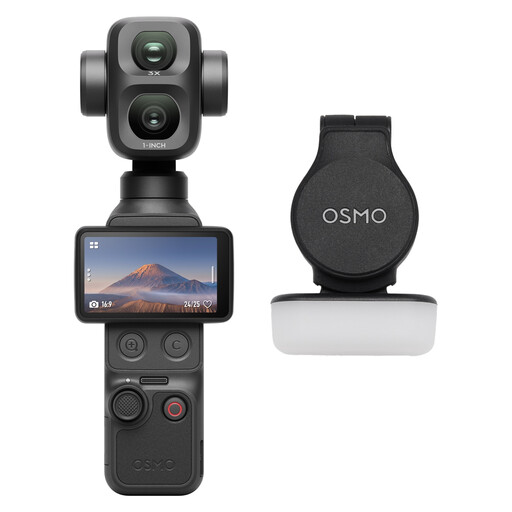 No image available
For mosaic photography, check whether the camera and lens support the framing and close-ups you want.
1-inch CMOS sensor; 20mm f/2.0 wide-angle lens; 4K/240fps is supported in slow-motion mode only.
 No image available
The zoom may be useful if you want to adjust the framing. Check that the lens can capture the whole sample in focus from your shooting distance.
12X optical zoom; 64MP; 4K.
 No image available
For still mosaic photos, check whether the lens can handle the framing and level of detail you want.
1-inch CMOS sensor; 4K/120fps video; 3-axis mechanical stabilisation.
 No image available
The included zoom lens lets you adjust the framing. Check that it can capture the whole sample in focus from the distance available.
24.2 MP APS-C CMOS sensor; included 16–50mm lens.
 No image available
The included zoom lens can help you adjust the framing. For detailed shots, check whether it can focus on your chosen framing from your working distance.
24.2 MP APS-C sensor; electronic viewfinder; tilting touchscreen.
No, not if that would make visible details in a light-coloured mosaic disappear. Keep the lighting and white balance consistent between shots, then check the result. Canon also describes using a fixed setup for a consistent background. This is photography advice, not a legal requirement.
Not necessarily. First check whether your current lens can capture the whole sample in focus from the distance available. A macro lens is useful when you need to make small details appear larger; the 1:1 magnification specified by Nikon and Sony applies to their separate lenses.
Keep the camera in a fixed position, use the same framing and keep the lighting as constant as possible. Check the white balance again if the lighting changes, as Nikon recommends. Canon describes using a fixed setup for consistent product photos.
When a consumer buys online, there is generally a statutory 14-day cooling-off period after delivery, with some exceptions. ACM ConsuWijzer also states that the seller is responsible for a faulty product that has been used normally; the statutory guarantee is separate from any manufacturer’s warranty. Check the terms that apply to your purchase.