
Creators checking fine details
If you’re filming drawings and hand movements, magnification and focus peaking can help you check sharpness while recording. Atomos and Portkeys describe these features for the Shinobi II and PT6 respectively.


A separate camera monitor is most useful if you can’t see your camera screen clearly from your filming position, or want to check focus and light-coloured pages more precisely. For a small table, opt for a compact screen if you have room for the monitor, mount and cables. Always check that the HDMI signal and power supply are compatible with your camera and setup.
If you’re filming drawings and hand movements, magnification and focus peaking can help you check sharpness while recording. Atomos and Portkeys describe these features for the Shinobi II and PT6 respectively.
If there’s little room next to your sketchbook, you’ll need to make space for the screen, mount and cables too. So don’t just compare screen sizes: think about where you could position the monitor away from your work surface.
If you want to check white paper and fine lines in changing light, look for exposure tools and consider where you’ll position the screen. Atomos and Portkeys list tools such as waveform and false colour for their respective models.
Choose this option if: you can already see your sketchbook and recording information clearly from where you sit.
Trade-off: app displays and controls vary by camera model; Canon describes this feature specifically for the EOS R7.
Choose this option if: you need a separate screen to check framing, focus or exposure, but have little room for equipment.
Trade-off: HDMI formats, power options and stated brightness vary by model. Check that the monitor supports your camera’s signal.
Choose this option if: you want to view the image further away from the table and have room beside your sketchbook for a larger setup.
Trade-off: a larger screen takes up more space. Check which battery or power option you’re buying too.
| What to consider | What should you check? | Who should pay particular attention? |
|---|---|---|
| Focus and fine detail | Check whether the exact model offers image magnification and focus peaking, and whether you can see the screen from your filming position. Atomos and Portkeys list these tools for the Shinobi II and PT6. | If I want to check fine lines and moving hands while filming, I prioritise focus tools. That’s why around 29% of consumers put checking detail first. |
| Space for the screen and mount | Measure the available space and plan where the monitor, mount, cable and power supply will go. Atomos gives the Shinobi II’s dimensions as 151 × 91,5 × 20,8 mm; Portkeys lists the PT6 at 165 g without a battery. | If I want to keep my sketchbook and hands clear, the monitor needs to fit away from my work surface. Around 29% of consumers prioritise table space for this reason. |
| Connection and power | Check your camera’s HDMI output while recording, along with the connectors, resolution and frame rate. Also check which battery or power source the monitor you’ve chosen needs. | If I want to rely on a working connection and power supply while recording, I check they’re compatible beforehand. Around 24% of consumers put a suitable camera setup top of their list. |
| Exposure and screen visibility | Check whether the model offers waveform, histogram or false colour, and consider where you’ll position it in the lighting conditions of your room. Brightness figures from different manufacturers aren’t measured under the same conditions, so they can’t be compared directly. | For light-coloured pages and changing light, I want to be able to assess the image without relying on brightness as my only guide. Around 18% of consumers prioritise exposure control. |
A monitor may receive a 4K signal even if the screen itself has a lower resolution. Atomos and Portkeys list the Shinobi II and PT6 screen resolution as 1920 × 1080 pixels.
Before choosing a model, compare its screen resolution and supported camera output separately.
According to Atomos, the Shinobi II has no built-in battery. The NEEWER F700 is available in different battery bundles, so what’s included depends on the version you choose.
Check what’s included with the exact version and plan the full signal and power setup, including a suitable mount.
The FW568 PRO is a 6-inch field monitor with manufacturer-stated frame guides for 9:16 video.
The PT6 is a 5,2-inch HDMI monitor with focus and exposure tools.
The T5+ is a 5,5-inch HDMI field monitor with features including peaking and false colour.
The F700 is a 7-inch field monitor for setups with room for a larger screen.
This selection includes a desktop monitor for anyone who specifically wants to use a larger external screen beside their sketchbook table. Check that your camera can output the video signal you need and that the connections and setup are compatible.
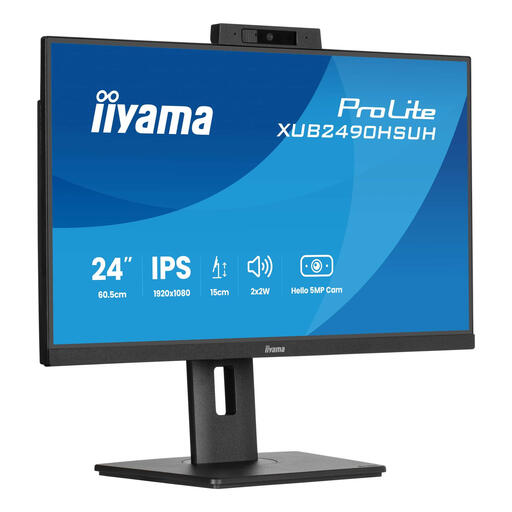 Image unavailable
This desktop monitor is only an option if you have enough room beside the small table; its large screen may take up space you need for working.
The product name specifies an IPS screen, a built-in Windows Hello camera and a microphone.
No. An HDMI connection alone doesn’t guarantee compatibility. Check your camera’s video output while recording, resolution, frame rate and connector type against the monitor’s input. Canon notes that on the EOS R50 V, HDMI display is linked to the ability to record on the camera at the same time.
Not necessarily: camera information can be useful when you’re monitoring the footage yourself. If you’re sending a clean image without overlays to recording or streaming equipment, check the HDMI settings for your camera model. For its HDMI streaming setup, Canon describes turning off the information display.
Place it where you can see it from your filming position, without it hanging over your sketchbook or hands. Check beforehand that the mount, cable and power supply will fit in that position. Follow the manual for the exact device when using and cleaning it.
Applicable European product rules apply to electrical and electronic products; the requirements depend on the product. The Dutch government explains that CE marking may apply to relevant products. CE marking isn’t an independent quality mark and, by itself, doesn’t prove that an individual listing has been carefully checked.
For a consumer purchase, the retailer is your point of contact for your legal guarantee. In the Netherlands, there’s no fixed statutory guarantee period; what you can expect from a product depends on factors including the product itself and how it’s used. For an ordinary online consumer purchase, you’ll often also have a 14-day cooling-off period after delivery, subject to applicable exceptions and conditions.