
Bookbinder using an overhead camera
Wants to see whether the book, hands and tools stay in frame while working, without having to keep looking behind the setup at the camera screen. Canon Europe describes external monitor output for the EOS R50 V.


Choose a camera monitor based on the video signal your camera outputs while filming and where you’ll view the screen from your workbench. For checking small details, a compact HDMI monitor with focus peaking or magnification may be all you need. Extra brightness or SDI is mainly worth considering if your workspace or equipment calls for it. Also check the power supply, mounting options and whether the version on offer carries the CE marking required under the applicable EU rules.
Wants to see whether the book, hands and tools stay in frame while working, without having to keep looking behind the setup at the camera screen. Canon Europe describes external monitor output for the EOS R50 V.
Wants to check before or during filming that seams, folds and other small details are in sharp focus. Magnification and focus peaking can help; check which features are available on the exact monitor version.
Leaves the camera and monitor on the desk for longer periods, so wants to know in advance how the screen is powered and where it can be mounted for easy viewing. Atomos states that the Shinobi II has no built-in battery.
A good fit for: a camera with a compatible HDMI output and a fixed workspace where you want to view the composition and details on a separate screen. Portkeys lists focus peaking on the PT5 II, which has a 5-inch screen.
Keep in mind: Portkeys specifies a maximum brightness of 500 cd/m²; check whether that suits the lighting at your workspace and whether the version on offer complies with the applicable product regulations.
A good fit for: changing ambient light or a workflow where you also want to assess exposure on screen. Atomos specifies 1500 cd/m² for the Shinobi II, along with features such as focus peaking and waveform.
Keep in mind: these are stated specifications, not measurements taken at your desk. The Shinobi II has no built-in battery; USB-C camera control depends on a supported camera model and compatible firmware.
A good fit for: a setup where you use SDI equipment as well as HDMI, or need specific monitoring software. SmallHD lists HDMI and 3G-SDI for the Indie 5.
Keep in mind: SmallHD says that certain camera control features require a separately available licence. For an HDMI-only setup at your bookbinding workbench, extra connections won’t automatically offer practical benefits.
| What to consider | What to look for | Who should consider this? |
|---|---|---|
| Camera and signal compatibility | Check the camera output, HDMI settings in your chosen recording mode, supported signal format and the cable you’ll need. | If I want to see a live view on an external screen, my camera must output one in the video mode I’ve chosen. Around 29% of consumers put compatibility first. |
| Clarity of small details | Check whether the exact version offers focus peaking and magnification, and whether the display is useful from your viewing distance. | When filming seams, folds or small details, I want to be able to check that they’re in sharp focus. Around 29% of consumers give detail and focus checks their highest priority. |
| Framing from your workspace | Decide where the screen will go and check its size, mounting point and the space needed for the cable. | If my camera is above the workbench, I want to keep the book, hands and tools in frame from where I’m working. This is the main priority for around 24% of consumers. |
| Power and screen visibility | Check how the monitor is powered and what’s included; also consider whether the screen will be easy to read in the light at your workspace. | For long recording sessions, I don’t want to run out of power halfway through, and I need to be able to read the screen from where I’m working. Around 18% of consumers prioritise power and screen visibility. |
A monitor may accept certain 4K signals without having a 4K panel. Atomos specifies a screen resolution of 1920 × 1080 pixels for the Shinobi II.
Compare the supported input signals and panel resolution as separate specifications.
Your camera settings may determine whether an external screen shows an image, camera information or both. So having a connection alone doesn’t guarantee that your chosen recording mode will give you the picture you want.
Check the manual for your exact camera model and test your chosen recording mode with the connection you plan to use.
The Atomos Shinobi II has no built-in battery. SmallHD says that separate licences are available for certain camera control features.
Before ordering, check what’s in the box, the power options and the terms for features on the exact version.
FEELWORLD lists 1600 cd/m² and a resolution of 1920 × 1080 for the F6 PLUSX. A Dutch product description gives different brightness figures and lists different resolutions.
Ask the seller to confirm the exact version and its specifications before choosing based on brightness or resolution.
The PT5 II is a compact HDMI monitor for anyone wanting to use features such as focus peaking.
The Shinobi II is an HDMI monitor for anyone who values extra brightness and on-screen tools.
The Indie 5 combines HDMI and SDI with extensive on-screen software.
The F6 PLUSX is a 5.5-inch HDMI field monitor with a touchscreen.
This selection is a desktop screen with an HDMI input for a fixed workspace. Using it as an external camera monitor depends on your camera’s signal output and the screen’s support for it.
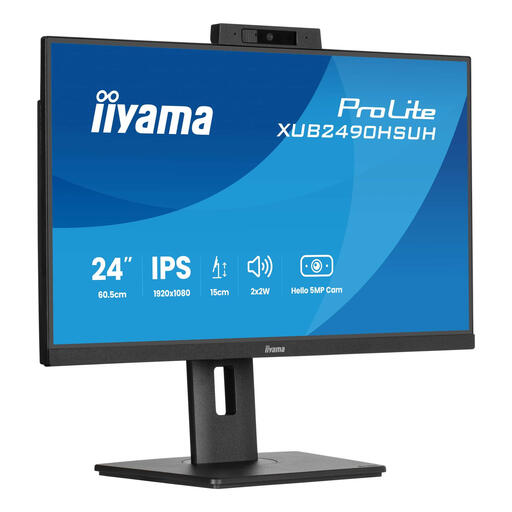 No image available
A desktop screen option for a fixed workspace; before using it as an external monitor, check that its connection and your camera’s signal are right for your setup.
The product description lists an HDMI input, a resolution of 1920 × 1080, height adjustment and tilt adjustment.
Check that the version on offer complies with the applicable EU product regulations and carries the CE marking required for it.
Not on its own. Check whether your camera outputs a live view via HDMI in your chosen video mode, and what format the signal uses. Compare this with the monitor’s supported input and check whether camera information appears on the external screen.
No. The monitor features mentioned don’t mean that it can also record. For recording on a computer, Canon Europe describes using a separate HDMI-to-USB video adapter between the camera and computer.
Check the power supply, cable routing and where you’ll be able to view the screen while bookbinding. Atomos says that the Shinobi II has no built-in battery and supports power from a compatible NP-F battery or via USB-C PD.
According to ACM ConsuWijzer, online consumer purchases generally come with a statutory cooling-off period of up to 14 days after delivery, subject to legal exceptions. You’re also entitled to a statutory guarantee if a product doesn’t meet what you could reasonably expect under normal use; the retailer is your point of contact.
Check whether the version on offer carries the CE marking when required by the applicable EU product regulations. The Dutch Government and European Commission explain when CE applies under the relevant product regulations; a marking or conformity detail for another model doesn’t prove that your version complies.