
Filming model railway details
You want to capture rails, wiring or small scenery details clearly, so focus and framing at your working distance are important. FWD describes both close-ups and wider shots for model railway videos.


Start with the type of footage you want to capture most often: fine details, a top-down view of your workbench or a build timelapse. Then choose based on focus and framing at your working distance, space for a mount and power supply. Compact cameras, webcams and gimbal cameras aren’t interchangeable.
You want to capture rails, wiring or small scenery details clearly, so focus and framing at your working distance are important. FWD describes both close-ups and wider shots for model railway videos.
You want to capture your hands and workbench without the camera or its mount taking up valuable workspace. Logitech describes a mode on the Brio 500 for showing your desk.
You want to record your progress over a longer period and need a fixed position, a suitable recording mode and enough storage. DJI specifies timelapse settings for the Osmo Pocket 3.
Choose based on the type of footage that matters most to you, then check the other requirements in your own room and workspace.
| What to consider | What should you check? | Who should pay particular attention? |
|---|---|---|
| Fine details | Compare the minimum focusing distance and take a test shot from your working distance to see how large the component appears in frame. | If you need to show rails, wiring or scenery clearly while working on your layout, you’ll want both sharp focus and useful framing. Around 36% of consumers say capturing fine details is their top buying priority. |
| Top-down view | Check where the camera can be mounted and whether your hands and the entire workpiece will remain in shot. | If you want to film your hands and workbench without cluttering a desk or small room, the camera needs to suit the space you have available. Around 29% of consumers prioritise a useful top-down view. |
| Long recordings | Check the timelapse function, storage, power supply and mount for the full recording duration. | If you want to condense a long building session into a video, a fixed position and suitable storage are important. Around 21% of consumers prioritise build timelapses. |
| Presenting and moving shots | Record a short test using the lighting and background noise in your room, and check the framing while moving. | If you want to explain things on camera or move the camera along the layout, also check that your set-up suits this style of filming. Around 14% of consumers prioritise presenting and moving shots. |
A camera can focus close up without making a miniature component appear large enough in frame at your working distance. Sony gives the ZV-1F a focusing range starting at around 5 cm from the front of the lens; DJI gives the Osmo Pocket 3 a minimum focusing distance of 0.2 m. These distances alone don’t determine how large your subject will appear in the footage.
Take a test shot of a component from the distance you’ll actually be filming at.
Logitech Brio 500’s Show Mode can tilt the camera towards your desk, but the result also depends on your monitor, mount and available space.
Check the mounting position, framing, focus and room to work in advance.
If your current set-up can’t achieve the angle you want, you may need a different mount.
For a longer timelapse, the recording mode, storage, power supply and mount are also important. DJI states that the Osmo Pocket 3 has no built-in storage and uses a microSD card.
Make a note of the storage, power supply and mount you’ll need, and record a short test first.
Depending on your set-up, you may need a suitable memory card or mount.
Sony describes the ZV-1F as an option for compact detail shots, provided the framing suits your working distance.
The Brio 500 is suited to a workbench set-up used alongside a computer.
DJI describes the Osmo Pocket 3 as suitable for timelapses and moving shots, among other uses.
The PowerShot V10 is a compact, self-contained camera for a small workspace.
Panasonic describes the LUMIX DC-FZ82D as an option when capturing very close-up details is important.
These cameras and webcams are suited to filming your model railway, from shots alongside a computer to moving footage in a compact workspace.
 No image available
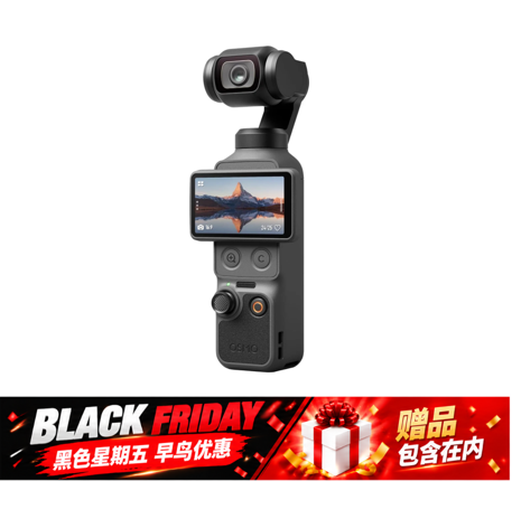
This pocket gimbal camera is a good choice if you want to capture moving footage along your model railway.
The product name lists 4K/240fps video, 3-axis stabilisation, 2× lossless zoom, 107 GB of built-in storage and a 2-inch rotating screen.
 No image available
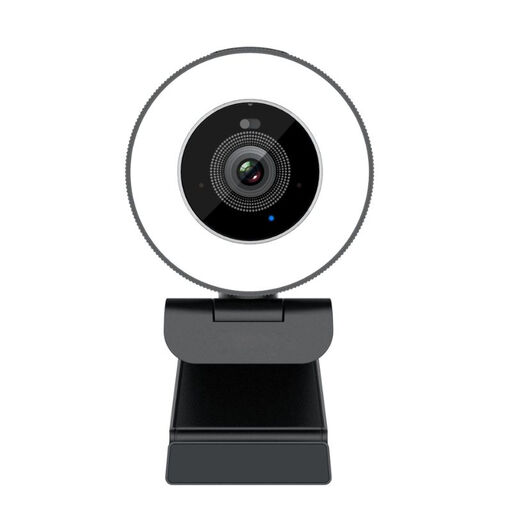
This webcam is suited to filming alongside a computer; check that the mount and viewing angle work with your workbench.
The product name lists 4K UHD, 8 MP, autofocus, dual built-in microphones, a privacy shutter and the EU Version, Black finish.
 No image available
This version could suit timelapses or moving shots; DJI specifies timelapse settings for the Osmo Pocket 3.
The product name lists 4K/120fps video, 3-axis stabilisation, an included microphone and a 2-inch rotating touchscreen. DJI gives the Pocket 3 a minimum focusing distance of 0.2 m; a microSD card is needed for storage.
 No image available
This compact camera is a good choice if you want to make a build timelapse or capture moving footage along your layout.
The product name lists 4K/120fps video, 3-axis stabilisation, fast autofocus and a 2-inch rotating touchscreen. DJI gives the Pocket 3 a minimum focusing distance of 0.2 m; a microSD card is needed for storage.
 No image available
The included zoom lens may be useful if you want to switch between different framings; check the framing from the distance you’ll be filming your layout.
The product name lists a 16–50mm zoom lens.
First, decide what you want to show. For close-ups, check both the focus and how large the component appears in frame. For a wider shot, test whether the layout and your hands fit in shot without blocking your workspace. FWD describes both close-ups and wider shots for model railway videos.
Logitech says the Brio 500 can be tilted towards a desk using Show Mode, but this doesn’t guarantee a straight-down view. Check your monitor position, the mount, the framing and focus on your workbench.
Start with a short test using the same mount, lighting, planned storage and power supply as for the full recording. DJI specifies timelapse settings for the Osmo Pocket 3; a microSD card is needed for storage.
For a consumer purchase in the Netherlands, you can contact the seller to request a solution under the legal guarantee. The Dutch government distinguishes between the legal guarantee and the manufacturer’s guarantee.
Keep your housemate out of shot or ask their permission before publishing footage in which they can be recognised. The Dutch Data Protection Authority distinguishes between footage for personal use and publication, for example on social media.