
Medal detail photographer
You want to show inscriptions, edges or relief in close-up. So compare magnification and working distance, not just the number of megapixels.


Start with the smallest detail you want to capture and the space you’ll need for your camera and lighting. A compact camera with a close-up mode may save you from needing a separate lens; a mirrorless camera with a macro lens gives you a choice of lenses, but you’ll need to check the mount, magnification, working distance and exactly what’s included in the kit. Either way, a stable set-up, controlled lighting and a carefully adjusted white balance are important when photographing medals against a white background.
You want to show inscriptions, edges or relief in close-up. So compare magnification and working distance, not just the number of megapixels.
When photographing reflective medals, you’ll want room to adjust the angle of the light and the position of the camera and light source.
If you’re photographing several medals, repeatable framing, backgrounds and lighting can help keep your images consistent. Canon Netherlands describes a tripod as a tool for achieving consistent composition.
First decide whether you mainly want to magnify small details, control reflections, photograph a series consistently or find a complete kit without a separate lens.
| What to consider | What to look for | Who it matters to |
|---|---|---|
| Small details | Compare maximum magnification and working distance; take a test shot of the smallest inscription. | If I want to show relief or small lettering clearly, I focus on how much detail fits in the frame. Around 33% of consumers prioritise detail. |
| Reflections and white balance | Test the angle of the light with the medal and check the white balance under the lighting you plan to use. | With shiny metal, I want to be able to move the camera and light around to assess distracting reflections. Around 25% of consumers give reflection control top priority. |
| Repeatable images | Check that you can set up the camera steadily and repeat the framing, exposure and white balance. | If I’m photographing a series of medals, I want to keep the framing and background the same. Around 25% of consumers prioritise a repeatable process. |
| Complete kit | Check whether the version includes just a camera body or a lens as well, and whether that lens offers the magnification you need. | If you want a suitable camera set-up without having to buy a separate lens, check what’s included in the complete kit. Around 17% of consumers prioritise the contents of the kit. |
A mirrorless camera’s close-up capabilities also depend on the lens that’s actually included or selected.
Before comparing kits, check the full lens name, mount, maximum magnification and what’s in the box.
A suitable macro lens may need to be bought separately.
Minimum focusing distance is measured from the camera’s sensor. The space in front of the lens may be smaller, leaving less room for lighting.
Compare the stated working distance and, with a shiny medal, test where the camera and light appear in the reflection.
For the Nikon NIKKOR Z DX MC 35mm f/1.7, Nikon gives an actual maximum reproduction ratio of 0.67×; the 1:1 equivalent label refers to the FX image equivalent.
Compare magnification specifications on a like-for-like basis and use a test shot to see whether the smallest inscription appears large enough.
With a reflective medal, the camera and light source may be visible, even when you’re using a macro lens.
First try a different shooting or lighting angle, and set the camera up securely.
A fixed tabletop set-up may require extra preparation and equipment for lighting and stability.
The Tough TG-7 offers a compact option with a built-in close-up mode, for anyone who doesn’t want to choose a separate lens.
The EOS R50 can be paired with a separate RF macro lens for a set-up with an interchangeable lens.
Nikon describes the Z50II with the separate NIKKOR Z DX MC 35mm f/1.7 as a close-up combination.
An APS-C camera with an E-mount can be paired with the separate E 30mm F3.5 Macro lens (SEL30M35).
The XF30mmF2.8 R LM WR Macro is a 1:1 lens for a compatible Fujifilm X camera.
Below are compact camera and vlog camera options. The product names don’t confirm that they have a macro function for medals, so check whether your chosen camera can capture the inscription in focus and at a large enough size.
 No image available
The product name describes a compact vlog camera; take a test shot to check whether it suits the medal close-ups you want to capture.
1-inch CMOS sensor, 4K/120fps video and 3-axis stabilisation, according to the product name.
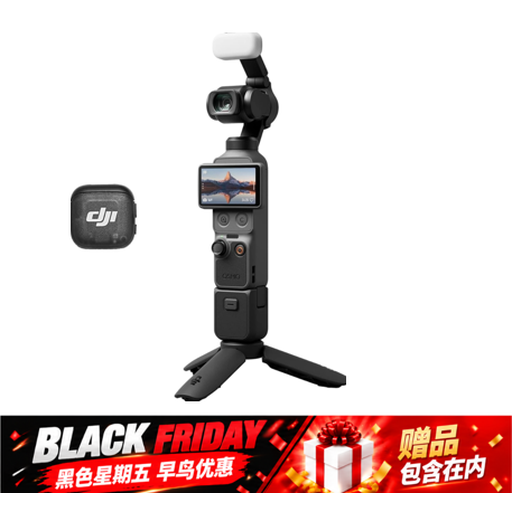 No image available
The product name positions this model as a pocket vlog camera; use a test shot to see whether its close-up capabilities suit your medals.
1-inch CMOS sensor, 4K/240fps video, 2× lossless zoom and 107 GB of built-in storage, according to the product name.
 No image available
The product name describes a compact video and vlog camera; check separately whether its close-up view is good enough to show the smallest details on your medal.
1-inch CMOS sensor, 4K/120fps video, 3-axis stabilisation and a 2-inch rotating touchscreen, according to the product name.
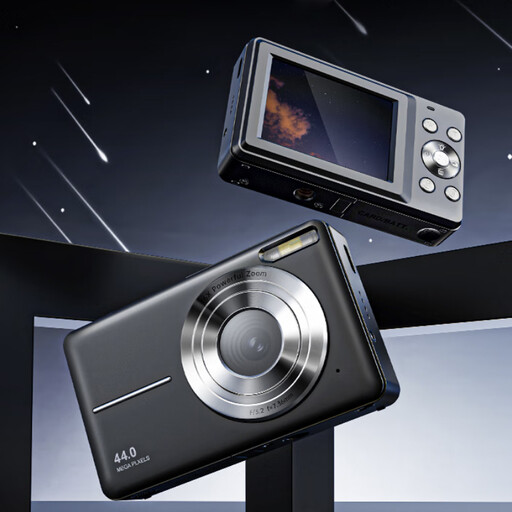 No image available
The product name lists photography and video; take a test shot to see whether small inscriptions appear large and sharp enough in the frame.
4K video, 44 MP and 16× zoom, according to the product name.
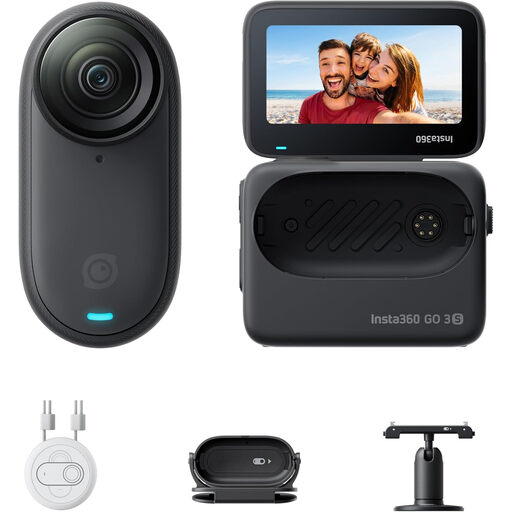 No image available
This portable mini camera is described in the product information as having photo and video modes; check whether its framing suits your medal set-up.
The product name lists 4K, a battery life of 140 minutes and water resistance to 10 m.
If you have a pacemaker, don’t wear the camera on your chest or use the magnetic pendant.
No, not necessarily. First check whether your current camera can capture the whole medal in focus and frame it well; for small inscriptions, magnification and working distance are separate things to consider. A test shot can help you decide whether you need a new lens.
Set up the camera and medal in fixed positions for a series, check the white balance under your own lighting, and take a test shot to assess reflections. Canon Netherlands describes a tripod as a tool for consistent composition and discusses white balance correction for colour differences caused by light sources.
For a distance purchase made by a consumer in the Netherlands, there is generally a statutory 14-day cooling-off period after delivery, with some exceptions. If a product doesn’t meet the reasonable expectations for normal use, the seller is responsible under the statutory guarantee. ACM ConsuWijzer explains these rules; the cooling-off period doesn’t automatically apply to business purchases.
Copyright can arise automatically in an original photo you’ve taken yourself. This doesn’t answer every question about logos, designs or other material shown in the image; consider those rights separately if you plan to publish it.