What should you look for?
Start with what you want your portfolio to show: the glaze colour, fine textures or complete pieces.
| Priority |
What to look for |
Who is this important for? |
| Colour consistency |
Check whether you can set the white balance and, if you want to edit your images, shoot in RAW. Compare shots taken in the same light using a neutral reference. |
If I want the same glaze colour to remain recognisable across a series, I look for consistent lighting and white balance. Around 36% of consumers prioritise colour consistency. |
| Small glaze details |
Compare the magnification and lens mount of the exact lens. Also check that you’ll have room to light the surface. |
If I want to show craquelure or subtle textural variations clearly, my lens’s magnification is crucial. Around 29% of consumers prioritise fine detail. |
| Reflections and shine |
Take test shots with softer lighting and, if needed, change the angle of the light, camera or piece. Check for blown-out highlights. |
If reflections hide details or colour in my glaze, I want to be able to adjust the lighting set-up before buying a different camera. Around 21% of consumers prioritise controlling shine. |
| Photographing complete pieces |
Check the exact kit contents and which lens is included. Try the standard lens to see whether it gives you the composition and sharpness you want. |
If I mainly want to photograph complete bowls or vases, I look for a practical camera-and-lens combination without unnecessary extra equipment. Around 14% of consumers prioritise a simple, all-in-one set-up. |
Cameras at Joybuy
This selection of Joybuy products includes compact cameras and a mirrorless camera with a standard zoom lens for photographing ceramics. Check each model’s focusing capabilities, lens version and suitability for the details you want to capture.
 No image available
DJI Osmo Pocket 3
Could suit a compact camera set-up; check that the camera offers the framing and focusing distance you need for your ceramics.
The product description lists a 1-inch CMOS sensor, autofocus, 3-axis stabilisation and a rotating touchscreen. The title specifies 4K/120 fps video.
View at Joybuy
 No image available
Songdian Pocket Camera 4K 44MP, pink
The product information mentions photography and touchscreen controls. Check whether the camera can focus on small glaze details from the distance you need.
The title specifies 16× zoom. The product description lists autofocus, manual focus and an adjustable focus area.
View at Joybuy
 No image available
Songdian Digital Camera 8X Optical Zoom, white
The zoom can help you adjust your framing; check that the focusing distance suits the complete pieces or details in your portfolio.
The title specifies 8× optical zoom, 5K, 64MP and a dual lens. The product description lists autofocus and manual focus.
View at Joybuy
 No image available
Sony ZV-E10 + 16-50mm Zoom, black
The kit’s standard zoom lens may suit photographing complete pieces; check whether the lens can also bring the close-up details you want into sharp focus.
The product description lists a 24.2 MP APS-C sensor, a 16–50mm kit lens and a Sony E mount.
View at Joybuy
 No image available
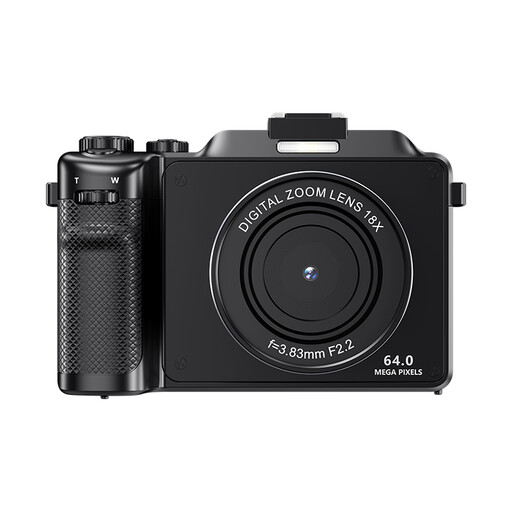
Komery X9 4K 64MP, black
The product description lists autofocus; check that the camera and lens suit the distance and framing you need for your ceramic photography.
The title specifies 18× digital zoom. The product description warns that digital zoom reduces image quality.
View at Joybuy
Frequently asked questions
How can you keep the colour consistent across a series of glazed pieces?
Use lighting that’s as even as possible, and set the white balance under that lighting with a neutral reference. RAW can give you more flexibility to adjust processing settings later; always compare the result with the actual piece. A reference alone can’t guarantee perfect colour.
Do you need a macro lens straight away?
Not necessarily for a shot of the whole piece. If you want small patterns to fill the frame, compare the magnification and mount of the exact lens. The Canon and Nikon macro lenses mentioned here are separate options, with maximum magnifications of 1:2 and 1:1 respectively.
What can you do about bright spots on shiny glaze?
Soften the light and try different angles for the light source, camera and piece. Take test shots and check whether shiny spots are hiding details: shiny ceramics can reflect light sources and their surroundings.
What are your rights if a camera bought online is faulty?
If you buy as a consumer in the Netherlands, you’re entitled to a product that conforms to the agreement. According to the Dutch government, the seller is your point of contact if a product is faulty. There’s no fixed statutory warranty period. For distance purchases, you’ll usually also have a 14-day cooling-off period. Check whether you’re buying the camera as a consumer and whether the rules apply to your purchase.
Can I include someone else’s photos in my public portfolio?
Not without permission. According to the Dutch government, you may generally only publish copyrighted photos with the creator’s permission. Copyright automatically belongs to you as the creator of photos you take yourself.


