What should you look for when choosing?
Standard lens for overview shots
Choose this if: you mainly photograph the whole wallet from a fixed position, and the lens captures it sharply with the framing you want at that distance.
Trade-off: a standard kit lens isn’t necessarily suitable for showing very small details at a larger size.
Suitable macro lens for details
Choose this if: you want to show stitching, a logo or the grain of the leather separately and at a larger size; check the magnification of that specific lens.
Trade-off: a separate lens means another lens to choose and use.
Adjust your existing camera set-up first
Choose this if: your current camera already captures the whole wallet sharply enough, and colour differences or inconsistent framing are your main concerns.
Trade-off: setting a fixed white balance, using a tripod or editing RAW files takes extra adjustments or work, and won’t increase a lens’s close-up capabilities.
The key things to check are focus at your working distance, colour control under your own lights and the lens’s magnification if you want to take detailed photos. Canon Netherlands explains how artificial light affects colour; Nikon Netherlands highlights that macro capabilities depend on the specific lens.
| What to consider |
What to check before buying |
Which consumers should pay particular attention? |
| Repeatable overview shots |
Check focus and framing at your shooting distance, the tripod mount and the available exposure settings. |
If I photograph several wallets from the same position, I want to frame the whole wallet in a similar way each time. Consumers who prioritise consistent framing make up around 33% of those considering this choice. |
| Leather colour under artificial light |
Check whether you can adjust the white balance and, if you edit your photos, whether RAW capture is available. Assess test shots under your own lights. |
If I want to show differences between leather colours, I want to avoid my lighting making those colours look different. Consumers who prioritise colour reproduction make up around 25% of those considering this choice. |
| Stitching and leather grain in close-up |
For the exact lens, compare maximum magnification, focusing distance, mount and the space available to light your subject. |
If I want to photograph a stitch, logo or patch of leather grain separately, my lens needs to capture that detail at a large enough size. Consumers who prioritise detail shots make up around 25% of those considering this choice. |
| Complete set-up |
Compare what’s included in the kit with the equipment you already own; only buy a separate macro lens if you can’t otherwise achieve the detail framing you want. |
If I first want to find out whether my current camera or a basic kit will do, I want to avoid choosing extra equipment unnecessarily. Consumers who prioritise the overall purchase make up around 17% of those considering this choice. |
Cameras at Joybuy
These cameras are options to consider for product photography; check each model to see whether its focus, framing and included equipment suit your wallet photos.
 No image available
DJI Osmo Pocket 4 Standard Combo
The product title mentions photography; check whether the focus and framing suit the distance at which you photograph your wallets.
According to the product title: 1″ CMOS, 4K/240fps, 2× lossless zoom, 107GB built-in storage, 2″ rotating screen and 3-axis stabilisation.
View at Joybuy
 No image available
Komery W6 digital camera
The product title describes this as a camera for photography; check its focus and framing for the overview or detail shots you want to take.
According to the product title: 12× optical zoom, 4K and 64MP.
View at Joybuy
 No image available
DJI Osmo Pocket 3 Creator Combo
The product title mentions photography; check whether the focus and framing suit the details of the leather you want to capture.
According to the product title: 1″ CMOS, 4K/120fps video and 3-axis stabilisation.
View at Joybuy
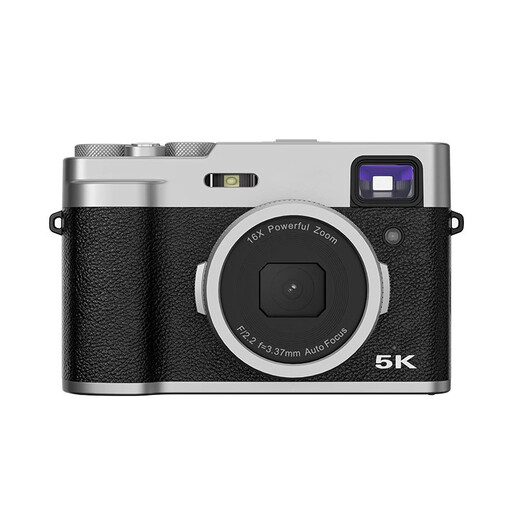 No image available
Songdian Retro compact digital camera
The product title describes this as a digital camera; check whether its stated focus suits the shooting distance for your wallets.
According to the product title: 48MP, 5K Ultra HD, 2.8-inch LCD screen and optical viewfinder.
View at Joybuy
 No image available
Sony ZV-E10 + 16-50mm zoom lens, black
The product title describes a camera with a zoom lens; check whether the lens focuses at your working distance and gives you the framing you want.
According to the product title: Sony ZV-E10 with a 16–50mm zoom lens, in black.
View at Joybuy
Frequently asked questions
Do I always need a macro lens to photograph an entire wallet?
No, not if a standard lens captures the whole wallet sharply and with the framing you want at your working distance. A macro lens is most useful if you want to show small parts separately and at a larger size; check the magnification of the specific lens.
How can I keep colour consistent between shots under artificial light?
Keep your lighting set-up consistent and adjust the white balance to suit. Canon Netherlands explains that artificial light can cause a colour cast. If you use RAW files, you can also adjust the white balance afterwards; assess the results using photos taken under your own lighting.
Why do stripes sometimes appear under LED lights?
Canon Netherlands warns that certain flickering LED or fluorescent lights can cause banding when used with an electronic shutter. Take a test shot and, if your camera offers the option, compare it with a different shutter setting; the effect depends on the light and the camera.
What returns and warranty rules apply to online purchases in the Netherlands?
For distance purchases from a business, you’ll generally have a 14-day cooling-off period, according to the Dutch government, although there are exceptions. Check who the seller is and what returns information applies to your purchase. This is separate from your statutory rights if a product is faulty: the Dutch government says that if a product was already faulty when delivered, you may be entitled to a repair or replacement, among other remedies. Any manufacturer’s warranty is a separate arrangement.
What should I check when buying a camera or light from outside the EU?
Before buying, check who the seller is and what information applies to returns, any import charges and product safety. The Dutch government notes that purchases from online shops outside the EU may incur additional costs and that electronic devices sold in the EU must bear a CE mark. Check the details for the specific product and seller.


