You don’t necessarily need to buy a new camera to photograph whole knitted toys. Start with the camera you already have, a fixed set-up and manageable lighting; RTINGS.com points out that presentation and lighting often make more difference to product photos than the camera model. If you want to fill the frame with stitches, compare the magnification and working distance of the actual lens: a standard kit zoom isn’t automatically a macro lens.
Who is this approach suitable for?
Maker building a portfolio of lots of toys
You want to photograph your creations in a consistent way on different days. A fixed camera and lighting position, along with consistent colours, may matter more than fast autofocus. RTINGS.com and Canon Netherlands explain the importance of presentation, lighting and repeatable framing.
Maker taking detail shots
You want to show stitches, faces and finishing details close up. The magnification of your chosen lens and the space available to light your work both play a part, so compare lens specifications rather than just camera bodies.
Beginner with a simple set-up
You want to take portfolio photos without buying several lenses straight away. First, try your current smartphone or compare a fixed-lens camera with the exact contents of a system camera kit.
What factors determine your choice?
Start with the type of photo you need most often. Test shots in the lighting and space you’ll actually use will show you which features matter for your portfolio.
Your current smartphone and a fixed set-up
Choose this if: you mainly photograph whole toys and your phone captures enough detail and framing in soft, even light.
Bear in mind: take some test shots first to see whether small stitches and yarn colours remain clear enough.
System camera with a standard zoom
Choose this if: you want to photograph whole toys from different angles and have more choice of framing and settings.
Bear in mind: the magnification of the supplied zoom determines how large small stitches appear in the frame; extra lenses are a separate purchase.
Compact camera with a close-up mode
Choose this if: you want to photograph small details up close without changing lenses; OM SYSTEM says the Tough TG-7’s microscope mode can focus from 1 cm away.
Bear in mind: the fixed lens cannot be replaced, and such a short distance can leave little room for lighting in front of the camera.
System camera with a separate macro lens
Choose this if: stitches or finishing details are an important part of your portfolio and you want to choose a lens that fits your camera mount.
Bear in mind: the quoted 1:1 magnification applies to specific macro lenses, not automatically to the camera body or kit zoom; also allow space for light in front of the lens.
| What to consider |
What to look for when buying |
Who is this most important for? |
| Repeatable overall shots |
Test your largest toy in the space you have available; check whether the lens gives you the framing you want and whether you can position the camera steadily. |
If I want to photograph my creations consistently on different days, a fixed crop and background are important. Around 31% of consumers give repeatable overall shots top priority. |
| Yarn colours and lighting |
Take test shots with light and dark yarns under your intended lighting; check whether the white balance can be adjusted. |
If I want yarn colours to look consistent across a series of photos, I pay attention to the lighting and colour settings. Around 25% of consumers prioritise colour consistency. |
| Visible stitches and details |
Compare the maximum magnification of the exact lens and its working distance. Canon Netherlands lists a maximum of 0.16× at 45 mm with autofocus, or 0.26× with manual focus, for the RF-S 18-45mm; this is not 1:1 macro. |
If I want small stitches to fill the frame, the lens needs to offer enough magnification while leaving room to light the work. Around 25% of consumers give close-up shots top priority. |
| Simplicity and a complete set |
Check what’s in the box, the lens mount and which components you already have; compare the complete set-up, not just the camera body. |
If I want to get started without buying several separate items, I look at what’s actually included in the set. Around 19% of consumers prioritise a simple, complete set-up. |
Common pitfalls
-
Assuming a kit zoom is a complete macro set-up
Maximum magnification applies to a specific lens. The Canon RF-S 18-45mm kit zoom reviewed has different magnification figures from the separately listed 1:1 macro lenses.
Read the full lens name and check what’s included in the set. Compare magnification and mount before choosing a camera for stitch details.
-
Focusing only on the minimum focusing distance
Working close to a small detail can limit the space available for lighting. OM SYSTEM says the Tough TG-7 can focus from 1 cm away; Sony lists a working distance of 2.4 cm in front of the lens for its separate 30mm macro lens.
Assess both a detail shot and a photo of the whole toy using the lighting you actually plan to use.
-
Expecting a more expensive camera to take better portfolio photos automatically
RTINGS.com points out that presentation and lighting often make more difference than the specific camera model. Canon explains how a tripod can help keep the framing consistent across a series.
First, take test shots against a simple background with fixed lighting; then work out exactly what your set-up still needs.
Camera brands to compare
These brands are examples of camera systems and lens options; the features listed apply to specific models and lenses, not every product from the brand.
Canon
The EOS R50 with RF-S 18-45mm kit zoom is an RF system option for overall shots of whole toys.
- Canon Netherlands lists a 24.2-megapixel APS-C sensor for the EOS R50.
- At 45 mm, the RF-S 18-45mm offers maximum magnification of 0.16× with autofocus or 0.26× with manual focus. It is not a 1:1 macro lens; also check which accessories are included with your chosen set.
Nikon
The Z50II with Z DX 16-50mm kit zoom is a Z system option for overall shots.
- Nikon Netherlands lists 1:1 magnification for the separate NIKKOR Z MC 50mm f/2.8.
- That macro lens is not included with the Z50II kit with Z DX 16-50mm reviewed. Nikon lists around 5 cm of space in front of the 50mm lens at its minimum focusing distance; allow for room to position lighting when taking close-ups.
OM SYSTEM
The Tough TG-7 has a fixed lens and a microscope mode for close-ups without changing lenses.
- According to OM SYSTEM, microscope mode can focus from 1 cm away.
- A short shooting distance does not guarantee a well-lit detail shot, and the fixed lens cannot be replaced. The LG-1 light guide is listed as part of a separate micro adventure kit; check what’s included in the pack you choose.
Fujifilm
The X-S20 is an X system camera for makers who want to take overall shots and compare separate macro lenses.
- Fujifilm X Netherlands specifies a 26.1-megapixel APS-C sensor and RAW files for the X-S20.
- The 1× magnification applies to the separate XF30mmF2.8 R LM WR Macro lens, not automatically to a kit zoom. Check whether your chosen set includes this lens.
Sony
The α6400 with E-mount is an APS-C system camera that can be paired with a separate macro lens.
- Sony Netherlands lists 1:1 magnification for the separate E 30 mm F3.5 Macro lens.
- Sony lists a working distance of 2.4 cm in front of the 30mm lens. This can make lighting more difficult; the lens is not automatically included with a camera body or standard zoom kit.
Cameras for toy portfolio photos
This selection of Joybuy products includes cameras and sets for different types of framing. For each model, check the exact lens, what’s included in the set and any accessories before deciding whether it suits your photos of whole toys or small details.
 No image available
Komery W6 4K camera with 12× optical zoom
The listed 12× optical zoom gives you framing options from different distances; take test shots to see whether the level of detail suits your portfolio.
The product name lists 64 MP, 4K, Wi-Fi and 12× optical zoom.
View at Joybuy
 No image available
DJI Osmo Pocket 3
The rotating touchscreen lets you frame shots from different angles; take a test shot to see whether the camera suits your photos of knitted toys.
The product name lists a 1-inch CMOS sensor, 4K video at 120 fps, 3-axis stabilisation and a 2-inch rotating touchscreen. The title also focuses on vlogging and video.
View at Joybuy
 No image available
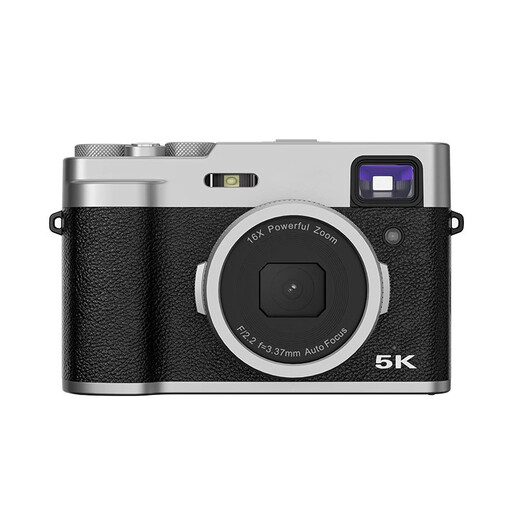
Songdian 48 MP compact camera with autofocus
The product name mentions autofocus; take a test shot of a toy to see how the camera captures the stitches and finishing details in your set-up.
The product name lists 48 MP, 5K, a 2.8-inch LCD screen and an optical viewfinder.
View at Joybuy
 No image available
Sony ZV-E10 with 16–50mm zoom lens
The supplied zoom lens gives you different ways to frame whole toys; check whether it can also capture the close-ups you need for stitches.
According to the product description, an SD memory card and adapter/charger are not included.
View at Joybuy
 No image available
Sony Alpha A6100 with 16–50mm f/3.5-5.6 OSS II
The kit includes a zoom lens according to the product name; compare test shots of the whole toy and small stitch details before deciding whether this lens is enough.
The product name lists a 16–50mm f/3.5-5.6 OSS II lens.
View at Joybuy
Frequently asked questions
Do you need a macro lens straight away for your first portfolio photos?
Not if you mainly want to show the whole toy: first take some shots with your current device or the kit zoom you’re considering. If you want individual stitches to fill the frame, compare the maximum magnification of the exact lens; the Canon RF-S 18-45mm kit zoom reviewed is not a 1:1 macro lens.
How can you keep photos of different toys consistent?
Keep the camera and background in roughly the same positions, use a stable support and compare test shots taken under the same lighting. Check the white balance again whenever the lighting changes, especially with light-coloured yarn.
What should you check about accessories and service before paying?
Check the exact box contents, lens mount and any costs for an extra lens; the Canon and Nikon sets reviewed have different contents. According to the Dutch government, statutory consumer rights are separate from any additional manufacturer’s or seller’s warranty. If a product is faulty, contact the seller.
Can you return camera equipment bought online?
For a distance purchase from a business, the Dutch government says you’ll often have a 14-day cooling-off period. Before buying, check who the seller is and which terms apply to the specific order.
Can you include someone else’s photos in your toy portfolio?
Not without permission. According to the Dutch government, you may only use other people’s copyright-protected photos with the creator’s permission; you must not distribute or publish a copy made for personal use. For your portfolio, it’s best to take your own photos or arrange the necessary permission.


