What should you look for when buying?
When choosing a camera for overall and close-up photos of knitted scarves, consider magnification, colour, a consistent workflow and the complete kit.
| What to consider |
What should you check? |
Who is this important for? |
| Magnifying fine stitches |
Check the maximum magnification and focusing distance of the exact lens; also make sure it fits the camera body. |
If I want to show individual stitches at a large size, I start with the lens and the crop I want. Around 36% of consumers say fine stitch detail is their top buying priority. |
| Reproducing yarn colour |
Look at test shots taken under your intended lighting and check RAW shooting and white balance settings. |
If I want the yarn colour to look consistent across a series of photos, I pay attention to the lighting and white balance. Around 29% of consumers prioritise colour reproduction. |
| Consistent focus |
Test your preferred crop and working distance; keep the camera steady and check which stitches are in focus. |
If I want to photograph several scarves in a similar way, I focus on consistent framing and focusing. Around 21% of consumers say a repeatable workflow is their top priority. |
| Complete kit |
Check which lens is included and whether it offers the magnification and focusing distance you need. |
If I want to weigh up the whole set-up, I look at what I already own and what the kit actually includes. Around 14% of consumers put the complete kit at the top of their buying priorities. |
Cameras on Joybuy
This selection of Joybuy products includes cameras for photography, as well as Sony camera bodies and zoom lens kits. For stitch detail, check separately whether the chosen or included lens offers the magnification and focusing distance you need.
 No image available
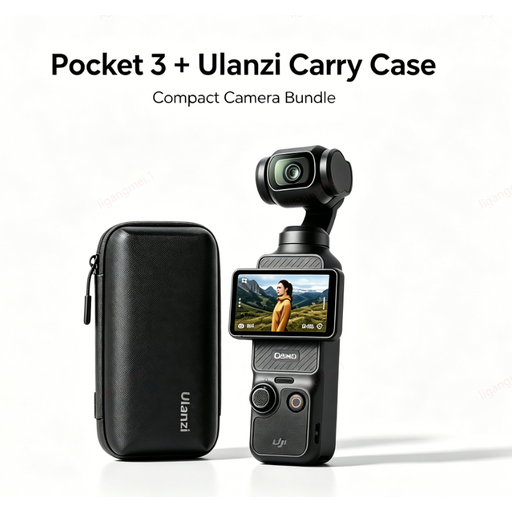
DJI Osmo Pocket 3 camera with Ulanzi Custom Storage Carry Case
The product title describes a camera; for individual stitch detail, check whether your chosen set-up can achieve the close-ups you need.
View at Joybuy
 No image available
DJI Osmo Pocket 3 Creator Combo
The product title describes a camera for vlogging; check separately whether the set-up is suitable for the crop and close-up distance you need for the scarf.
The product title lists a 1-inch CMOS sensor and 4K/120fps video.
View at Joybuy
 No image available
Sony ZV-E10 mirrorless camera body, lens not included
The product title lists the camera body only. Check which compatible lens you need for the magnification and focusing distance you want.
View at Joybuy
 No image available
Sony ZV-E10 with 16–50mm zoom lens, black
The product title lists a 16–50mm zoom lens; check whether it offers the focusing distance and magnification you need for stitch detail.
View at Joybuy
 No image available
Sony Alpha A6100 with 16–50mm f/3.5–5.6 OSS II
The product title lists a 16–50mm lens; use test shots to see whether you can achieve the crop and focusing distance you need for the scarf.
View at Joybuy
Frequently asked questions
Do I always need a 1:1 macro lens to photograph the whole scarf?
No. An overall shot calls for different things from a photo of individual stitches. Decide how small a detail you want to show, then check the magnification and focusing distance of the lens you’ve chosen.
What can I try if only some of the stitches are in focus?
Set up the camera and stationary scarf securely, then check the focus point. Canon Netherlands notes that achieving sufficient depth of field is an important consideration in macro photography. Take test shots and check that the area you want to show is in focus.
Will RAW help if the yarn colour looks different?
RAW gives you room to adjust the white balance afterwards, but check the lighting when you take the photo too. Canon Netherlands explains the role of white balance in post-processing; different light sources can affect how colours appear.
Can I always return a camera bought online within 14 days?
Not in every case. The Dutch government states that, for eligible distance purchases, a 14-day cooling-off period applies in many cases. Check whether your purchase is covered by this scheme and which terms apply.
Does a camera always come with exactly two years of statutory warranty in the Netherlands?
No. The Dutch government states that there is no fixed statutory warranty period in the Netherlands: it depends on what you can reasonably expect from the product. If a product is faulty, contact the seller; a manufacturer’s warranty is separate.


