Who is this camera advice for?

Hat seller

If you photograph hats in several yarn colours for product pages, a fixed setup helps you keep the framing consistent. Canon Europe describes a tripod as a useful way to maintain a consistent product setup; being able to control the white balance matters when you’re working under artificial light.

Knitting detail photographer

For close-ups of stitches, edges and yarn texture, the camera isn’t the only thing that matters: the focusing distance and magnification of your chosen lens also determine how tightly you can frame your subject. The Consumers’ Association points out that not every lens fits every camera.

At-home photography enthusiast

If you photograph hats under your indoor lighting and want to keep your kit simple, compare a compact camera with a fixed lens against a mirrorless camera that lets you choose a lens. The Consumers’ Association explains the difference between fixed and interchangeable lenses.

What should you look for when choosing?

Compact camera with a fixed lens

Choose this if: you mainly take wider shots and want to use one camera without separate lenses.

The trade-off: the fixed lens limits your options later; check whether the exact model can focus close enough to capture your stitches.

Mirrorless camera with a standard lens

Choose this if: you want to take wider and lifestyle shots and set up the camera, lighting and lens as a complete system.

The trade-off: a standard lens isn’t necessarily suited to photographing very small stitches; check the lens mount and what’s included in the kit.

Mirrorless camera with a close-up or macro lens

Choose this if: you need to show individual stitches, yarn fibres or finishing details clearly.

The trade-off: a separate lens means another choice to make; check the mount and magnification of that exact lens in advance. Sony specifies 1:1 magnification for the SEL30M35.

What to consider What should you check? Who is this important for?
Yarn colour under artificial light Check whether you can adjust the white balance and take RAW photos if you want to fine-tune the white balance afterwards. If I’m comparing several yarn colours for product pages, I want consistent colour settings under the same lighting conditions. Around 36% of consumers say matching yarn colour is their main purchasing concern.
Visible knitting texture Check the focusing distance and magnification of the exact lens, as well as its compatibility with the camera. If I want to show individual stitches and yarn texture, my chosen lens needs to focus close up. Around 29% of consumers prioritise useful close-ups of knitting.
Consistent setup in indoor light Check whether the camera can be mounted on a tripod and whether you can adjust the white balance for your lighting; compare test shots under your own lights. If I take repeatable product photos at home, I want to be able to keep my framing and lighting setup consistent. Around 21% of consumers prioritise a stable, manageable setup.
Simplicity and a complete kit Check whether a lens is included, which mount the mirrorless camera uses and whether the lens suits the close-ups you want to take. If I want to get started without unexpected extra purchases, I need to know which components I’ll actually need. Around 14% of consumers say simplicity and buying a complete kit are their main purchasing concerns.

Common buying mistakes

  • Choosing a camera based only on megapixels for stitch photos

    The camera body’s pixel count won’t tell you how close the lens can focus or how large a stitch will appear in the frame.

    Decide in advance how much knitting detail you want to show, then compare the lens specifications with those of the body as a complete combination.

  • Assuming a camera body or fixed lens will handle every close-up

    A compact camera has a fixed lens; with a mirrorless camera, the mount determines which separate lenses will fit. The included lens won’t necessarily be suitable for every close-up.

    Before buying, check what’s included in the kit, the lens mount and how close the supplied lens can focus.

  • Assuming automatic white balance guarantees accurate yarn colour

    Artificial light can cause a colour cast. RAW files and manual adjustments give you more control, but don’t automatically guarantee the final colour you want.

    Keep the lighting as consistent as possible and check test shots of the hat before photographing a whole series.

Camera brands to consider

Canon

The EOS R50 is an APS-C mirrorless camera with interchangeable RF or RF-S lenses.

  • Canon Netherlands lists 24.2 effective megapixels and support for RF and RF-S lenses.
  • The EOS R50 body doesn’t have sensor-shift image stabilisation. The body specifications don’t tell you how close a particular lens can focus.

Sony

The ZV-E10 has an E mount and supports RAW shooting; the system also includes the separate SEL30M35 lens for greater magnification.

  • Sony lists RAW photo support for the ZV-E10 and 1:1 magnification for the SEL30M35 lens.
  • The 1:1 specification applies to the SEL30M35, not to every Sony camera or lens. Check what’s included in the kit and the working distance of your chosen lens.

Fujifilm

The X-S20 is an X-mount mirrorless camera that supports RAW shooting and interchangeable lenses.

  • FUJIFILM X lists 26.1 effective megapixels, 14-bit RAW and sensor-shift stabilisation for the X-S20.
  • The stated stabilisation performance is based on specific test conditions and a particular lens. It doesn’t prove that you’ll get better photos of stationary hats when using a tripod.

Nikon

The Z50II is a Z-mount mirrorless camera that also offers an option for presenting products on video.

  • Nikon describes a product review mode that shifts the focus from a face to an object being shown during video recording.
  • This Nikon feature relates to video and doesn’t indicate whether still photos of hats will be better. Choose a suitable lens separately.

Joybuy camera picks

Joybuy camera picks for photography. Check which features and accessories suit the way you plan to take photos for each model.
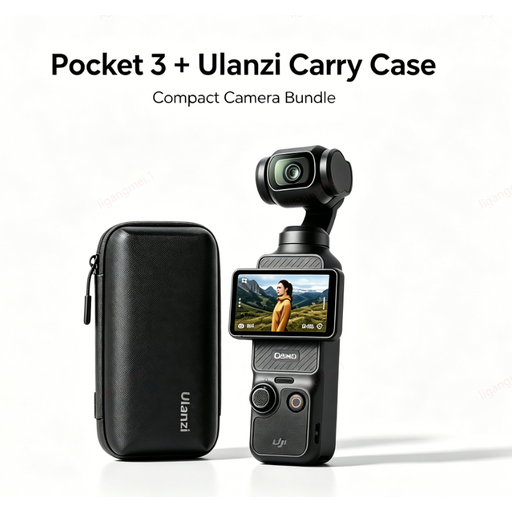
DJI Pocket 3 camera with Ulanzi Custom Storage Carry Case

DJI Pocket 3 camera with Ulanzi Custom Storage Carry Case

The product name lists a DJI Pocket 3 camera with a Ulanzi storage case; check whether this model suits the way you want to photograph hats.

The product name specifies the Ulanzi Custom Storage Carry Case.

View at Joybuy

Osmo Pocket 4P Standard Combo Black

Osmo Pocket 4P Standard Combo Black

The product name lists an Osmo Pocket camera; check the features and what’s included in this version before deciding whether it suits your photography setup.

Version as listed: Standard Combo, Black.

View at Joybuy

Komery W6 camera

Komery W6 camera

The product name lists a digital camera for photography; check whether the lens is suitable for the close-ups of stitches you want to take.

According to the product name: 12× optical zoom, 64 MP, 4K video and Wi-Fi. These specifications alone don’t confirm how well it will perform for close-ups.

View at Joybuy
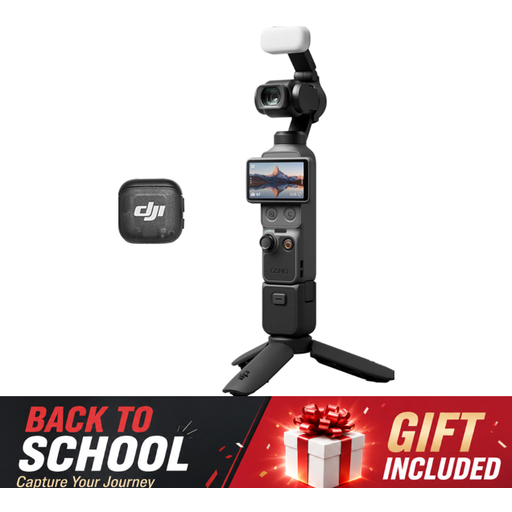
DJI Osmo Pocket 3 Creator Combo

DJI Osmo Pocket 3 Creator Combo

The product name puts the emphasis on video; check whether the listed features suit your needs for taking still photos of knitted hats.

According to the product name: 1-inch CMOS sensor, 4K/120fps video, 3-axis stabilisation and an included microphone.

View at Joybuy
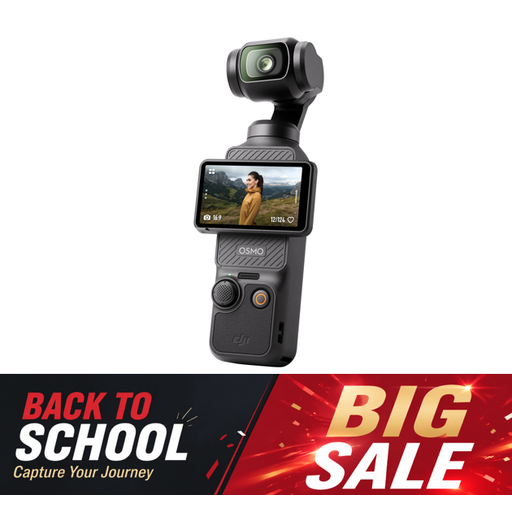
DJI Osmo Pocket 3

DJI Osmo Pocket 3

The product name lists a camera for photography and video; check whether its features are relevant to the still product photos you want to take.

According to the product name: 1-inch CMOS sensor, 4K/120fps video, 3-axis stabilisation and a 2-inch rotating touchscreen.

View at Joybuy

Frequently asked questions

How can you make yarn colours easier to compare under artificial light?

Keep the lighting and setup the same, adjust the white balance to suit the light and take a test photo of the hat. RAW gives you the option to adjust the white balance afterwards, but it doesn’t replace careful comparison; Canon Europe recommends setting the white balance to match the lighting conditions.

Do you need the same lens for the whole hat and individual stitches?

Not necessarily. Check whether the lens you choose can frame the whole hat in the space available to you, and whether its focusing distance and magnification are suitable for the close-up you want. Sony specifies 1:1 magnification for the SEL30M35 lens in particular.

What costs should you check in addition to the camera body?

Check whether a suitable lens is included and whether you’ll need another lens for your close-ups. Also include any accessories you plan to use in your setup, such as a tripod or memory card, in your own cost comparison.

What are your rights when buying a camera online in the Netherlands?

When you buy online as a consumer, you’re generally entitled to a cooling-off period, subject to legal exceptions; ACM ConsuWijzer explains that this ends 14 days after delivery. You’re also covered by the statutory guarantee if the product doesn’t do what you could reasonably expect under normal use. Check the applicable terms if you’re buying the camera for business use.
