
Hat seller with several yarn colours
You want to keep colours and framing consistent across product variations. So look for controlled lighting, white balance and a fixed camera position.


Start with a consistent setup, controlled lighting and test shots; a new camera isn’t automatically the first thing you need to improve. If you want to photograph lots of hat variations or show stitches up close, compare a compact camera with a mirrorless camera and the lens you actually need. A compact camera has a fixed lens, while with a mirrorless camera you’ll need to assess your lens choice separately.
You want to keep colours and framing consistent across product variations. So look for controlled lighting, white balance and a fixed camera position.
You need close-up shots as well as a photo of the whole hat. Check the focusing distance and magnification of the lens you’ll use.
You want to find a setup that works before choosing a more extensive camera kit. Compare test shots with photos from your existing phone.
Choose this if: you first want to see whether your phone captures yarn colours and knitting details well enough. Adobe and Canon Nederland recommend a controlled shooting environment and consistent composition.
Bear in mind: features and close-up capabilities vary between phones, so assess them using test shots of your own hats.
Choose this if: you want a dedicated camera without having to change lenses. Sony states that the RX100 VII can focus from around 8 cm at the wide-angle end and around 100 cm at the telephoto end.
Bear in mind: you can’t change the lens, and the focusing distance also varies depending on the zoom setting.
Choose this if: you regularly photograph a series of products or want to alternate between wider shots and close-ups. Check the kit lens and lens mount; Canon states that the separate RF 35mm F1.8 MACRO IS STM offers up to 1:2 magnification.
Bear in mind: a standard zoom isn’t automatically a macro lens; you may need a different lens for certain details.
Against a white background, you need to be able to assess both the yarn colour and the lighter stitches. Canon Nederland describes white balance and exposure as settings to consider when taking and editing photos, so take some test shots before choosing a camera.
| What to consider | What to look for when buying | Who should prioritise this? |
|---|---|---|
| Yarn colour and light contrast | Check whether you can adjust white balance and exposure; compare test shots of light and dark hats. | If I photograph light wool against white, I still want to be able to distinguish the shade and stitches. Around 33% of consumers put colour accuracy first. |
| Stitches and finishing | Compare the focusing distance and magnification of the lens at the setting you want to use for the detail shot. | If I want to show an individual stitch or edge, I check how close the lens I’m using can focus. Around 27% of consumers prioritise detail. |
| Consistent product photos | Check whether you can position the camera securely and keep the lighting and viewpoint the same between shots. | For several colour variations, I want a consistent crop and background. Around 20% of consumers mainly want to create consistent series of photos. |
| Complete camera setup | Check which lens comes with the camera and whether it’s suitable for the wider and detail shots you want. | If I first want to find out whether my current phone or a simple setup will do, I look at the complete setup. Around 20% of consumers want to assess this first. |
White balance is affected by the lighting, and automatic exposure won’t know how bright you want the background to look. As a result, light stitches or yarn shades may be harder to make out.
Take a test shot with both a light and a dark hat. Assess the hat and background separately before using the settings for a whole series.
You may need a separate lens alongside the standard zoom for certain close-up shots.
The EOS R50 is a mirrorless camera with an RF mount; the PowerShot G7 X Mark III has a built-in lens.
The RX100 VII is a compact camera with a built-in lens; the α6400 is a mirrorless camera with an E-mount.
The Z50II with the NIKKOR Z DX 16-50mm VR is a mirrorless camera kit with a standard zoom lens.
The X-S20 is a mirrorless camera option for those looking to assess manual exposure and RAW shooting.
These camera options are relevant to the topic; check whether the lens and features of each model suit the wider and detail shots you want to take.
 No image available
A compact handheld camera is an option if you also want to create content on the go, as well as product photos.
Bundle with DJI Pocket 3 camera and Ulanzi storage case.
 No image available
An option if you’re looking for a compact camera setup and want to try different compositions.
Listed features and accessories: 64 MP, Wi-Fi, 330° rotating lens, 1.72-inch touchscreen, face recognition, mini tripod and Type-C.
 No image available
A point-and-shoot camera to consider if you’re looking for zoom to create different compositions.
The product name lists 18× optical zoom and an 80 MP specification.
 No image available
A camera option to compare if you’re looking for one device for zoom photography and video recording.
The product name lists 12× optical zoom, 4K, Wi-Fi and a 64 MP specification.
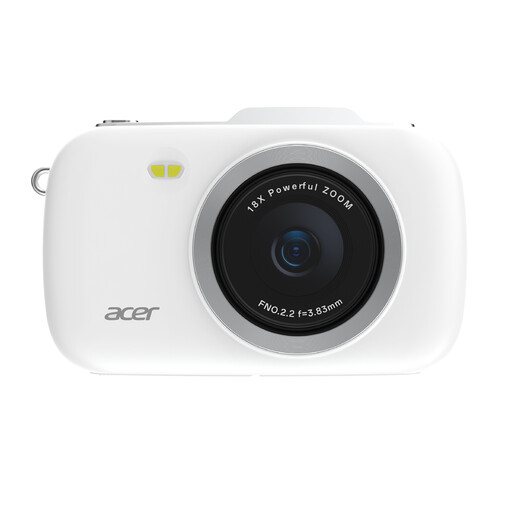 No image available
A portable point-and-shoot camera to compare if you’re looking for zoom and photo and video recording.
The product name lists 18× zoom and an 80 MP specification.
Not automatically. In a test shot, check separately whether the background looks white enough and whether the lighter stitches are still visible. Adjust the exposure to suit what you want to show in the photo.
RAW gives you the flexibility to adjust white balance afterwards. Take care to set the lighting and white balance during the shot too, so you can assess the colour straight away. Canon Nederland describes RAW as a way to adjust white balance during editing.
A tripod isn’t essential, but Canon Nederland recommends one for consistent composition. Keep the position of the hat and the lighting setup the same between shots too.
As a consumer, you’re entitled to a product that meets reasonable expectations. The Dutch government states that there is no fixed statutory warranty period, and that you should contact the seller if there’s a problem. For distance purchases, a 14-day cooling-off period applies in many cases, with some exceptions. These rules don’t necessarily apply to business purchases.