Who is this advice for?

Photographers capturing stitch details

You want to show stitches, ribbing or yarn texture clearly alongside a photo of the whole hat. The magnification and working distance of the lens you choose are key; Sony describes 1:1 as life-size on the sensor.

Creators building a consistent collection

You’re photographing several hats for one portfolio and want similar colours, backgrounds and framing. The Crafts Council and Nikon highlight the importance of planning your shots and keeping the lighting consistent.

Creators putting together a simple photo setup

You want to capture whole hats and the occasional close-up without immediately buying several lenses. Canon Nederland and OM SYSTEM Nederland describe different options: a mirrorless camera kit with a zoom lens, and a compact camera with a built-in close-up mode.

What should you look for?

Mirrorless camera with a suitable lens

Best if: you want to combine shots of the whole hat with increasingly close stitch details, and choose your lenses separately.

Consider: a camera body or standard kit is not automatically a macro setup. Nikon lists 1:1 magnification for the NIKKOR Z MC 50mm f/2.8, but at the closest focusing distance there is still around 5 cm of space in front of the lens.

Compact camera with a close-up mode

Best if: you want to photograph the whole hat and small knitting details without changing lenses. OM SYSTEM lists a built-in lens and a Super Macro mode for the TG-7.

Consider: you cannot replace the built-in lens, and the stated 12 megapixels alone do not tell you how much detail you’ll get in a particular crop.

Existing camera with a fixed setup

Best if: your current camera already captures the hat and the details you want at a suitable size and sharpness, but the colours vary between photos.

Consider: even lighting and a fixed white balance can make a series more consistent, but they won’t make up for insufficient magnification or focusing distance.

What to consider What should you check? Who is this important for?
Stitches and yarn texture Check the maximum magnification, minimum focusing distance and available space in front of the specific lens. If you’re considering a compact camera, check its close-up mode too. If I want small stitches to look clear in the photo, I first check whether the lens can capture the crop I need. Around 36% of consumers put detail first.
Consistent colours Check whether you can set the white balance and whether you want to shoot in RAW. For similar photos, keep the lighting as consistent as possible. If I’m showing several hats in one portfolio, I want the same shade of yarn to look consistent from photo to photo. Around 29% of consumers prioritise colour consistency.
Repeatable shots Compare the controls, framing and what’s included in the kit. Plan a set order for photos of the whole hat and close-up details. If I’m photographing a series of hats, I want to be able to repeat shots of the whole hat and its details in a consistent way. Around 21% of consumers value easy-to-repeat controls most.
Complete equipment Check whether you’re buying a camera body or a kit, and which accessories are included. Find out whether you’ll need a separate macro lens to get the magnification you want. If I’m putting together the whole photo setup, I want to know in advance whether the supplied lens can handle my detail shots. Around 14% of consumers prioritise keeping equipment costs down.

Common buying mistakes

  • Assuming a standard zoom is a complete macro setup

    A mirrorless camera kit may include a standard zoom that does not offer the same magnification as a dedicated macro lens. Canon lists a maximum magnification of 0.14× at 18 mm for the RF-S 18-45mm F4.5-6.3 IS STM, rising to 0.25× with manual focusing.

    Decide how large you want the smallest stitch to appear in the frame, then check the magnification and mount of the specific lens.

  • Comparing megapixels alone

    The Consumentenbond points out that photo quality also depends on factors such as the lens, the sensor and how they work together. A higher megapixel count alone does not tell you whether the whole hat or its stitches will come out as you’d like.

    Assess the complete camera-and-lens combination for both shots of the whole hat and close-up details.

  • Confusing focusing distance with the space in front of the lens

    For the NIKKOR Z MC 50mm f/2.8, Nikon lists a minimum focusing distance of 0.16 m and around 5 cm between the front of the lens and the subject at the closest distance. This can affect where you position your lights.

    Check how much space you’ll have to light the hat at the magnification you want.

  • Confusing an accessory kit with the camera on its own

    According to the manufacturer, the OM SYSTEM TG-7 micro adventure kit includes an LG-1 Light Guide. This accessory is not automatically included with the TG-7 on its own.

    Check the exact version and what’s in the box before putting your photo setup together.

Camera brands to consider

Canon

The EOS R50 kit with RF-S 18-45mm lens is a starting point with an interchangeable lens for shots of the whole hat and limited close-ups.

  • Canon Nederland lists a maximum magnification of 0.14× at 18 mm for the lens; Canon gives 0.25× when using manual focusing.
  • These specifications do not make the kit a 1:1 macro setup.

Nikon

The Z50II is a mirrorless camera body; the NIKKOR Z MC 50mm f/2.8 is a separate Z-mount lens for close-ups.

  • Nikon lists 1:1 magnification for the lens.
  • Nikon says there is around 5 cm of space in front of the lens at the closest focusing distance, which may limit where you can position your lighting. The body listing is not a complete kit.

OM SYSTEM

The TG-7 has a built-in lens and is designed for those who want to use a Super Macro mode without changing lenses.

  • OM SYSTEM lists 12 megapixels, RAW shooting and a Super Macro mode.
  • According to the manufacturer, the LG-1 Light Guide comes with a separate micro adventure kit and is not automatically included with the TG-7 on its own.

Sony

The α6400 is a mirrorless camera option for anyone who wants to choose their own lens.

  • Sony lists a 24.2-megapixel APS-C sensor for the camera.
  • Sony distinguishes between the body on its own and a version with a 16-50mm zoom lens. The sensor specifications alone do not tell you whether a lens can fill the frame with stitches.

Cameras at Joybuy

The product listings below range from cameras with zoom lenses to compact vlogging cameras. For each model, check that the controls, framing and any close-up features suit the photos you want to take of hats and stitches.

Sony ZV-E10 with 16-50mm zoom lens, black

Sony ZV-E10 with 16-50mm zoom lens, black

The listing says a 16-50mm lens is included; check whether its magnification is sufficient for the stitches you want to photograph.

The listing specifies an APS-C sensor and a Sony E mount.

View at Joybuy

Komery W6 digital camera with 12× optical zoom

Komery W6 digital camera with 12× optical zoom

The product description mentions photography and close-ups; check whether the camera can capture the crop you want for small stitches.

The product title specifies 12× optical zoom.

View at Joybuy
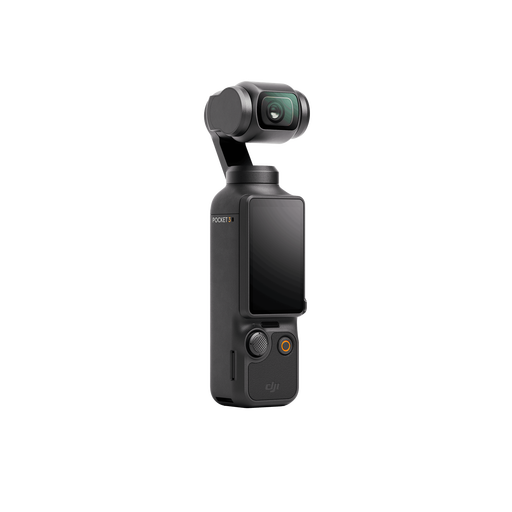
DJI Osmo Pocket 3 Creator Combo

DJI Osmo Pocket 3 Creator Combo

The product title describes this model as a camera for photography and vlogging; check whether its controls and framing suit still product photography.

The title specifies a 1-inch CMOS sensor, 3-axis stabilisation and a microphone in the Creator Combo.

View at Joybuy

DJI Osmo Pocket 3

DJI Osmo Pocket 3

The product title mentions photography and vlogging; consider whether this compact camera suits the way you want to frame your hats.

The title specifies a 1-inch CMOS sensor and a rotatable touchscreen.

View at Joybuy
Sony Alpha A6100 with 16-50mm f/3.5-5.6 OSS II lens

Sony Alpha A6100 with 16-50mm f/3.5-5.6 OSS II lens

The listing says a 16-50mm lens is included for different framing options; check separately whether its magnification is suitable for stitch details.

The product listing specifies a 24.2-megapixel APS-C camera and a Sony E mount.

View at Joybuy

Frequently asked questions

Do I need a macro lens for every photo of a knitted hat?

No, you don’t automatically need a macro lens for a photo of the whole hat. If you want small stitches to fill the frame, check the maximum magnification of the specific lens you plan to use; Sony describes 1:1 as life-size on the sensor.

How can you keep yarn colours consistent across a series of photos?

Keep the lighting as consistent as possible, and check the white balance if the lighting changes. If you want to adjust the white balance afterwards, shooting in RAW can give you more flexibility.

What should you check when using and maintaining a mirrorless camera?

First, check which lens is actually supplied with the camera. Sony advises changing lenses only when necessary and, ideally, in a low-dust environment. Keep the camera body facing down while you do so, and don’t touch the sensor with a blower bulb.

What if a camera bought online is faulty or isn’t right for me?

For consumer purchases in the Netherlands, the seller must resolve problems under the statutory guarantee; a manufacturer’s warranty is separate, according to the Rijksoverheid. For online consumer purchases, ACM ConsuWijzer says you often have up to 14 days after delivery to change your mind, with some exceptions. Check the terms separately if you’re buying on behalf of a business.

Can I publish a portfolio photo featuring an identifiable model without permission?

First, consider the privacy rules if someone is identifiable in the photo. The Autoriteit Persoonsgegevens states that a legal basis under the GDPR, such as consent, is needed to take and publish these photos professionally or commercially. If the photo shows only the hat, this specific issue of an identifiable model does not apply.
