For full jars and a simple tabletop setup, a compact camera with a suitable focusing distance may be all you need. If small details on a label or ingredient are your priority, a mirrorless camera lets you choose a close-up or macro lens. Check the lens, the space available for a tripod and lighting, and the cost of the complete setup. A different camera won’t eliminate reflections in glass by itself.
Who is this buying guide for?
Detail photographer
You want to capture the texture of fruit, a handwritten label or a small detail on a lid clearly. So consider the close-up capabilities of both the camera and the lens. Canon Europe and Sony explain why the lens and shooting distance matter.
Consistent product photographer
You photograph several jars for a personal catalogue or online shop, for example, and want to be able to repeat your lighting and framing. Nikon Netherlands and Canon Europe explain the benefits of a tripod or other fixed support when photographing still subjects.
Beginner with a small home setup
You want to photograph full jars without buying several lenses straight away. Compare what the fixed or supplied lens can capture from your tabletop. The Consumers’ Association recommends considering factors such as how you’ll use a camera and its size.
What should you look for when choosing?
First, decide between a fixed lens for a simple setup and an interchangeable lens for more choice with close-ups. Then consider how you’ll manage reflections and take repeatable shots.
Compact camera with a fixed lens
Best for: full jars and the occasional close-up, if you’d rather not change lenses.
Trade-off: you can’t choose a different lens later. Check the focusing distance at the zoom setting you plan to use.
Mirrorless camera with a suitable lens
Best for: when details matter or you want to switch between a standard lens and a close-up or macro lens.
Trade-off: a suitable close-up lens may add to the cost of the camera body or kit. Also check that the lens mount is compatible.
| What to consider |
What to look for |
Who should pay more attention to this? |
| Small details |
Compare the magnification and focusing distance of the exact lens. Canon Europe describes 1:1 as capturing an image at life size on the sensor. |
If I want to show small textures on fruit or a label, I look at the lens and the distance at which I can focus. Around 36% of consumers prioritise capturing detail. |
| Reflections and lighting |
Try adjusting the position of the jar, camera and light. Nikon Netherlands notes that a suitable circular polarising filter reduces reflections on glass. |
If glare obscures the contents or label, I want to be able to adjust the lighting setup. Around 29% of consumers prioritise control over lighting and reflections. |
| Complete setup |
Compare what the fixed or supplied lens can do at your shooting distance. With an interchangeable lens, also check the mount and any additional lens options. |
If I mainly want to photograph full jars and keep things simple, I look at what’s included in the kit. Around 21% of consumers prioritise simplicity and having a clear overview of the complete setup. |
| Repeatable shots |
Consider whether you can keep your camera in a fixed position and whether the screen can be positioned to suit your work surface. Nikon Netherlands and Canon Europe describe the use of fixed support for still subjects. |
If I want to photograph a series of jars in the same way, I want to be able to repeat my composition and lighting setup. Around 14% of consumers prioritise a consistent way of working. |
Common buying mistakes
-
Judging close-up performance by the camera body alone
How close you can focus and how large a detail appears in the frame depends partly on the lens you use. A mirrorless camera doesn’t automatically become a macro camera.
Compare the camera body, lens mount and exact kit or macro lens as one complete setup.
-
Looking at the minimum focusing distance without checking the zoom setting
Canon lists a minimum focusing distance of 5 cm at the wide-angle setting and 40 cm at the telephoto setting for the PowerShot G7 X Mark III, measured from the front of the lens. Being able to focus close doesn’t automatically mean the detail will fill the frame.
Check the distance and framing at the zoom setting you plan to use for the jar.
-
Choosing a different camera to fix reflections in glass
Reflections are partly determined by your shooting setup. The camera body alone won’t change the position of the light or its reflection in the jar.
First try adjusting the position of the light, jar and camera. Then check whether any filter you’re considering is compatible with your chosen lens.
Camera brands to consider
Canon
The models discussed represent a fixed-lens option and a mirrorless camera with interchangeable lenses.
- Canon lists support for RF and RF-S lenses for the EOS R50.
- For the PowerShot G7 X Mark III, the minimum focusing distance varies by zoom setting: 5 cm at wide angle and 40 cm at telephoto.
Nikon
The Z50II is a mirrorless camera with a Z mount. Nikon also mentions the NIKKOR Z MC 50mm f/2.8 in its food photography materials.
- Nikon lists a movable screen and a DX sensor with 20.9 million effective pixels for the Z50II.
- The camera body’s specifications don’t prove that a standard kit lens is suitable for every small label detail. Assess the lens separately.
Sony
The α6400 is an APS-C mirrorless camera with a Sony E mount, for anyone comparing lens choice and RAW shooting.
- Sony lists 24.2 million effective pixels and RAW shooting for the α6400.
- Sony states that the minimum focusing distance varies by lens and sometimes by zoom setting.
Fujifilm
The X-S20 is a mirrorless camera option where you can also take the stated in-body image stabilisation into account.
- Fujifilm lists five-axis in-body image stabilisation for the X-S20.
- That specification doesn’t prove it will benefit you when photographing a jar on a tripod. Your choice of lens also plays a part in close-up photography.
Cameras at Joybuy
These product options are aimed at general photography of jars and other subjects. For small details, always check that the lens and shooting distance suit your setup.
 No image available
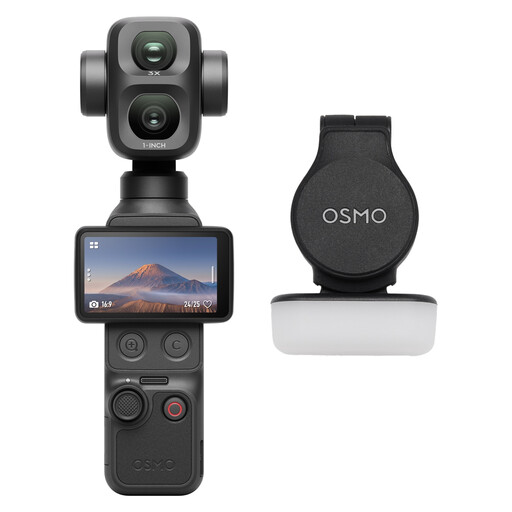
Osmo Pocket 4P Standard Combo, black
A camera option for general shots of jars. For close-ups, check that the shooting distance suits your subject.
The product name specifies the Standard Combo version in black.
View at Joybuy
 No image available
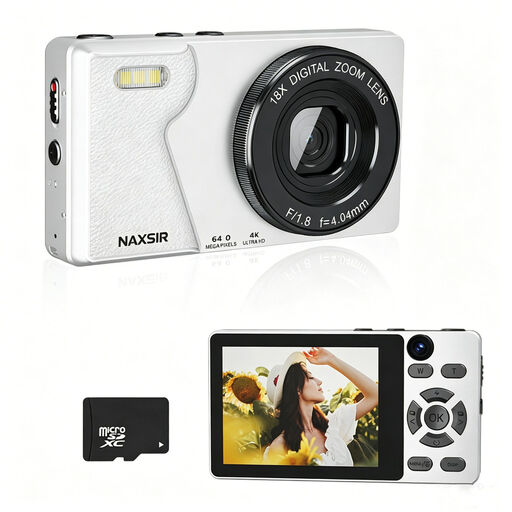
NAXSIR 4K digital camera, 64 MP, 18x digital zoom
A camera option for general jar photography. Check the focusing distance before relying on it for small details.
The product name specifies autofocus, 18x digital zoom and an included 32 GB memory card.
View at Joybuy
 No image available
KOMERY G7-A 4K digital camera, 80 MP, pink
A camera option for general jar photography. For detailed shots, check whether the lens can focus close enough.
The product name specifies 18x zoom and a pink finish.
View at Joybuy
 No image available
KOMERY G7 5K digital camera, 80 MP, white
A camera option for overview shots of jars. Assess its close-up capabilities separately before photographing small details.
The product name specifies 18x zoom and a white finish.
View at Joybuy
 No image available
KOMERY W6 4K digital camera, 64 MP, 12x optical zoom
A camera option for general jar photography. For small details, check the focusing distance of the lens you’re using.
The product name specifies Wi-Fi and 12x optical zoom.
View at Joybuy
Frequently asked questions
Do I need a macro lens to photograph a whole jar?
Not necessarily. First decide how much of the jar and its surroundings you want in the frame. For very small textures, the magnification of the lens you’re using matters. Canon Europe describes 1:1 as capturing an image at life size on the sensor.
Why does a label go out of focus when you move closer?
You may be closer than the minimum focusing distance of the lens you’re using. This distance varies by lens and can also change with the zoom setting on a zoom lens.
How can you start reducing glare on glass jars?
First, change the position of the jar and the light, then check the reflections from your chosen camera angle. A suitable circular polarising filter is another option. Nikon Netherlands notes that its filter reduces reflections on glass.
Is a tripod useful if the jar isn’t moving?
Yes. A tripod or other fixed support helps keep the camera and composition in place when taking a series of shots of a still subject. Nikon Netherlands and Canon Europe describe the use of fixed support for this type of photography.
Can you return a camera bought online if it doesn’t suit your setup?
Online consumer purchases generally come with a statutory cooling-off period. According to ACM ConsuWijzer, it expires 14 days after delivery. Check the applicable exceptions and the conditions for unpacking, trying out and returning the camera.


