
Skyline photographer in changing light
Wants to retain detail in a bright sky and dark quayside, so pays attention to exposure control and RAW processing. Nikon describes exposure bracketing as a way to capture different brightness levels.


For a fixed skyline with strong contrast, RAW, exposure bracketing and a suitable lens are key considerations. For changing viewpoints and handheld shots, portability and stabilisation matter more. Choose a lens to suit your preferred angle of view, and remember that stabilisation won't freeze the movement of boats.
Wants to retain detail in a bright sky and dark quayside, so pays attention to exposure control and RAW processing. Nikon describes exposure bracketing as a way to capture different brightness levels.
Changes viewpoint and often shoots handheld. Which? points out that not every lens fits every camera, while Nikon highlights stabilisation as a consideration for handheld shots.
Wants to crop or print buildings, cranes or ships at a large size, and so weighs resolution against lens quality and focal length. Which? stresses that both the sensor and lens are important for image quality.
Start with the shot you want to take: a fixed skyline calls for a different approach from a walk where you'll be shooting handheld. Then assess the camera body and lens as a complete set.
| What to consider | What should you check? | Who is this important for? |
|---|---|---|
| Bright sky and dark quayside | Check that the camera can shoot in RAW and whether the model offers exposure bracketing. | If I want to retain detail in both the sky and the dark quayside, I look at the options for post-processing. Around 33% of consumers put contrast control at the top of their list. |
| Dusk and movement | Check the stabilisation offered by the camera-and-lens combination, the lens's maximum aperture and the shutter speed settings. | When photographing boats as the light fades, I want to be able to choose the shutter speed myself. Stabilisation reduces camera shake, but it won't freeze a moving boat. Around 27% of consumers give dusk and movement top priority. |
| Angle of view and distant details | Check the lens mount and focal length, then see whether the resolution is suitable for cropping or large prints. | If I want to frame both a wide skyline and distant cranes, the lens needs to suit my viewpoint. Around 20% of consumers start by considering the angle of view and distant detail. |
| Portability of the set | Compare the combined weight of the camera body and lens, and check which lens and accessories are included in the kit. | If I'm walking between viewpoints, I want to know what I'll actually be carrying and whether the kit is ready to use straight away. Around 20% of consumers give portability and the complete set top priority. |
More pixels alone don't guarantee better photos in low light. Both the sensor and lens affect image quality.
First decide on your viewpoint and the crop you want. Then compare the lens and camera body together, and consider whether RAW or exposure bracketing suits the way you work.
A mirrorless camera may be sold without the lens that suits your preferred angle of view.
Check exactly what's included in the kit and the lens mount before you choose. You may need to buy a suitable lens, spare battery or tripod separately.
Stabilisation helps reduce camera shake, but moving water or a boat can still look blurred with a long exposure.
Choose the shutter speed to achieve the movement effect you want. If you use a long exposure, use a tripod if needed and check whether it's allowed at the location.
The X-T5 is an APS-C mirrorless camera for anyone looking for interchangeable lenses and dial-based controls.
The Z5II is a full-frame camera with a Z mount, suited to anyone who values in-body stabilisation when shooting handheld.
The EOS R8 is a full-frame RF camera body; the EOS R5 is another option for anyone who values high resolution for cropping.
The Sony α7R V, model ILCE-7RM5, has an E mount and is aimed at anyone who values resolution for large prints or cropping.
This Joybuy selection includes several camera models, including two Sony APS-C models with zoom lenses. For each model, check that its shooting features and angle of view suit the harbour photos you want to take.
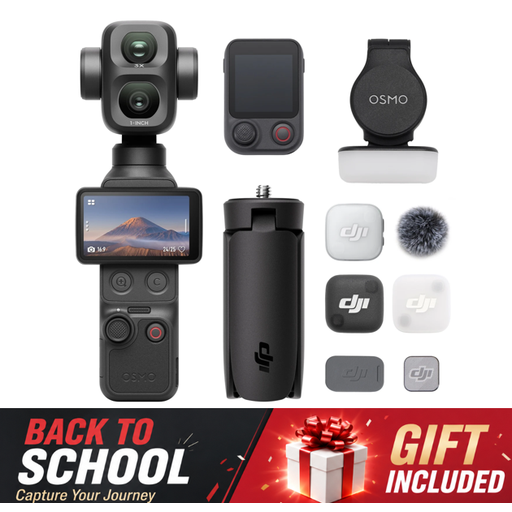 Image unavailable
The product description lists a 20mm f/2.0 lens and a 1-inch CMOS sensor. Check whether this model is suitable for the way you want to frame a skyline.
The product description also mentions 4K video and a dynamic range of 17 stops. These are product specifications, not independent test results.
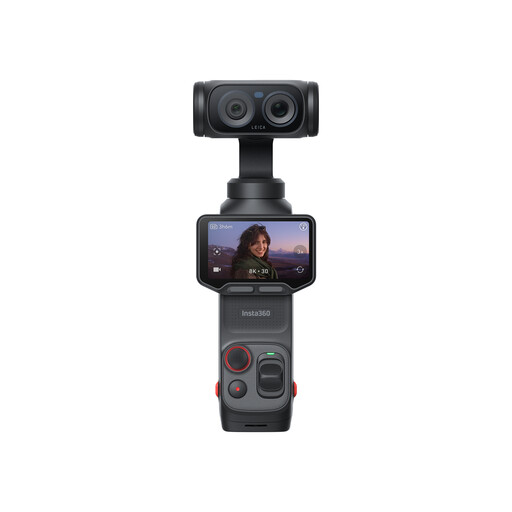 Image unavailable
The product description lists a 1-inch main sensor and a 1/1.3-inch telephoto sensor. Check whether the camera and its angle of view are suitable for the static harbour photos you want to take.
The description mentions telephoto zoom and zoom up to 6×. Check how these features work for the framing you want to achieve.
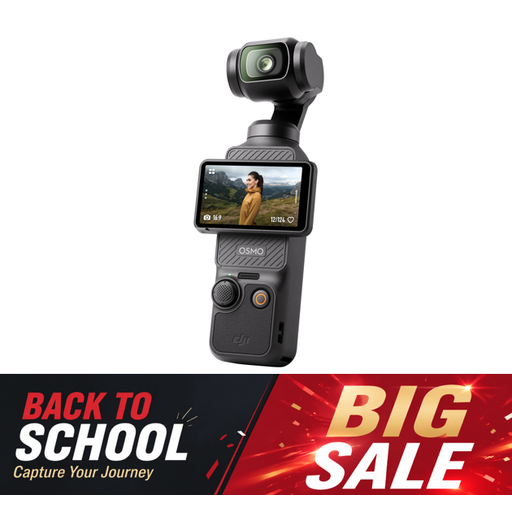 Image unavailable
The product description presents this model as a compact vlogging camera. If you're considering it for skyline photography, check its capabilities for still images.
The description lists a 1-inch sensor and mechanical 3-axis stabilisation. It also mentions 4K video at up to 120 fps and a rotating screen.
 Image unavailable
The Sony ZV-E10 is supplied with a 16–50mm zoom lens. This combination could be useful if you want to compare different angles of view with a single set.
The product description lists an APS-C sensor, 24.2 megapixels and a body weight of 343 g. That's the weight of the camera body; remember to factor in the lens if you're taking it on a walk.
 Image unavailable
This Sony camera is supplied with a 16–50mm kit lens. Check whether it offers the angle of view you want from your chosen viewpoint.
The product description lists an APS-C sensor, 24.2 megapixels and an electronic viewfinder.
No. More megapixels alone don't guarantee better photos in low light. First check for RAW recording, exposure bracketing and a lens that suits the camera.
Choose the shutter speed to suit the movement you want to capture: a longer exposure can blur water, while a shorter one helps limit motion blur. A tripod helps reduce camera shake during long exposures, but it won't freeze a moving boat.
No. Check the mount on the specific camera body and lens. An older lens may need a compatible adapter.
When you buy as a consumer, the product must meet the terms of the agreement, and the seller is your point of contact if it is faulty. The Dutch Government says there is no fixed statutory guarantee period in the Netherlands; any manufacturer's guarantee is in addition to this.
It depends on who took the photo, its purpose and how you share it. The Dutch Data Protection Authority distinguishes between private use within a limited circle and sharing more widely or for business purposes. This is not a general ban on taking a skyline photo.