
Maker taking product photos regularly
You photograph several tiles or new pieces and want to keep the framing and lighting consistent. A tripod can help you keep the frame in place, as MPB explains in its product photography guide.


Start with a fixed shooting position, a tripod and even, diffused light. This helps you tackle differences in composition and reflections before buying a different camera. For whole tiles, a mirrorless camera with a suitable standard lens may be enough, while small glaze details might justify a dedicated macro lens. Check the lens and the contents of the exact kit: a macro lens is not automatically included.
You photograph several tiles or new pieces and want to keep the framing and lighting consistent. A tripod can help you keep the frame in place, as MPB explains in its product photography guide.
You want to show glaze colours and reflections as consistently as possible from one photo to the next. Orbitvu describes diffused light as a way to reduce harsh shadows and visible reflections when photographing ceramics.
Alongside an overall view, you want to capture small textures or finishes. The magnification and working distance of your chosen lens are important here.
First, work out how to position the tile and the lighting in the same place each time. Then choose a camera and lens to suit your preferred framing and level of detail.
| What to consider | What should you check? | Who is this important for? |
|---|---|---|
| Repeatable composition | Check that you can mount the camera securely and mark the tile’s position and framing. | I want to photograph successive tiles from the same angle so the images are easier to compare. Around 36% of consumers give repeatability the highest priority. |
| Colour and shine | Check that you can record your settings deliberately; plan for diffused light and a consistent background. | If the glaze colour and reflections need to stay comparable between photo sessions, I also want to keep the lighting setup constant. Around 29% of consumers prioritise colour consistency. |
| Small details | Compare the magnification of the exact lens and check its working distance with your lighting setup. | I want to show textures or small finishes in close-up while leaving room to light the tile. Around 21% of consumers choose detail as their top priority. |
| Complete setup | Check whether you’re buying a camera body or a kit, and which lenses and setup equipment you already have. | I want to avoid buying a new body or an extra lens if my existing equipment can do the job for the photos I want. Around 14% of consumers focus mainly on the complete setup. |
Stabilisation won’t keep the camera in exactly the same position each time you take a similar photo on a different occasion.
Assess the camera alongside a sturdy tripod and a fixed spot for the tile.
Macro magnification depends on a specific lens and isn’t automatically available with every body or included lens.
Check the exact kit contents and compare the lens’s magnification with the details you want to capture.
This distance doesn’t tell you directly how much room there’ll be between the front of the lens and the tile for lighting.
Also check the working distance and whether the lens or camera blocks light from reaching the tile.
The EOS R50 is an RF mirrorless camera with interchangeable lenses.
The Z50II is part of the Z system; a separate macro lens is an option for close-ups.
The ILCE-6400A is an APS-C camera with an E-mount for interchangeable lenses.
The X-S20 offers an interchangeable-lens system for anyone who wants to choose their own shooting settings.
This selection of Joybuy products includes cameras and kits with different types of lenses and shooting features. For detail shots and repeatable compositions, check whether the exact kit and its settings suit your setup.
 No image available
The stated zoom may be useful if you want to adjust the framing; check in advance how you can keep the tile composition and lighting setup fixed.
The product name lists 64 MP, 4K, 12× optical zoom and Wi-Fi.
 No image available
This kit may suit anyone looking for an interchangeable lens and a choice of framing; check separately whether the lens can capture the details you want at a large enough size.
The kit includes a 16–50mm zoom lens. The product description lists a 24.2 MP APS-C sensor and a vari-angle LCD screen.
 No image available
The included zoom lens gives you a choice of framing; check whether it suits the distance and level of detail in your tile setup.
The product description lists a 24.2 MP APS-C sensor and manual focus. The kit name lists a 16–50mm lens.
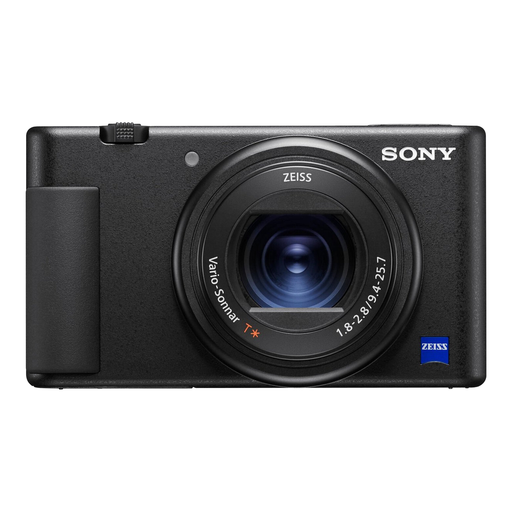 No image available
A compact camera may be an option if you want a fixed lens; check whether the zoom range and controls suit your preferred framing.
The product description lists a 1-inch CMOS sensor, a 24–70 mm zoom lens, RAW and JPEG shooting, and a tilting touchscreen.
 No image available
The rotatable screen can help you check the framing; make sure the controls and exact setup work for still images of tiles.
The product name lists a 1-inch CMOS sensor, 2× lossless zoom, 107 GB of built-in storage, a rotatable 2-inch screen, 4K/240fps and 3-axis stabilisation.
No, a macro lens isn’t automatically necessary for an overall shot. Consider the size of the tile, the shooting distance available and the framing you want; a macro lens is mainly useful when your chosen lens can’t capture small details at a large enough size.
Use a sturdy tripod or note where the camera is positioned, mark the tile’s position, and keep the background and lighting the same. Check the framing and focus before each series of shots.
Use consistent diffused light and the same background to keep your setup consistent. Avoid a direct light source that creates unwanted reflections, and save your camera settings for future sessions.
Check whether the offer includes a body or a kit, and which lens and other setup equipment you already have. According to ACM ConsuWijzer, when a consumer buys online, there is generally a statutory 14-day cooling-off period after delivery. You may also be entitled to a legal guarantee if the product doesn’t meet reasonable expectations under normal use. Consumer rules don’t necessarily apply to business purchases.