
Creating a portfolio of several notebook designs
You want to photograph complete notebooks in a consistent way, as well as show a few details. A fixed frame and a lens that captures the whole book matter more here than video features.


Start with a fixed setup, suitable lighting and test shots of both a whole notebook and a binding detail. You only need a new camera if your current one can’t capture these images the way you want. A mirrorless camera with a standard zoom gives you the option to change lenses later, while a compact camera with a close-up mode is an alternative if small details and minimal equipment are important. Before choosing, assess the actual framing, focusing distance and complete kit.
You want to photograph complete notebooks in a consistent way, as well as show a few details. A fixed frame and a lens that captures the whole book matter more here than video features.
You want to capture stitches, paper fibres or small finishing details clearly. Check how close the camera-and-lens combination can focus and how large the detail actually appears in the frame.
You’re looking for a simple setup with minimal extra equipment. Before switching to a larger camera system, compare what your current camera can do with a compact camera.
| What to consider | What should you look for? | Who is this important for? |
|---|---|---|
| Fitting the whole book in the frame | Use your largest notebook to check whether it fits completely in the frame from the camera height available. Also check whether a tripod can be positioned securely above the table. | If I want to photograph different designs consistently, I focus on getting a complete, repeatable frame. Around 33% of consumers prioritise seeing the whole book. |
| Small binding details | Check the magnification of the specific lens and test the crop you want. Canon Netherlands lists a maximum magnification of 0.16× with autofocus at 45 mm for the RF-S 18–45mm zoom. | If I want to show stitches and paper texture clearly, I check how large those details actually appear in the photo. Around 25% of consumers prioritise these kinds of binding details. |
| Colour reproduction | Take test shots under the lighting you use for your portfolio and compare them with the notebook. Check which white balance settings are available. | If the cover and paper colours need to look true to life, I first want to see how my lighting setup affects the photo. Around 25% of consumers prioritise colour reproduction. |
| Simplicity and equipment | Test your current camera first. Then compare complete kits and check whether the required lens and any storage or power accessories are included. | If I want to work with minimal extra equipment and avoid unnecessary spending, I compare the whole setup rather than just the camera body. Around 17% of consumers prioritise simplicity and equipment. |
Being able to focus close up doesn’t automatically mean a small binding detail will appear large in the frame. According to Canon Netherlands, the maximum magnification of the Canon RF-S 18–45mm kit zoom at 45 mm with autofocus is 0.16×.
Compare magnification at the focal length you plan to use and, if possible, test the exact kit lens with your detail.
If your chosen details don’t appear large enough in the frame, a separate macro lens may mean extra equipment and expense.
Changing the framing and lighting can make it difficult to compare notebook photos. A different camera won’t automatically change your workspace or lighting conditions.
First, take test shots with your current camera, a fixed setup and the lighting you plan to use for your portfolio. Canon Europe explains how a tripod can help you frame shots consistently.
According to OM Digital Solutions, the OM SYSTEM TG-7 has no internal memory and is supplied without a memory card.
Before buying, check what’s included in the kit and how you plan to charge the camera.
For the TG-7, allow for a separate memory card and a suitable USB power solution if you don’t have a compatible USB device to charge it.
The EOS R50 with RF-S 18–45mm kit zoom is an interchangeable-lens option for overview shots. Canon also offers separate RF macro lenses.
The Z50II with NIKKOR Z DX 16–50mm f/3.5–6.3 VR is an interchangeable-lens option with a standard zoom.
The ZV-E10 II lens kit combines an APS-C body with an E PZ 16–50mm F3.5–5.6 OSS II zoom.
The Tough TG-7 is a compact camera with a fixed lens and a mode for close-up photography.
Joybuy product picks suited to this topic.
 No image available
The product name mentions a rotating lens and a tripod. Take a test shot to check whether you can achieve the framing you want for your book and binding details.
The product name lists a 330° rotating lens, a 1.72-inch touchscreen and an included tripod.
 No image available
The product name mentions zoom for different crops. Take a test shot to see whether both the whole notebook and the detail you want are clearly in the frame.
The product name lists 5K, 80 MP and 18× zoom.
 No image available
The product name mentions optical zoom. Use test shots to check what framing you can achieve for overview photos and details.
The product name lists 4K, 64 MP and 12× optical zoom.
 No image available
The product name also mentions still photos and a rotating touchscreen. Check whether these make it easy to assess the composition in your setup.
The product name lists a 1-inch CMOS sensor and 4K/120fps video.
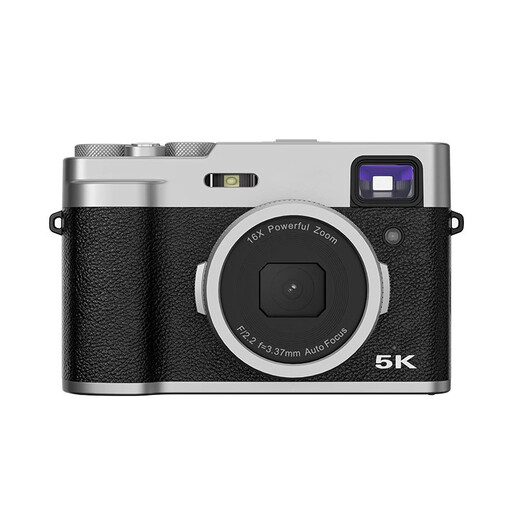 No image available
The product name mentions both a screen and an optical viewfinder. Compare which framing method works best in your workspace.
The product name lists autofocus, 5K and a 2.8-inch LCD screen.
Place the camera and notebook in the same position each time, and keep the background consistent. Canon Europe explains how a tripod can help you frame shots consistently; check that all the edges are visible for each notebook.
Not necessarily. Check the maximum magnification too, and take a test shot. The focusing distance of a Nikon lens and the maximum magnification of a Canon kit zoom describe different features.
Compare what’s included in the complete kit and check whether you need a different lens for small details. OM SYSTEM says the TG-7 is supplied without a memory card; also check how you plan to charge the camera.
Be mindful of other people’s copyright-protected work and of identifiable people in your images. The Dutch government states that you generally need permission from the creator to publish copyright-protected work. According to the Dutch Data Protection Authority, a GDPR legal basis, such as consent, is required to take and publish images of identifiable people for business or commercial purposes.