Start with the distance from the table and the size of your notebook: choose a camera and lens that can capture the whole book in focus from your setup. A compact camera keeps your kit simple; with a mirrorless camera, you can change lenses later, but check which lens is included and its focusing distance and magnification. For open pages, a stable setup, aperture control and consistent white balance all matter.
Who is this buying guide for?
Catalogue photographer
You want to frame complete covers and open notebooks consistently on a small table. Distance, screen controls and a stable setup all play a part. The Consumers’ Association (Consumentenbond) highlights ease of use and zoom range, among other things, when choosing a camera.
Book-detail photographer
You want to show details such as stitching, fastenings or paper texture on their own. So, check both the focusing distance and magnification of the lens you’ll actually use; Canon publishes these figures for the RF-S 18–45mm at each setting.
Seller comparing paper colours
You want paper and cover colours to look consistent across a series of photos. Adjustable white balance and consistent lighting help you establish a reliable workflow; Canon also explains how to adjust the white balance of RAW images later.
What should you look for when choosing?
Compact camera with fixed lens
A good fit if: you mainly want to photograph complete notebooks and use as few separate components as possible.
The trade-off: you can’t simply fit a different lens later. Check in advance that the fixed lens can frame the details you want from your usual distance.
Mirrorless camera with standard zoom lens
A good fit if: you switch between complete covers, open pages and different compositions.
The trade-off: a camera body isn’t automatically a complete kit, and a standard zoom lens won’t necessarily make a tiny stitch fill the frame.
Mirrorless camera with close-up or macro lens
A good fit if: small bindings, paper textures or fastenings are often your main subject.
The trade-off: check the lens mount, magnification and working distance; a separate lens also means extra kit.
| What to consider |
What to check before buying |
Who it matters most to |
| Framing the whole book |
Measure the book and the available distance; check the lens range, focusing distance at the zoom setting you’ll use, and screen visibility. |
I want a complete cover or open book to fit in the frame on my small table. Around 31% of consumers put framing complete books from a limited distance first. |
| Capturing small details |
Compare the minimum focusing distance and maximum magnification of the exact lens; allow room for lighting, too. |
If I want to show stitching or paper texture clearly, I focus on how much detail the lens can actually capture. Around 25% of consumers give small finishing details top priority. |
| Keeping colours consistent |
Check the white balance settings and, if you plan to edit your photos, whether the exact model supports RAW. Keep your lighting and settings the same between shots. |
I compare covers or pages and want to minimise colour differences caused by changing settings. Around 25% of consumers prioritise consistent paper and cover colours. |
| Choosing a complete setup |
Check whether you’re buying a body or a kit, which lens is included and whether the camera will sit securely in the space available. |
I don’t want to start with separate components and would rather have a simple setup than the option to add more lenses. Around 19% of consumers make an easy-to-use complete setup their main requirement. |
Common buying mistakes
-
Assuming a short focusing distance means enough magnification for details
A lens can focus close up without making a tiny stitch large enough in the frame.
For the exact lens, compare both the minimum focusing distance and maximum magnification. Also check that you’ll have enough room for lighting.
With a mirrorless camera, you may need to buy a separate lens later to capture small details.
-
Mistaking a camera body offer for a complete camera kit
A body without the lens you need isn’t a complete setup for taking photos. For example, Nikon sells the Z50II as a body and as a specific kit with a 16–50mm lens.
Read the full model and kit name, then check which components are actually included.
-
Prioritising a high megapixel count over your setup
An open book won’t automatically be sharp from front to back, and changing the white balance can make consecutive photos look different.
Check whether you can adjust the aperture and white balance, and use a stable setup you can repeat.
Camera brands to consider
Canon
The EOS R50 with RF-S 18–45mm is a mirrorless camera with a standard zoom lens, suited to photographing complete books and changing your framing.
- Canon specifies the focusing distance and magnification of the RF-S 18–45mm at each zoom setting.
- This standard zoom lens doesn’t offer the same magnification as a dedicated macro lens; an EOS R50 body on its own doesn’t automatically include this lens.
Sony
The ZV-1 II has a fixed lens, while the ZV-E10 is a mirrorless camera with an interchangeable E-mount lens.
- With a fixed lens, there’s no separate lens to choose; the ZV-E10 lets you choose another compatible lens.
- The minimum focusing distance of the first-generation E PZ 16–50mm varies depending on the focal length. Sony’s positioning of the ZV-1 II as a compact creator camera isn’t an assessment of its suitability for book photography.
Nikon
The Z50II is available as a body or as a specific kit with a 16–50mm standard zoom lens.
- Nikon specifies which lens is included with the standard kit mentioned.
- A different kit or a body sold separately won’t automatically include the same lens; the standard zoom isn’t necessarily designed to make tiny details fill the frame.
Cameras at Joybuy
Cameras at Joybuy that may suit notebook photography; check the features and components included with each model to see whether they’ll work with your table setup.
 No image available
KINSI Mini Vlog Camera 4K
The rotating lens and touchscreen listed may be useful if you’re taking photos from a table; check that the angle of view and focusing distance suit your book.
Listed features: 330° rotating lens, 1.72-inch touchscreen, 64 MP and a tripod included in the set.
Joybuy
 No image available
KOMERY G7 5K, white
If you’re considering a point-and-shoot camera, check that the focusing distance and angle of view will work in the space available on your table.
Listed features: 18× zoom, 80 MP and 5K video.
Joybuy
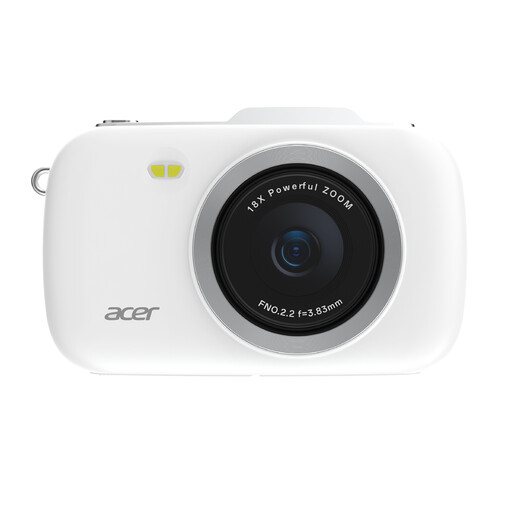 No image available
KOMERY G7-A 4K, white
For a point-and-shoot camera on a small table, it’s worth comparing the focusing distance and framing you need with the size of your book in advance.
Listed features: 18× zoom, 80 MP and 4K video.
Joybuy
 No image available
Sony ZV-E10 + 16–50mm zoom lens, black
The standard zoom lens gives you a range of framing options; check the focusing distance at the zoom setting you want and make sure you have enough working space.
The kit includes an E PZ 16–50mm lens and has a tilting touchscreen. According to the product listing, an adapter and charger are not included.
Joybuy
 No image available
Sony ZV-1
A compact camera with a fixed zoom lens means you don’t need to choose a separate lens; check that the lens range and focusing distance suit the space between your camera and notebook.
Listed features: 24–70mm lens range, tilting touchscreen and JPEG and RAW file formats.
Joybuy
Frequently asked questions
How can I keep more than one part of an open notebook in focus?
Set the camera up securely and, if your camera allows it, choose a smaller aperture for greater depth of field. This lets in less light, so adjust the exposure or lighting as well.
Do I need a macro lens straight away to photograph every stitch?
Not necessarily: first compare the minimum focusing distance and maximum magnification of your lens with the detail you want to show. These figures can vary depending on the zoom setting and focusing method.
What does the legal guarantee mean when I buy a camera in the Netherlands?
According to the Dutch Government, you’re entitled to a product that works as it should, and the seller is your point of contact if something goes wrong. The Netherlands doesn’t have a fixed legal guarantee period for every product; a manufacturer’s guarantee is in addition to your legal rights.
Can I always return a camera bought online within 14 days?
According to the Dutch Government, purchases made remotely from a business generally come with a 14-day cooling-off period, but the rules and exceptions depend on the purchase. The same rules don’t apply to an online purchase from a private seller.


