For full shots of handmade cards, start with a standard zoom lens that frames the whole card from your working distance. If your current camera already gives you the composition you want, try it out before buying anything new. A macro lens is mainly useful for small embellishments that you want to fill the frame: Nikon specifies 1:1 magnification for the Z MC 50mm f/2.8, but buying an extra lens adds to the cost, and high magnification reduces depth of field. Compare the lens and screen from your shooting position, and pay attention to white balance as the light from your window changes—not just to megapixels or video features.
Who is this buying guide for?
Card maker taking product photos
You want to photograph complete cards consistently, perhaps for a sales page or portfolio. Consider framing, the background and a stable set-up; Canon Netherlands recommends using a tripod to help achieve consistent compositions.
Card maker working with colour-sensitive designs
You want the colours of the paper and illustrations to look true to life as the light from your window changes. Canon Netherlands explains that natural light can vary in colour depending on the conditions, so pay attention to white balance and choose a workflow that lets you check colours.
Card maker capturing fine details
You want to photograph small stamps, textures or embossing on their own. Nikon Netherlands explains that magnification and working distance matter, so consider the lens as well as the camera body.
What should you look for when choosing?
Start with how the whole card will fit in the frame and the distance you’ll be shooting from. Then decide whether colour control, close-ups or a simple set-up matters most to you.
| What to consider |
What should you check? |
Who is this important for? |
| Framing the whole card |
Check which lens is included and the working distance; see whether the screen position and a tripod suit your set-up. |
I want to capture complete cards with a similar composition and background each time. Around 33% of consumers give framing the whole card top priority. |
| Getting paper colours right |
Check whether you can adjust the white balance and, if you plan to edit your images, whether the camera supports RAW capture. |
If paper colour is my priority, I want to be able to manage colour casts caused by changing window light. Around 25% of consumers put colour reproduction ahead of other buying needs. |
| Photographing small details |
Compare the maximum magnification and working distance of the exact lens; check the mount, too. |
I want a small embellishment or embossed detail to fill the frame, rather than simply appearing in a photo of the whole card. Around 25% of consumers prioritise close-ups of small details. |
| Keeping the set-up simple |
First, take a test shot with your current camera and work out what specific problem a new camera body, lens or tripod should solve. |
I mainly want a simple workflow, without buying extra equipment unless there’s a clear reason. Around 17% of consumers put simplicity first. |
Common buying mistakes
-
Comparing only megapixels or the camera body
The lens affects how a complete card fits in the frame and how large a small detail appears. A camera body on its own won’t tell you whether the combination suits your card and working distance.
Before choosing a camera body, compare the exact kit contents, working distance and maximum magnification.
-
Assuming a short focusing distance means a lens is a macro lens
Focusing distance and magnification ratio describe different features. Canon Netherlands specifies a maximum magnification of 0.25x for the RF-S 18-45mm; Nikon Netherlands specifies 1:1 for the Z MC 50mm f/2.8 macro lens.
First decide whether you want to photograph a whole card or fill the frame with a small detail. Then compare the magnification and working distance of the specific lens.
-
Assuming the manufacturer’s warranty replaces your statutory rights
A manufacturer’s warranty is separate from your statutory rights. According to the Dutch government, if a product is faulty, the retailer is your point of contact for a solution.
Keep your proof of purchase and check the terms of any additional warranty.
Camera brands to consider
Canon
The EOS R50 kit with RF-S 18-45mm is worth considering for framing complete cards.
- Canon specifies a minimum focusing distance of 15 cm for the RF-S 18-45mm and a vari-angle screen on the EOS R50.
- Canon specifies a maximum magnification of 0.25x for the lens; don’t assume this is the same as a 1:1 macro lens.
Nikon
The Z50II kit includes a Z DX 16-50mm standard zoom. For small details, there’s also a separate Z MC 50mm f/2.8 macro lens.
- Nikon specifies a minimum focusing distance of 0.2 m for the kit zoom and 1:1 magnification for the macro lens.
- The macro lens is an extra purchase, and high magnification results in a shallow depth of field.
Sony
The ZV-E10 II kit with 16-50mm power zoom is worth considering if you want to shoot video as well as card photos.
- Sony markets the ZV-E10 II as a vlog camera with an interchangeable lens.
- Video and face-focused features don’t, in themselves, offer an advantage for taking still photos of flat cards.
Cameras at Joybuy
These Joybuy picks are digital cameras whose product titles describe them as being for photography. Try them with your own card and window light to see whether the framing and colour reproduction suit your workflow.
 No image available
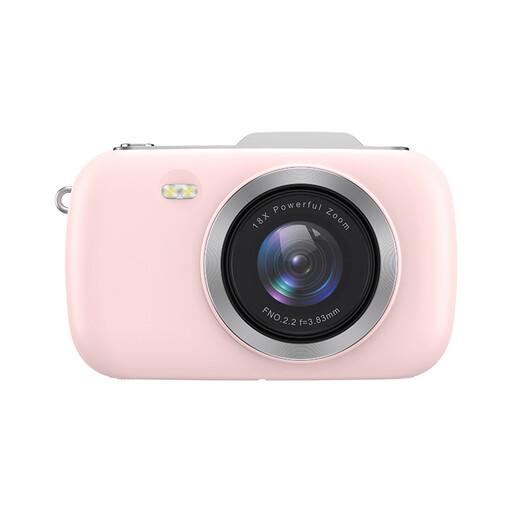
KOMERY G7-A 4K 80MP 18X digital camera, Pink
The product title describes this model as a digital camera for photography. Take a test shot to check that your whole card fits in the frame.
The title lists 4K, 80MP and 18X zoom. These are stated product features, not independent test results.
View at Joybuy
 No image available
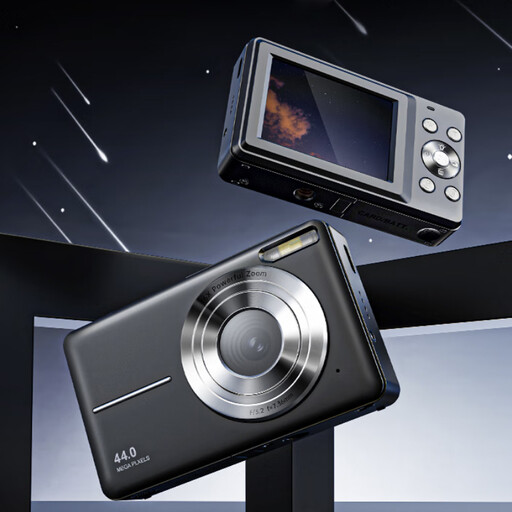
Songdian Pocket Camera 4K 44MP 16X Zoom, Black
The product title describes this as a camera for photography and video. Take a test shot to check that the card fits well in the frame from your shooting distance.
The title lists 4K, 44MP and 16X digital zoom. These are stated product features, not independent test results.
View at Joybuy
Frequently asked questions
How can I keep a series of card photos consistent in window light?
Place the card and camera in roughly the same positions each time, and use a tripod if needed. Check the white balance again as the daylight changes; Canon Netherlands explains both the value of consistent framing and how changing natural light can affect colour.
Do I need a macro lens to photograph a whole card?
Not necessarily. Start by seeing how the card looks with a standard zoom from your usual working position. A macro lens is mainly useful when you want small details to fill the frame on their own; Nikon Netherlands notes that high magnification gives you a shallow depth of field.
Do I always have 14 days to change my mind when buying online in the Netherlands?
No, not in every case. According to the Dutch government, when you buy remotely from a business, you can often change your mind within 14 days, but there are exceptions. The rules may also differ when you buy from a private individual. Check which terms apply to your purchase.
Do I need to contact the manufacturer about my statutory guarantee?
No. According to the Dutch government, if a product is faulty, the retailer must provide a solution. The Netherlands does not have one fixed statutory guarantee period for all products; a manufacturer’s warranty is in addition to your statutory rights.


