
Maker of colour-sensitive cards
You sell cards where the colour of the paper, ink and finish needs to look true to life. Start by assessing the lighting and white balance in your set-up; Adobe explains how white balance affects colour reproduction.


Start with a fixed set-up and even lighting. If your smartphone captures the whole card and the details you want to show clearly, you don’t automatically need to buy a separate camera. A mirrorless camera gives you more control over your choice of lens, while a compact camera with a close-up mode lets you avoid changing lenses. With either option, check the exact lens, what’s included in the kit and the focusing capabilities before you decide.
You sell cards where the colour of the paper, ink and finish needs to look true to life. Start by assessing the lighting and white balance in your set-up; Adobe explains how white balance affects colour reproduction.
You want to show embossing or small embellishments as well as the whole card. Check the focusing capabilities of the exact camera and lens combination.
You regularly photograph new designs and want to be able to repeat the framing and background. Canon describes a tripod as a useful aid for consistent framing.
Choose this option if: test shots of whole cards and the details you want to show are sharp enough, and the colours look good in even lighting.
Bear in mind: close-up capabilities and settings vary from one phone to another.
Choose this option if: you want to weigh up your lens choices and camera settings yourself, for example for separate detail shots.
Bear in mind: a camera body or standard zoom lens isn’t automatically a macro kit; check which lens is included.
Choose this option if: you want to use one camera without changing lenses, and take photos of small details too.
Bear in mind: a short minimum focusing distance doesn’t tell you whether you can fit a whole card into the frame from your workspace.
| What to consider | What to look for | Who should pay extra attention? |
|---|---|---|
| Colour of paper and print | Look at test shots in your own lighting and check the white balance; settings alone can’t guarantee perfectly accurate colours. | If the shades of the paper and ink need to look true to life, you’ll want to assess any colour differences in your own set-up. Around 33% of consumers put colour reproduction first. |
| Small details and embossing | Check the lens or close-up mode of the exact kit, and try framing both a detail and the whole card. | If small embellishments need to be shown separately, the camera and lens combination matters more than the name of the camera body alone. Around 27% of consumers prioritise detail shots. |
| Repeatable photos | Check that you can position your camera or phone securely and repeat the framing in your space. | When photographing a series of new designs, you won’t want to work out the framing and background from scratch each time. Around 20% of consumers prioritise a repeatable set-up. |
| Equipment you already own | Take test shots with your current device first; if you’re considering a camera kit, check which lens is actually included. | If you want to avoid buying equipment you don’t need, first compare what your current device can do with what the new kit offers. Around 20% of consumers prioritise avoiding unnecessary purchases. |
Start with even lighting and a simple background. Adobe identifies both as elements of a controlled product photography set-up and notes that a smartphone can be an option if you’re on a limited budget. Take comparable test shots before deciding whether a new camera will make a difference to your card photos.
The stated magnification figures apply to specific lenses, not automatically to a camera body or every kit. Canon specifies 0.5× for the separate RF 24mm F1.8 MACRO IS STM; Nikon quotes 1:1 for the separate NIKKOR Z MC 50mm f/2.8.
Before buying, check the exact lens name, mount and kit contents if you want to take close-ups.
You may need to buy a separate compatible lens to achieve the magnification you want.
Your lighting set-up and white balance affect how white and coloured cards look in photos. A different camera won’t replace the need to check these.
Take test shots with your current device first, then adjust the lighting or white balance if needed.
This could help you avoid buying a camera you don’t need for your photos.
A short minimum focusing distance doesn’t tell you whether the camera can also frame a whole card properly from your workspace.
Assess both full-card and detail shots at the distance you actually want to photograph from.
The EOS R50 is a mirrorless camera body with an RF mount, which you can pair with a suitable RF or RF-S lens.
The Z50II is part of the Z system; the NIKKOR Z MC 50mm f/2.8 is a separate lens option for close-ups.
The ILCE-6400 is a mirrorless camera with an E mount; assess the lens separately for the card and detail shots you want to take.
The Tough TG-7 is a compact camera with a fixed lens and a close-up mode described in the manual.
This selection of Joybuy products includes compact cameras and cameras with zoom lenses. For each model, check whether the lens, framing and kit contents suit your card photos.
 No image available
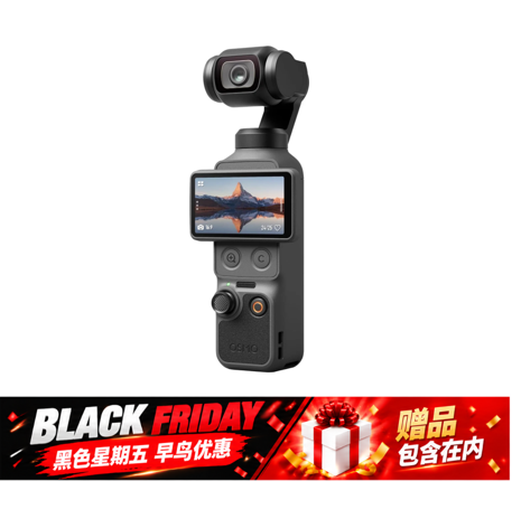
The product title describes a pocket gimbal camera for photography; use test shots to see whether this design suits your card set-up.
The title lists a 1″ CMOS sensor, 4K/240fps video, 3-axis stabilisation, 2× lossless zoom, 107 GB of built-in storage and a 2″ rotating screen.
 No image available
This digital camera is worth considering if you want to try different framings; use a card to check whether you can achieve the composition you want.
The product title lists 12× optical zoom, 4K video and Wi-Fi.
 No image available
The product title describes a compact camera for photography; take test shots to see whether the framing works for your cards.
The title lists a 1″ CMOS sensor, 4K/120fps video, 3-axis stabilisation and a 2″ rotating touchscreen.
 No image available
The kit lists a 16–50mm zoom lens, giving you different framing options to try. See whether it lets you capture both the whole card and the close-ups you want.
Check what’s in the kit: the product information for this version states that an adaptor/charger isn’t included.
 No image available
The product title lists a 16–50mm lens; use test shots to check whether the combination suits the full-card and detail framing you want.
Not before you’ve taken some test shots. Photograph a whole card and a detail you want to show in even lighting. Adobe lists a smartphone as an option if you’re on a limited budget, but that doesn’t tell you what your own phone can do.
Use a simple background and even lighting, and place your camera or phone in the same secure position each time. According to Canon’s product photography guide, a tripod helps keep the framing consistent between shots.
Assess the white balance and lighting using test shots in your own set-up. Adobe describes white balance as an adjustment that can make colours look more realistic; always check the photo against the card itself.
Not automatically: it also depends on the capacity in which you’re buying. The Authority for Consumers & Markets describes the statutory guarantee for sales to consumers; Business.gov.nl states that a business purchase isn’t covered by consumer law, although small businesses may be able to rely on consumer law in some cases. Before buying, check which situation applies to you.
Give consumers clear and accurate information about the features of the products you sell, and avoid misleading images or descriptions. Business.gov.nl states that copyright arises automatically for an original work; also check that you have the rights to use other people’s images or designs.