What should you look for when choosing?
With glossy, handmade tiles, reflections, colour reproduction, detail framing and what’s included in the set all play a part.
| What to consider |
What to look for when buying |
Who it matters most to |
| Reflections and shine |
Can you position the camera steadily while moving the light source? If you’re considering a filter, check that the lens is compatible and find out which filter size you need. |
If I want to reduce distracting reflections but keep the glaze’s shine, I’ll start by adjusting the position of the camera, tile and light. Around 36% of consumers prioritise managing reflections. |
| Colour consistency |
Check the available white balance settings and, if you want to edit your photos, whether the exact model supports RAW shooting. Keep the lighting consistent throughout a series. |
If I want to photograph several tiles and compare their colours, a consistent lighting set-up is important. Around 29% of consumers prioritise colour consistency. |
| Wide shots and close-up details |
Check the focusing distance or magnification of the exact lens or camera against the framing you want and the working distance available. |
If I want to show both the whole tile and a detail in its relief, I need to be able to frame both shots successfully. Around 21% of consumers prioritise detail and framing. |
| Complete set |
Check whether the offer includes a lens and whether it fits the camera body. Also consider what tripod or lighting equipment you already have. |
If you want to take the shots you have in mind straight after buying, you’ll want to know which components you already have and which you still need. Around 14% of consumers prioritise a complete, ready-to-use set. |
Cameras at Joybuy
These camera options from Joybuy give you a starting point for comparing zoom, lens choice and camera size. For each model, check whether it suits the tile framing, shooting distance and lighting set-up you want.
 No image available
Komery W6 camera, 12× optical zoom, 4K, 64MP
The listed optical zoom can be a useful starting point if you want to compare different framings; check whether you can get the tile clearly into the frame from your working distance.
The product name lists 12× optical zoom, 4K and 64MP.
Joybuy
 No image available
DJI Osmo Pocket 3 Creator Combo
An option to consider if you want to take still photos as well as video; check that it suits the tile framing and working distance you want for your set-up.
The product name mentions 4K/120fps video.
Joybuy
 No image available
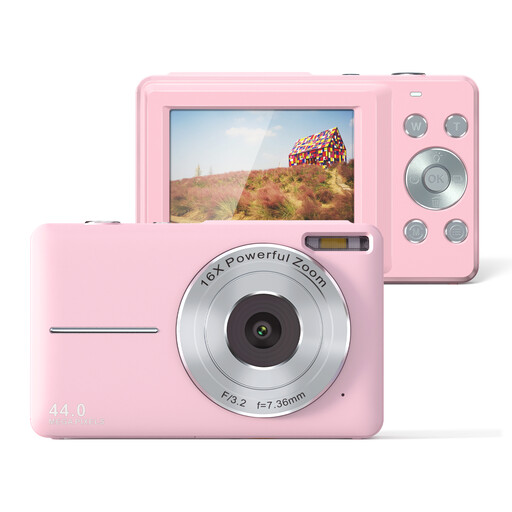
Songdian Pocket Camera, 4K, 44MP, 16× zoom, pink
The zoom specification gives you a starting point for assessing your preferred framing; check the tile size to see whether you can capture both an overview and the detail you want.
The product name lists 4K, 44MP, 16× zoom and the pink colour option.
Joybuy
 No image available
Sony ZV-E10 + 16–50mm Zoom, black
This kit is worth considering if you’re looking for a camera with an interchangeable lens; check the working distance and framing the included lens allows for your tile.
The product name lists a 16–50mm zoom lens.
Joybuy
 No image available
Sony Alpha A6100 + 16–50mm f/3.5–5.6 OSS II
Compare this kit if you’re considering a camera with an interchangeable lens; check the wide and close-up framing you want against the lens and the shooting distance available to you.
The product name lists a 16–50mm f/3.5–5.6 OSS II lens.
Joybuy
Frequently asked questions
Will a polarising filter always remove reflections from the glaze?
No, a polarising filter isn’t guaranteed to reduce every reflection. First move the light source and camera, then compare shots with and without the filter to see whether the shine you want is still visible. Also check that the filter fits your chosen lens.
Do I need a macro lens to photograph a whole tile?
Not necessarily. First check whether you can fit the whole tile into the frame from the distance available to you. A macro lens may be useful for very small details; with a mirrorless camera, it must also fit the lens mount.
How can I make photos of several tiles look consistent?
Keep the camera and tile in fixed positions, use a tripod and keep the lighting as consistent as possible. Check the white balance under the lighting you’re using; Canon Europe describes a tripod as a way to take consistent product photos, while Adobe explains that a light source can cause a colour cast.
What extra equipment and after-sales support should I check?
Check whether the offer includes a suitable lens and consider what tripod or lighting equipment you already have. In the Netherlands, the seller is your point of contact if a product is faulty and you need a solution, according to the Rijksoverheid.
Can I return a camera bought online in the Netherlands within 14 days?
For an applicable online consumer purchase, you generally have a statutory 14-day cooling-off period starting from delivery. ACM ConsuWijzer also explains the exceptions and conditions for trying out and returning an item; check which rules apply to your purchase.


