Start with the smallest detail you want to photograph, then choose a lens that can focus on it while leaving enough room to position the light around the glass. Reflections need their own lighting setup when photographing glass paperweights. For greater depth of field with a stationary subject, a tripod and, where available, focus stacking can help. Don’t assume that a camera body or zoom kit includes a macro lens.
Who is this setup for?
Glass detail photographer
You want to make small inclusions, engravings or flaws visible. So compare the magnification and working distance of the lens you choose. Canon Netherlands and OM SYSTEM Netherlands publish specifications for individual macro lenses.
Maker in a shared workshop
You want to show the shape of the glass without reflections from the surroundings dominating the photograph. A manageable setup with movable lighting and flags can help you try different exposures. broncolor explains how the position of the light affects both reflections and the visibility of engravings.
Photographer creating repeat product ranges
You want to photograph paperweights with similar framing and depth of field. A tripod and a consistent approach to framing help you achieve consistent compositions; Canon Netherlands describes using a tripod for product photography.
What should you look for when choosing?
Mirrorless camera with a macro lens
Choose this when: you want small inclusions, engravings or other fine details to appear large in the frame.
Bear in mind: the macro lens may need to be bought separately. Also check the mount and the space in front of the lens for lighting.
Mirrorless camera with a zoom or kit lens
Choose this when: an overall shot matters more than maximum magnification and the lens can focus at your desired distance.
Bear in mind: an interchangeable lens or a macro mention doesn’t automatically mean that the supplied zoom lens can capture the level of detail you want.
Focus-stacking setup
Choose this when: you want more of a stationary paperweight, from front to back, to appear in focus.
Bear in mind: Canon lists focus bracketing and stacking for the EOS R10. You’ll need a stable camera, and this won’t resolve reflections.
| Consideration |
What should you check? |
Who does this matter to? |
| Small details |
Compare the maximum magnification of the exact lens, its mount and its usable working distance with the smallest detail you want to show. |
If I want to capture inclusions or engravings clearly, lens magnification comes first. Around 36% of consumers make small details their top buying priority. |
| Reflections and contours |
Consider whether you can position light sources and light or dark flags around the glass. Check test shots for both reflections and visible details. |
In a shared workshop, I want to stop the surroundings from dominating the image of the glass without losing sight of the engravings. Controlling reflections is the top priority for around 29% of consumers. |
| Depth of field |
Check whether the exact camera has focus bracketing and stacking features, and whether there’s room for a sturdy tripod. |
If I want to show a paperweight in focus from front to back, I look for a stable setup and the camera body’s features. Around 21% of consumers prioritise depth of field. |
| Repeatable workflow |
Check the exact kit contents and whether you’ll need to buy the lens you want, a tripod and the required lighting setup separately. |
For a series of similar product photographs, I want to be able to repeat the framing and adjust the light for each object. Around 14% of consumers give a repeatable workflow their top priority. |
broncolor’s practical examples show why lighting position needs careful consideration when photographing shiny glass. Even lighting can make details such as engravings less visible, while simply adding more light won’t necessarily solve the problem. Canon Netherlands describes the limited depth of field in close-up photography and using a tripod for a consistent composition.
Buying pitfalls
-
Expecting more megapixels to solve reflections
When photographing shiny glass, the position of light sources and flags matters. A higher resolution won’t change those reflections.
First, take test shots with the light moved and with light or dark cards. Then assess which details are still missing before choosing a different camera body.
-
Assuming a camera kit includes a macro lens
A kit may include a standard zoom lens, while the quoted macro magnification applies to a different lens that’s sold separately.
Check the exact kit contents, lens mount and specifications of the supplied lens before ordering.
-
Confusing minimum focus distance with the space in front of the lens
Minimum focus distance doesn’t tell you directly how much room you’ll have in front of the lens to position lighting and flags.
Check the working distance of the exact lens at the magnification you want to use, then compare it with the space available in your workshop.
Camera brands compared
Canon
The EOS R10 can be compared with a separate RF 100mm F2.8L Macro lens if both detailed magnification and focus stacking are important to you.
- Canon specifies a maximum magnification of 1.4× for the RF 100mm F2.8L Macro lens. Canon lists focus bracketing and stacking for the EOS R10.
- Check whether the lens is included with the camera body. Focus bracketing features won’t remove reflections from glass.
Nikon
The Z50II is a camera body to compare with the separate NIKKOR Z MC 105mm f/2.8 VR S lens when close-up detail is a priority.
- Nikon specifies a reproduction ratio of 1:1 for this lens.
- Don’t assume the lens is included with the camera body unless the kit contents explicitly say so. The stated lens magnification alone doesn’t tell you how much space there’ll be in front of the lens.
Sony
The ZV-E10 is an interchangeable-lens camera; a separate macro lens may be useful for capturing small details.
- Sony states a 1:1 magnification for the separate FE 90mm Macro lens.
- A ZV-E10 zoom kit doesn’t mean the supplied zoom lens can achieve that magnification. Check which lens is actually included in the kit.
FUJIFILM
The XF80mmF2.8 R LM OIS WR Macro lens is an X-mount option to compare for close-ups that leave room to adjust your composition.
- FUJIFILM specifies a focal length of 80 mm, equivalent to 122 mm in full-frame terms.
- That equivalent focal length doesn’t measure the available working distance. Assess the complete camera setup where you’ll be taking photographs.
OM SYSTEM
The OM-5 can be compared with the separate M.Zuiko Digital ED 60mm F2.8 Macro lens for a Micro Four Thirds setup.
- OM SYSTEM specifies a magnification of 1:1, a minimum focus distance of 0.19 m and a weight of 185 g for the lens.
- Minimum focus distance isn’t measured from the front of the lens, so it doesn’t guarantee how much room you’ll have for lights.
Joybuy products
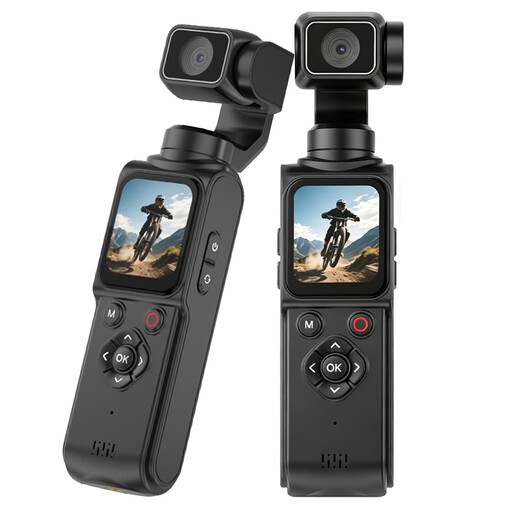
This Joybuy selection includes vlog and pocket cameras, as well as several Sony ZV-E10 options. For glass paperweights, check the close-up capabilities, the lens you’ll need and the space available for lighting around the subject separately.
 No image available
KINSI Mini Vlog Camera 4K, 64 MP
The product title describes a vlogging camera with a rotating lens. Check separately whether its focusing is suitable for capturing the details of your paperweight.
The title lists 4K, 64 MP, a 330° rotating lens, a 1.72-inch touchscreen and a tripod.
View at Joybuy
 No image available
DJI Osmo Pocket 4 Standard Combo
The title describes a pocket gimbal camera for photography. For small glass details, check whether the focusing and shooting distance suit your subject.
The title lists a 1″ CMOS sensor, 4K/240fps, 2× lossless zoom, 107 GB of built-in storage and a 2″ rotating screen.
View at Joybuy
 No image available
DJI Osmo Pocket 3
This title describes a camera for photography and video. Check whether it can focus at the distance you want to photograph the glass from.
The title lists a 1″ CMOS sensor, 4K/120fps video, fast focusing, 3-axis stabilisation and a 2″ rotating touchscreen.
View at Joybuy
 No image available
Sony ZV-E10, body only
Consider this body if you want to choose a suitable lens yourself. Check that the lens is right for the close-ups you want to take.
The product name specifies body only. No lens is included.
View at Joybuy
 No image available
Sony ZV-E10 with 16–50mm zoom lens
According to the product name, this kit includes a zoom lens for wider shots. Check whether it can also focus at the distance you need for detailed photographs.
The product name lists the 16–50mm zoom lens. Check the exact lens capabilities before choosing this kit for macro photography.
View at Joybuy
Frequently asked questions
Does focus stacking get rid of reflections in the glass?
No. Canon says that stacking combines shots taken at different focus distances to show more depth in focus. Assess reflections separately by adjusting the position of light sources and flags.
How can I photograph a series of paperweights with the same framing?
Use a sturdy tripod and keep the framing and background the same. Adjust the light if reflections vary between glass objects. Canon describes a tripod as a way to achieve a consistent composition, while broncolor shows why lighting position needs careful consideration.
Is there always a two-year warranty on a camera bought online in the Netherlands?
No. Don’t assume there’s one fixed period for every purchase. ACM ConsuWijzer distinguishes between a commercial guarantee and statutory rights: a product must meet what you could reasonably expect of it under normal use. Also check the terms of any additional guarantee.
Can I return a camera bought online in the Netherlands within 14 days?
For applicable consumer purchases made online, there’s generally a statutory cooling-off period of up to 14 days after delivery, subject to exceptions set out by ACM ConsuWijzer. This doesn’t necessarily apply to a business purchase for a workshop.


